Industry News
Understanding the U.S. Pool Market in 2026

The U.S. swimming pool industry in 2026 remains one of the largest and most resilient sectors within the outdoor living economy. While the explosive pandemic-era construction boom has normalized, the broader market continues generating billions annually through remodeling, maintenance, chemicals, service, automation, equipment replacement, retail sales, and backyard lifestyle upgrades.
Today, the United States is home to an estimated 10.7 million swimming pools², including approximately 10.4 million residential pools² spread across suburban and Sun Belt markets nationwide. That installed base continues creating recurring demand for service, repairs, remodeling, water care products, heaters, pumps, filters, lighting, automation systems, and outdoor living enhancements year after year.
The broader pool and spa industry itself is estimated to generate more than $60 billion annually¹, making it one of the most significant categories within the home improvement and outdoor living sectors.


Unlike many industries that rely heavily on new construction starts alone, the modern swimming pool business increasingly operates as a long-term ownership economy. Every installed pool becomes a recurring source of demand for service professionals, remodelers, manufacturers, distributors, retailers, and technology providers.
Table of Contents
• U.S. Pool Market at a Glance
• America’s Massive Installed Pool Base
• In-Ground Pools Continue Leading the Market
• Above-Ground Pools Still Represent a Major Category
• The Hot Tub and Spa Market Is Booming
• Commercial Pools Continue Producing High-Value Revenue
• Sun Belt States Continue Dominating Pool Ownership
• Pool Distribution Infrastructure Continues Expanding
• New Pool Construction Has Normalized
• Why Pool Remodeling Is Booming
• Outdoor Living and Backyard Wellness Continue Growing
• Technology Is Transforming the Pool Industry
• Why the Pool Market Remains Strong
• The Future of the U.S. Pool Industry


U.S. Pool Market at a Glance
• Total swimming pools in the United States: 10.7 million²
• Residential swimming pools nationwide: 10.4 million²
• Estimated annual industry value: More than $60 billion annually¹
• Residential in-ground pools: 5.4 million³
• Residential above-ground pools: 3.4 million³
• Residential spas and hot tubs: 5.5 million³
• Commercial pools nationwide: 300,000+³
• U.S. households with a swimming pool: Approximately 8%⁴
• Annual new in-ground pool construction: Approximately 60,000–61,000 pools annually³
• Largest regional markets: Florida, California, Texas, and Arizona⁵
• Largest pool distribution networks: POOLCORP and Heritage Pool Supply Group
• Fastest-growing segments: Pool remodeling, automation, outdoor living, and wellness products
• Strongest recurring revenue category: Pool service and maintenance


America’s Massive Installed Pool Base
The biggest story in the pool industry today is not necessarily how many new pools are being built. It’s how many pools already exist.
With more than 10.7 million pools currently operating nationwide², the United States has built one of the largest recurring aftermarket economies in the outdoor living sector. Over 8% or 1 in 12 households have a swimming pool installed in the backyard.


Every installed pool creates continuing long-term demand for:
• Weekly service and maintenance
• Chemicals and water care
• Equipment replacement
• Pool remodeling
• Heater and pump upgrades
• Lighting modernization
• Smart automation systems
• Leak detection and repairs
• Tile and coping replacement
• Outdoor living renovations
This recurring demand is one of the primary reasons the industry has remained relatively stable despite higher interest rates and slower housing activity entering 2026.
Unlike industries tied entirely to new construction, the pool business benefits from a massive installed customer base that continues spending money year after year simply to maintain and modernize existing pools.

In-Ground Pools Continue Leading the Market
The United States currently has an estimated 5.4 million residential in-ground swimming pools³, making in-ground construction the dominant segment of the professional pool industry.
In-ground pools continue driving the highest-value backyard projects because they are permanent, highly customizable, and deeply integrated into modern outdoor living design.
Today’s premium residential pool projects increasingly include:
• Integrated spas
• Baja shelves and tanning ledges
• Infinity edges
• Fire bowls and fire features
• Waterfalls and scuppers
• Outdoor kitchens
• Pergolas and shade structures
• Luxury hardscape design
• Smart automation systems
• LED lighting environments
The modern residential pool is no longer viewed as a standalone feature. It has become the centerpiece of a larger outdoor entertainment and wellness environment.
Luxury homeowners continue investing heavily in resort-style backyard spaces that combine recreation, hospitality, wellness, and technology into a single integrated environment.

Above-Ground Pools Still Represent a Major Category
Although above-ground pools receive less attention within luxury outdoor living discussions, they continue representing a substantial portion of the total U.S. market.
Current estimates place the residential above-ground pool market at approximately 3.4 million pools nationwide³.
Above-ground pools remain especially popular among:
• First-time pool owners
• Budget-conscious households
• Rural homeowners
• Seasonal-climate markets
• Families seeking lower upfront investment
These pools continue generating strong demand for:
• Pool liners
• Pumps and filtration systems
• Water care products
• Seasonal maintenance
• Covers and accessories
• Heaters and circulation equipment
For many consumers, above-ground pools represent an entry point into long-term pool ownership.

The Hot Tub and Spa Market Is Booming
One of the most surprising realities within the broader aquatic industry is the sheer size of the residential spa and hot tub market.
The United States now has an estimated 5.5 million residential spas and hot tubs³ currently operating nationwide — slightly more than the number of residential in-ground swimming pools.
That creates a major opportunity for pool service professionals willing to expand beyond traditional swimming pool maintenance.
Many homeowners still separate spa ownership from pool service despite the overlap in:
• Water chemistry
• Filtration systems
• Pumps and circulation
• Heating systems
• Automation controls
• Preventative maintenance
The growth of hydrotherapy, cold plunge systems, wellness-focused outdoor living, and recovery-oriented backyard design continues fueling expansion throughout this category.
Spas have increasingly become part of larger wellness-oriented backyard environments that emphasize relaxation, recovery, stress reduction, and health-conscious living.

Commercial Pools Continue Producing High-Value Revenue
The U.S. commercial aquatics sector remains another critical segment of the broader market.
Current estimates place the number of commercial pools nationwide at more than 300,000 facilities³.


Sun Belt States Continue Dominating Pool Ownership
Pool ownership continues clustering heavily throughout warm-weather states where outdoor living plays a larger role in residential culture.
The largest pool markets in the United States remain:
• Florida⁵
• California⁵
• Texas⁵
• Arizona⁵
Together, these states account for a massive share of national pool construction, remodeling, distribution, and service activity.
Florida in particular continues gaining momentum due to:
• Rapid population migration
• Year-round swimming climate
• Expanding suburban development
• Strong luxury housing activity
• High pool ownership rates per capita
California still maintains one of the country’s largest installed pool bases, while Texas continues benefiting from explosive suburban expansion and population growth.
Arizona remains one of the densest pool ownership markets in the nation due to extreme summer temperatures and strong backyard culture.
Many industry analysts now believe Florida may eventually surpass California as the nation’s largest pool market due to long-term demographic shifts and continued migration into the Southeast.


Pool Distribution Infrastructure Continues Expanding
The long-term strength of the installed pool market has fueled aggressive expansion among national distribution networks.
POOLCORP, the largest wholesale pool products distributor in the industry, currently operates 456 sales centers globally⁶.
At the same time, Heritage Pool Supply Group has expanded rapidly to more than 160 locations across 36 states⁷.
Combined, those two companies alone now represent more than 600 distribution and supply locations serving builders, retailers, remodelers, and service professionals throughout North America.
That infrastructure exists to support continuing demand for:
• Equipment replacement
• Chemicals and water care products
• Remodeling materials
• Pumps and heaters
• Automation systems
• Plumbing and fittings
• Outdoor living products
• Service and repair operations
Distribution expansion is one of the clearest indicators that the installed pool market remains economically strong.
The continued growth of national distribution networks has also helped improve product availability, logistics, technical training, and contractor support across the industry.


New Pool Construction Has Retracted
The pool industry experienced unprecedented growth between 2020 and 2022 as homeowners redirected spending into backyard improvements during the pandemic.
During the height of the surge:
• Builders reported multi-year backlogs
• Equipment shortages became widespread
• Labor shortages intensified
• Construction pricing climbed dramatically
• Automation demand surged
• Project values increased substantially
In many markets, contractors were booking projects 18 to 24 months in advance⁸ during the peak boom cycle.
That pace has moderated entering 2026.
Current estimates suggest the U.S. market is now building approximately 60,000 to 61,000 new in-ground pools annually³.
While lower than pandemic highs, that still represents a healthy long-term construction environment supported by strong consumer interest in outdoor living.
The normalization of construction activity has also helped stabilize:
• Material availability
• Equipment lead times
• Labor scheduling
• Consumer expectations
• Builder backlogs
Rather than signaling industry weakness, many professionals now view the current market as healthier and more sustainable than the extreme boom conditions seen during the pandemic years.

Why Pool Remodeling Is Booming
One of the most important trends shaping the pool industry in 2026 is the explosive growth of remodeling and renovation work.
Millions of residential pools across the country are now decades old and entering major modernization cycles.
Rather than relocating or constructing entirely new pools, homeowners are increasingly investing in upgrading existing backyards through:
• Resurfacing and replastering
• Tile and coping replacement
• Spa additions
• Saltwater conversions
• LED lighting upgrades
• Smart automation installation
• Variable-speed pump upgrades
• Baja shelves and tanning ledges
• Water and fire features
• Outdoor living integration
For many contractors, remodeling now represents a more predictable and stable revenue source than speculative new construction.
The aging installed pool base virtually guarantees long-term demand for renovation services well into the future.
Many homeowners are also choosing to remodel because upgrading an existing pool is often significantly less expensive and less disruptive than building a completely new one.
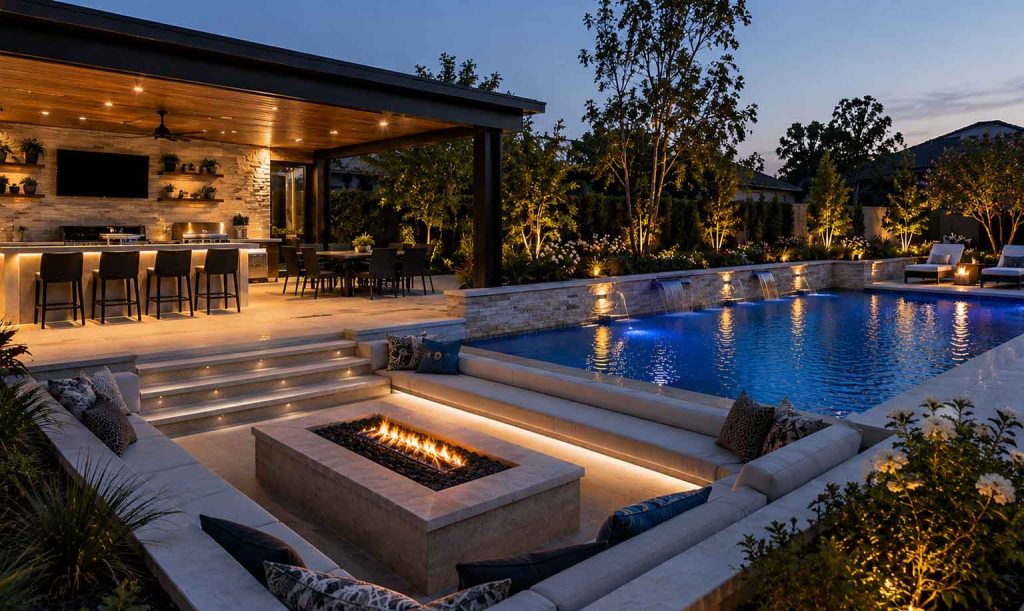
Outdoor Living and Backyard Wellness Continue Growing
Swimming pools are increasingly becoming part of larger lifestyle-focused outdoor living environments.
Modern homeowners are investing heavily in transforming their backyards into resort-style spaces designed around:
• Entertainment
• Hospitality
• Relaxation
• Recovery
• Fitness
• Wellness
Today’s premium backyard projects increasingly include:
• Outdoor kitchens
• Covered patios and pergolas
• Cold plunge pools
• Hydrotherapy systems
• Swim jets and resistance systems
• Smart outdoor lighting
• Audio and entertainment systems
• Fire pits and fireplaces
• Luxury hardscape installations
Consumers are no longer simply purchasing swimming pools. They are investing in complete outdoor experiences.
This broader shift toward experiential outdoor living has helped elevate the pool industry far beyond its traditional role as simply a recreational category.

Technology Is Transforming the Pool Industry
Technology adoption throughout the pool industry has accelerated rapidly over the past several years.
Modern pool owners increasingly expect app-driven experiences that allow remote control over:
• Pool lighting
• Pumps and filtration
• Water features
• Heating systems
• Cleaning schedules
• Water chemistry systems
• Temperature settings
At the same time, pool professionals themselves are becoming increasingly technology-driven operationally.
Today’s service companies rely heavily on:
• Route optimization software
• CRM platforms
• Automated billing systems
• GPS dispatching
• Water chemistry tracking apps
• Customer communication tools
• Marketing automation systems
• Remote monitoring platforms
The pool industry is becoming more connected, more automated, and more data-driven than ever before.
Artificial intelligence, predictive maintenance tools, smart diagnostics, and remote monitoring technology are also beginning to reshape how pool professionals manage customer accounts and equipment performance.

Why the Pool Market Remains Strong
Despite broader economic uncertainty, several major long-term fundamentals continue supporting the industry.
Massive Installed Base
With more than 10 million pools already operating nationwide², the recurring aftermarket opportunity remains enormous.
Recurring Service Demand
Pools require continuous maintenance, chemicals, repairs, and upgrades regardless of housing cycles.
Outdoor Living Remains Popular
Consumers continue prioritizing backyard entertainment, outdoor kitchens, wellness environments, and luxury exterior design.
Aging Pool Infrastructure
Millions of older pools now require resurfacing, modernization, automation upgrades, and equipment replacement.
Wellness Trends Continue Growing
Hydrotherapy, cold plunge systems, swim fitness, and spa-focused backyard design continue gaining popularity among homeowners nationwide.
Distribution Networks Continue Expanding
The rapid growth of distribution networks reflects continued long-term confidence in the installed pool market and the recurring revenue opportunities surrounding it.

The Future of the U.S. Pool Industry
Looking ahead, the long-term outlook for the U.S. pool market remains strong.
The explosive pandemic construction surge may have normalized, but the industry now sits atop one of the largest installed residential pool bases in history.
That installed base will continue creating durable long-term demand for:
• Service and maintenance
• Remodeling and renovation
• Equipment replacement
• Automation upgrades
• Outdoor living enhancements
• Wellness-focused backyard design
• Commercial aquatics support
• Water care and chemical products
For builders, service professionals, manufacturers, distributors, and retailers alike, the opportunity in 2026 is no longer simply about building new pools.
It’s about maintaining, modernizing, automating, upgrading, and supporting the millions of pools Americans already own.
As outdoor living continues evolving into a year-round lifestyle category centered around wellness, hospitality, technology, and luxury residential design, the swimming pool industry appears positioned to remain one of the strongest segments within the broader home improvement economy for years to come.
You must be logged in to post a comment Login