Hot Tubs
Beyond the Hot Tub: Designing the Backyard Wellness Experience

Not long ago, a hot tub was considered the ultimate backyard luxury. Today, homeowners are building complete outdoor wellness environments centered around hot tubs, swim spas, saunas, cold plunges, fitness, outdoor living, recovery, and connection.
“Wellness has replaced luxury in the sense that people increasingly view these as investments in daily health rather than status symbols,” says Jake Ricks, Vice President of Marketing and Customer Experience with Bullfrog Spas.
For pool and spa professionals, that shift is changing the sales conversation. Rather than evaluating a hot tub or swim spa strictly as a standalone purchase, homeowners are increasingly considering how water, heat, exercise, landscaping, and gathering spaces can work together to create a backyard they will use more often.


Questions This Article Answers
- Why are hot tubs becoming part of larger backyard wellness projects rather than standalone purchases?
- What makes a hot tub or spa design genuinely effective for its users?
- How can a backyard wellness space encourage family connection and more frequent outdoor use?
- When does a swim spa make more sense than a conventional swimming pool or a standard hot tub?
- How can spa technology make ownership easier without eliminating water-care responsibilities?
The Backyard Is the New Wellness Center
Today’s homeowners aren’t simply adding a hot tub or swim spa to the backyard. They’re designing outdoor environments where architecture, landscaping, wellness, and gathering spaces work together.
Whether it’s an integrated spa beside the pool, a tucked-away sauna or a dedicated recovery zone complete with a cold plunge and fire feature, the focus has shifted from individual amenities toward creating a more cohesive outdoor lifestyle.
Ricks says the hot tub frequently becomes the centerpiece of those environments.
“High-end home projects now include dedicated wellness features, and residential installations are among the fastest-growing in the category,” Ricks says. “Interestingly, the hot tub tends to anchor these designs, becoming the foundation on which everything else is built.”
The appeal of hot tubs, saunas and swim spas as places for relaxation and stress relief is nothing new. Increasingly, however, those benefits are only part of the reason homeowners continue using them.


According to Ricks, one of the biggest benefits owners discover after purchasing a spa has little to do with specifications.
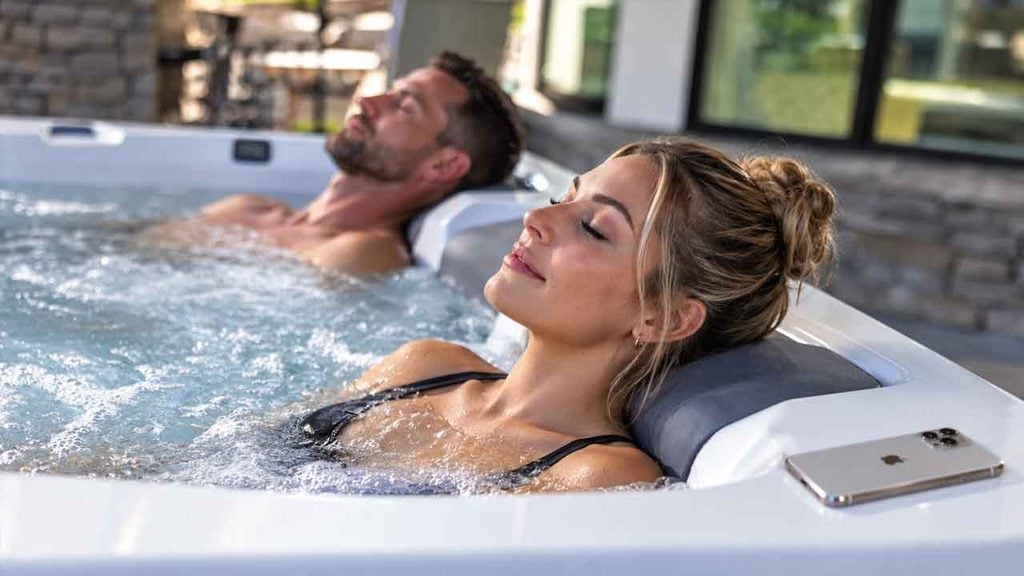
“The spa becomes a place where families put their phones down and reconnect,” he says. “Couples and families report that it becomes a distraction-free space to communicate.”
That combination of physical comfort, relaxation, and social connection helps explain why the hot tub continues to occupy such an important place in the evolving backyard wellness category.

Great Design Is About People, Not Products
When consumers shop for a hot tub, it can be easy to focus on the numbers: How many seats? How many jets? How powerful are the pumps?
But according to Vic Walker, Toro product marketing manager and former product design manager for Dimension One Spas, those specifications tell only part of the story.
Great spa design begins with a more fundamental question: How are people actually going to use it?
That philosophy extends from hydronomics — the relationship between water movement, pressure, jet placement and the human body — to the way people sit, move and interact within a spa.
It’s also why Walker cautions against assuming a higher jet count automatically means a better hydrotherapy experience. A smaller number of strategically positioned jets may ultimately accomplish more than a larger number added primarily to increase a product specification.
The same human-centered thinking applies to seating.
People move between seats, have different body types and therapeutic needs, and often want to interact with the people around them. A thoughtful layout considers those behaviors rather than simply finding room for the greatest possible number of seats and jets.
Personalization is also becoming a larger part of spa design. Bullfrog Spas, for example, uses its interchangeable JetPak Therapy System to allow owners to select and position different hydromassage experiences according to individual preferences.
Walker’s work on the Amore Bay product offers another example. Its layout incorporated captain’s chairs positioned opposite a family bench, allowing adults to enjoy dedicated hydrotherapy while remaining oriented toward children, family or friends.
The lesson is simple: features should serve the people using them, not the other way around.

The Backyard as a Place to Connect
Hot tubs may be wellness products, but they are also inherently social spaces. Increasingly, that sense of connection extends beyond the spa itself.
Ricks says homeowners are incorporating hot tubs into larger “wellness-focused backyards alongside saunas, cold plunges, fitness equipment and swim spas,” while surrounding them with shade, seating, fire pits and other features designed for gathering.
“The industry has even coined terms for it, such as the ‘backyard bathhouse’ or the ‘sparden,’” he adds.
Walker has seen the shift play out in his own backyard as well. Spaces that once saw little use are becoming places where people spend time together — gathering around water and fire pits, watching movies outdoors, talking or simply relaxing.
He also argues against viewing these installations strictly as luxury products, suggesting that immersion, exercise and outdoor gathering spaces can become meaningful parts of a family’s everyday routine.
“A well-designed product should cater to multiple needs, including solitary relaxation, social hosting, and recovery,” Walker says.
Five years after adding a swimming pool, Walker says his family’s relationship with their backyard has completely changed.
“There was grass there before. We never hung out as a family in the backyard to sit in the grass,” he says.
With additional improvements including umbrellas, furniture, multiple fire pits and an outdoor projector, their backyard has become a regular hangout spot for family and friends.
That may ultimately be the bigger story behind the backyard wellness trend. It isn’t simply about adding more amenities. It’s about creating a reason to go outside and stay there — turning the backyard into a place for both personal wellness and human connection.
Swim Spas Find Their Niche
Swim spas occupy a middle ground between traditional swimming pools and hot tubs. Their compact footprint and year-round usability appeal to homeowners looking for a convenient way to combine low-impact exercise and recreation with, in some models, the therapeutic benefits of dedicated hot tub seating.
For homeowners without the space or desire for a conventional swimming pool, they also offer another way to incorporate usable water into the backyard.
Ricks sees that same appeal carrying over to swim spas.
“People have always loved water. It’s elemental,” he says. “As humans, we intuitively understand its therapeutic power, especially when it’s hot, and increasingly when it’s cold too. Owning a little bit of therapeutic water right at home is a pretty natural draw. It’s convenient, it’s private, and it’s available whenever you need it.”
The intended use remains an important consideration. Homeowners primarily interested in exercise may place greater emphasis on the swim current and usable activity area, while families may prioritize versatility, seating, and recreation. In either case, the appeal lies in having a compact aquatic environment available at home throughout more of the year.

The Future Is Easy Ownership
As backyard wellness products become more sophisticated, the next big innovation may actually be simplicity.
Smart monitoring, automated water care and connected technology are increasingly aimed at removing one of the biggest barriers to long-term enjoyment: maintenance.
Ricks specifically points to one area where that simplicity matters.
“Water care is the other area that can detract from the hot tub experience,” he says. “If it feels confusing or goes wrong, it takes a bit of the joy out of ownership.”
Automated monitoring and dosing, supplemental oxidation technologies, mineral systems and improved filtration are increasingly designed to reduce the burden of routine water care. These technologies can simplify aspects of ownership, although they do not eliminate the need for proper sanitizer levels, balanced water, filtration and periodic testing.
Walker takes the idea even further. In his view, owners shouldn’t need to become water chemistry experts simply to enjoy their spas.
Future systems, he says, should translate complicated water-care information into simple guidance — essentially telling owners when everything is good, when something needs attention, and when it’s time to call a professional.
Ease of ownership isn’t only about what happens beneath the water.
As spas become part of increasingly sophisticated outdoor environments, homeowners also expect them to look like they belong there. Walker sees that expectation influencing future design, with more homeowners looking for ways to integrate spas naturally into the surrounding landscape.
Recessed installations, custom surrounds and other design solutions can soften the traditional boxy appearance of an above-ground spa while still preserving the access technicians need for service and maintenance.
Ultimately, the future of backyard wellness may be less about adding more features and more about removing barriers — making products easier to use and maintain, more personal and more naturally integrated into everyday life.
The most successful products won’t necessarily have the most jets or the flashiest technology. They’ll be the ones that best support how people actually live.
You must be logged in to post a comment Login