





Hot Tubs
Should You Add a Spa to your Pool? Pros and Cons


If you’re considering adding a spa to your swimming pool, you’re not alone. Many people are opting for this type of installation these days. But before you make any decisions, it’s important to weigh the pros and cons. In this article, we’ll take a look at some of the most important factors to consider when making your decision.
Pros of Adding a Spa
If you’re considering adding on a spa, there are several things you should take into account. Here are some pros of adding a spa that will help you make your decision:
- One pro is that spas can be very relaxing. Soaking in hot water can help to relieve muscle tension and pain. It can also be a great way to wind down after a long day.
- Another pro is that hot tubs and spas can be used for social gatherings. They provide a great space for people to relax and chat. You can even host parties or events around your spa.
- One of the best things about spas is that you can use them all year round. In the winter, they’re a great way to stay warm while you enjoy the outdoors. In the summer, they provide a refreshing way to cool down after a long day in the sun.
- Finally, spas and hot tubs can add value to your home. If you ever decide to sell your home, adding a spa on to your pool may make it more attractive to potential buyers.
Cons of Adding a Spa
Conversely, if you’re on the fence and are wondering if there are any drawbacks to adding a spa, here is what you should know:

- One con is the cost. Inground pools and spas can be very expensive, the price is going up and if you’re not careful, you can end up spending a lot of money on one.
- Another con is the maintenance. Inground spas require a lot of upkeep and if you’re not prepared to do this, you’ll quickly become frustrated with your purchase.
- Finally, inground spas can take up a lot of space and if you have a small yard, this may not be the best option for you.
What You Should Think About When Considering Adding On a Spa
Ultimately, one of the biggest considerations is cost. Spas are expensive, and pools are even more so. A jackhammer makes a poor eraser though, so if you are considering adding on a spa to your pool at so point, it’s often cheaper to add a spa at the same time. This is because the pool builder can do both installations at once, which saves on labor costs.
How much does a spa cost?
It really depends on the make and model of spa that you’re looking at. Inground spas are generally more expensive than hot tubs are. The price of a hot tub usually ranges from about $5,000 to $10,000. Usually, inground spas range anywhere from $10,000 to $20,000 or more.
If you’re looking for a high-end spa with all the bells and whistles, you can expect to pay closer to $15,000. But if you’re just looking for something to relax in after a long day, you can find models for as little as $10,000.
Other Cost Considerations
Of course, the cost of a spa isn’t just the upfront cost itself. You also have to factor in things like installation costs and ongoing maintenance costs. So it’s important to do your research before you make any decisions.
Another important consideration is installation time. Most hot tubs can be installed in a single day while an inground spa is going to definitely take longer. If you don’t relish the thought of having a crew come back to install one at a later date and disrupt your yard, the most opportune time to install a spa is during your pool construction.
Finally, there’s the question of maintenance. Spas require just as much maintenance as pools do if not more. While they are a great way to relax and unwind, they also come with a few costs. Let’s take a look at what is involved with maintaining a spa.
Spas require some chemicals to keep the water clean and safe for soaking. These can include chlorine, bromine, and PH balancers. Depending on the size of your pool and spa, you may need to purchase these chemicals in bulk. You will also need to regularly clean your filters to prevent dirt and debris from clogging them. Depending on the type of filter you have, you may need to replace them every few months.

Inground Spa vs Hot Tub – Which is Best?
For those pool owners wishing they had purchased a spa too, a hot tub becomes an appealing option. When it comes to choosing an inground spa or a hot tub, it can be difficult to decide which is the best choice to make. Both have their own unique benefits and drawbacks, so it really depends on your specific needs and wants. Let’s compare and contrast them for a moment so that you can make an informed decision about which one is right for you!
- In-ground spas are generally larger and more luxurious than hot tubs. They are also inground, so they can be a great addition to your backyard landscape. However, inground spas are also more expensive to install and maintain than hot tubs.
- Hot tubs are less expensive than inground spas and they are easier to install. Hot tubs are also portable, so you can take them with you if you move. However, hot tubs are not as large as inground spas and they don’t offer the same luxury features.
So, what’s the verdict? There’s no right or wrong answer, it all depends on your personal preferences and situation. Weigh the pros and cons carefully before making your decision. Either way, you’ll end up with a beautiful backyard retreat that you can enjoy for years to come.


Not long ago, a hot tub was considered the ultimate backyard luxury. Today, homeowners are building complete outdoor wellness environments centered around hot tubs, swim spas, saunas, cold plunges, fitness, outdoor living, recovery, and connection.
“Wellness has replaced luxury in the sense that people increasingly view these as investments in daily health rather than status symbols,” says Jake Ricks, Vice President of Marketing and Customer Experience with Bullfrog Spas.
For pool and spa professionals, that shift is changing the sales conversation. Rather than evaluating a hot tub or swim spa strictly as a standalone purchase, homeowners are increasingly considering how water, heat, exercise, landscaping, and gathering spaces can work together to create a backyard they will use more often.

Questions This Article Answers
- Why are hot tubs becoming part of larger backyard wellness projects rather than standalone purchases?
- What makes a hot tub or spa design genuinely effective for its users?
- How can a backyard wellness space encourage family connection and more frequent outdoor use?
- When does a swim spa make more sense than a conventional swimming pool or a standard hot tub?
- How can spa technology make ownership easier without eliminating water-care responsibilities?
The Backyard Is the New Wellness Center
Today’s homeowners aren’t simply adding a hot tub or swim spa to the backyard. They’re designing outdoor environments where architecture, landscaping, wellness, and gathering spaces work together.
Whether it’s an integrated spa beside the pool, a tucked-away sauna or a dedicated recovery zone complete with a cold plunge and fire feature, the focus has shifted from individual amenities toward creating a more cohesive outdoor lifestyle.
Ricks says the hot tub frequently becomes the centerpiece of those environments.
“High-end home projects now include dedicated wellness features, and residential installations are among the fastest-growing in the category,” Ricks says. “Interestingly, the hot tub tends to anchor these designs, becoming the foundation on which everything else is built.”
The appeal of hot tubs, saunas and swim spas as places for relaxation and stress relief is nothing new. Increasingly, however, those benefits are only part of the reason homeowners continue using them.

According to Ricks, one of the biggest benefits owners discover after purchasing a spa has little to do with specifications.
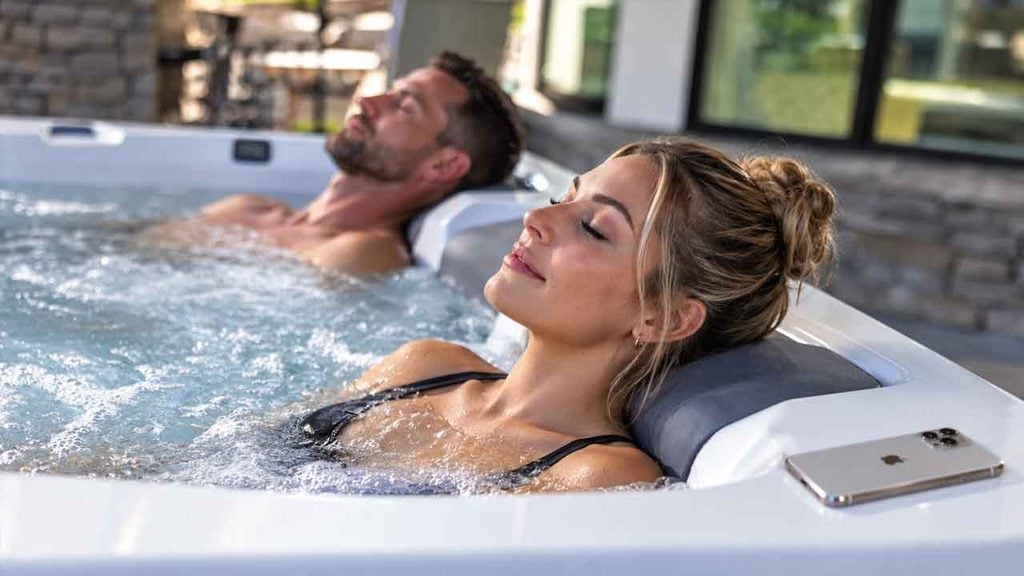
“The spa becomes a place where families put their phones down and reconnect,” he says. “Couples and families report that it becomes a distraction-free space to communicate.”
That combination of physical comfort, relaxation, and social connection helps explain why the hot tub continues to occupy such an important place in the evolving backyard wellness category.
Great Design Is About People, Not Products
When consumers shop for a hot tub, it can be easy to focus on the numbers: How many seats? How many jets? How powerful are the pumps?
But according to Vic Walker, Toro product marketing manager and former product design manager for Dimension One Spas, those specifications tell only part of the story.
Great spa design begins with a more fundamental question: How are people actually going to use it?
That philosophy extends from hydronomics — the relationship between water movement, pressure, jet placement and the human body — to the way people sit, move and interact within a spa.
It’s also why Walker cautions against assuming a higher jet count automatically means a better hydrotherapy experience. A smaller number of strategically positioned jets may ultimately accomplish more than a larger number added primarily to increase a product specification.
The same human-centered thinking applies to seating.
People move between seats, have different body types and therapeutic needs, and often want to interact with the people around them. A thoughtful layout considers those behaviors rather than simply finding room for the greatest possible number of seats and jets.
Personalization is also becoming a larger part of spa design. Bullfrog Spas, for example, uses its interchangeable JetPak Therapy System to allow owners to select and position different hydromassage experiences according to individual preferences.
Walker’s work on the Amore Bay product offers another example. Its layout incorporated captain’s chairs positioned opposite a family bench, allowing adults to enjoy dedicated hydrotherapy while remaining oriented toward children, family or friends.
The lesson is simple: features should serve the people using them, not the other way around.

The Backyard as a Place to Connect
Hot tubs may be wellness products, but they are also inherently social spaces. Increasingly, that sense of connection extends beyond the spa itself.
Ricks says homeowners are incorporating hot tubs into larger “wellness-focused backyards alongside saunas, cold plunges, fitness equipment and swim spas,” while surrounding them with shade, seating, fire pits and other features designed for gathering.
“The industry has even coined terms for it, such as the ‘backyard bathhouse’ or the ‘sparden,’” he adds.
Walker has seen the shift play out in his own backyard as well. Spaces that once saw little use are becoming places where people spend time together — gathering around water and fire pits, watching movies outdoors, talking or simply relaxing.
He also argues against viewing these installations strictly as luxury products, suggesting that immersion, exercise and outdoor gathering spaces can become meaningful parts of a family’s everyday routine.
“A well-designed product should cater to multiple needs, including solitary relaxation, social hosting, and recovery,” Walker says.
Five years after adding a swimming pool, Walker says his family’s relationship with their backyard has completely changed.
“There was grass there before. We never hung out as a family in the backyard to sit in the grass,” he says.
With additional improvements including umbrellas, furniture, multiple fire pits and an outdoor projector, their backyard has become a regular hangout spot for family and friends.
That may ultimately be the bigger story behind the backyard wellness trend. It isn’t simply about adding more amenities. It’s about creating a reason to go outside and stay there — turning the backyard into a place for both personal wellness and human connection.
Swim Spas Find Their Niche
Swim spas occupy a middle ground between traditional swimming pools and hot tubs. Their compact footprint and year-round usability appeal to homeowners looking for a convenient way to combine low-impact exercise and recreation with, in some models, the therapeutic benefits of dedicated hot tub seating.
For homeowners without the space or desire for a conventional swimming pool, they also offer another way to incorporate usable water into the backyard.
Ricks sees that same appeal carrying over to swim spas.
“People have always loved water. It’s elemental,” he says. “As humans, we intuitively understand its therapeutic power, especially when it’s hot, and increasingly when it’s cold too. Owning a little bit of therapeutic water right at home is a pretty natural draw. It’s convenient, it’s private, and it’s available whenever you need it.”
The intended use remains an important consideration. Homeowners primarily interested in exercise may place greater emphasis on the swim current and usable activity area, while families may prioritize versatility, seating, and recreation. In either case, the appeal lies in having a compact aquatic environment available at home throughout more of the year.

The Future Is Easy Ownership
As backyard wellness products become more sophisticated, the next big innovation may actually be simplicity.
Smart monitoring, automated water care and connected technology are increasingly aimed at removing one of the biggest barriers to long-term enjoyment: maintenance.
Ricks specifically points to one area where that simplicity matters.
“Water care is the other area that can detract from the hot tub experience,” he says. “If it feels confusing or goes wrong, it takes a bit of the joy out of ownership.”
Automated monitoring and dosing, supplemental oxidation technologies, mineral systems and improved filtration are increasingly designed to reduce the burden of routine water care. These technologies can simplify aspects of ownership, although they do not eliminate the need for proper sanitizer levels, balanced water, filtration and periodic testing.
Walker takes the idea even further. In his view, owners shouldn’t need to become water chemistry experts simply to enjoy their spas.
Future systems, he says, should translate complicated water-care information into simple guidance — essentially telling owners when everything is good, when something needs attention, and when it’s time to call a professional.
Ease of ownership isn’t only about what happens beneath the water.
As spas become part of increasingly sophisticated outdoor environments, homeowners also expect them to look like they belong there. Walker sees that expectation influencing future design, with more homeowners looking for ways to integrate spas naturally into the surrounding landscape.
Recessed installations, custom surrounds and other design solutions can soften the traditional boxy appearance of an above-ground spa while still preserving the access technicians need for service and maintenance.
Ultimately, the future of backyard wellness may be less about adding more features and more about removing barriers — making products easier to use and maintain, more personal and more naturally integrated into everyday life.
The most successful products won’t necessarily have the most jets or the flashiest technology. They’ll be the ones that best support how people actually live.

(Chesterfield, UK) – Superior Wellness, a global leader in hot tubs, swim spas, and wellness products, is delighted to announce the appointment of three new AquaSolus Sales Managers as the brand continues its rapid expansion across North America. The announcement comes at an exciting time, as AquaSolus debuted its brand-new Series 3, a striking evolution in design, innovation, and performance at the PSP/Deck Expo in Las Vegas last week.
Gareth Ward, Global Sales Director, Superior Wellness said, “We’re thrilled to welcome Dave, Ray, and Joe – our new AquaSolus Sales Managers to the Superior Wellness family. Each brings decades of industry knowledge, trusted dealer relationships, and a shared passion for wellness. Their arrival strengthens our commitment to providing outstanding support to our growing dealer network.”
The investment in three experienced Sales Managers in the United States reflects Superior Wellness’ continued commitment to growth in the North American market across their portfolio of brands, such as Platinum Spas, Chill Tubs, and of course, AquaSolus. This growth aligns with the company’s vision to become the world’s biggest hot tub brand.
Dave Henderson joins Superior Wellness as AquaSolus Sales Manager, bringing over three decades of experience in the pool and spa industry, including eight years as a Regional Manager in the spa business.
Before joining Superior Wellness, Dave served as Regional Manager at Bullfrog Spas, where he managed relationships with over 100 dealers. His impressive career also includes regional management roles with Jacuzzi Hot Tubs (JHT) and Bullfrog Spas (BFS). As Corporate Trainer at BFS, Dave designed both online and in-person training programs and served as a respected presenter at national dealer events. His deep product knowledge and dealer-focused approach make him a valuable asset to the AquaSolus team.
Dave Henderson, Regional Manager, AquaSolus said, “I am thrilled to be representing the AquaSolus line with a company that shares my passion for innovation and quality.”
Joining the team as AquaSolus Sales Manager, Ray Pritchett brings a wealth of experience, with 30 years in the hot tub industry. Ray’s diverse background includes 20 years as a Regional Manager, five years as the owner of a service and warranty company, and five years in retail spa sales.
Most recently, Ray held the position of Regional Manager at Bullfrog Spas, where he developed strong dealer relationships and a proven track record of driving growth. His hands-on experience across multiple facets of the spa business, from retail to after-sales service, provides a well-rounded perspective that will greatly benefit AquaSolus partners and customers alike.

RayPritchett, sales manager at AquaSolus said, “I am excited to join Superior Wellness and represent our new AquaSolus spas. From the moment I first saw AquaSolus I knew I wanted to sell them. I am honoured to represent a global company that makes affordable, luxurious, and reliable spas.”
Joe Sullivan joins Superior Wellness as AquaSolus Sales Manager, bringing extensive sales and business development experience within the spa and wellness industry. Throughout his career, Joe has held progressive sales, management, and leadership roles with several of the most recognized brands in the market, driving growth, strategic partnerships, and operational excellence.
His background includes leadership positions such as: Regional Sales Manager for Sundance Spas & Jacuzzi Spas; Director of Partner Development at Bullfrog Spas; and VP of Sales and Marketing at Jacuzzi Brands, Sunrise Spas & Dream Maker Spas. Most recently, he served as U.S. Head of Sales for PurSpas & Innova Spas, overseeing national sales performance and brand development.
Known for his collaborative leadership and strategic approach, Joe brings a passionate blend of retail, training, and executive experience to AquaSolus. His focus on dealer relationships, team motivation, and performance-driven results makes him a key addition to the growing North American sales team.
Joe Sullivan, sales manager at AquaSolus said, “I’m excited to share that I’ve joined Superior Wellness, helping launch our new premium brand, AquaSolus. This brand represents where wellness meets innovation—and reminds us that what we build on tomorrow starts with what we do today!”
The addition of these new team members marks another major milestone in Superior Wellness’ North American expansion, ensuring the premium AquaSolus brand continues to thrive in key markets.
Visit Superior Wellness and AquaSolus to discover the latest in spa and wellness innovation.
Contact
For further information, please contact Beth Hibbert via [email protected]
About Superior Wellness
Superior Wellness is a global leader in hot tubs, swim spas, and wellness products, headquartered in Chesterfield, UK. With a focus on innovation, quality, and customer care, the company partners with a network of global dealers to make wellness accessible to everyone.
About AquaSolus
AquaSolus is a premium spa brand by Superior Wellness, combining advanced hydrotherapy, cutting-edge design, and energy-efficient technology to deliver the ultimate wellness experience. Engineered for both performance and comfort, AquaSolus spas are built to the highest standards and designed to enhance every aspect of relaxation and recovery. With its growing presence across North America, AquaSolus continues to redefine modern wellness through innovation, craftsmanship, and a commitment to excellence.
Hot Tubs
Understanding Legionella in Spas
How pool pros can prevent Legionellosis outbreaks in hot tubs and spas


What Is It and How Does It Spread?
Simply put, Legionella pneumophila is a bacterium that can be transmitted to people from poorly maintained spas. Why spas specifically? The bacteria thrive in hot water temperatures of 77°F–108°F, conditions usually found in spas. They also thrive if the water is not circulating for a period of time.
Additionally, Legionella bacteria are spread by aerosolized water droplets or mist created by spa therapy jets. The mist contains bacteria that can get deep into the lungs and cause symptoms. You don’t even have to be in the spa—simply sitting next to it, downwind of the mist, can put you at risk.
Symptoms may include loss of appetite, body aches, headache, fatigue, fever, chills, diarrhea, abdominal pain, pneumonia, and nonproductive cough. Severity can vary depending on a person’s immune system. Those most likely to be impacted are:
▪ Elderly individuals
▪ Pregnant women
▪ Children
▪ People with conditions that lower their immune system (medical conditions, smokers, or chronic respiratory issues)

Legionellosis is not a common outbreak, but when it does occur, it is more serious than many other recreational water illnesses.
The number of cases in the United States has increased in recent years. This may be due to inexpensive or simplified testing options, greater awareness in the public and medical communities, and increased reporting. It is likely a combination of all these factors that has brought more attention to Legionellosis within the pool industry.
Where Is It Found?
Legionella is always present in natural and artificial freshwater environments worldwide. In a spa environment, it resides in biofilm inside the piping, jets, and other equipment. Biofilm is a community of microorganisms surrounded by the slime they secrete, attached to surfaces. Most of the time, Legionella shelters with amoebae inside spa plumbing.

Conditions That Increase The Spread of Legionella in Hot Tubs & Spas
Water temperature between 77°F–108°F encourages rapid bacterial growth in spa water. Stagnant water creates an ideal environment for biofilm to form in plumbing lines, jets, and return lines. Other contributing factors include:
▪ Decreased filtration and improper water chemistry
▪ Scaling, which increases rough surfaces for biofilm buildup
▪ Sediment, which bacteria can bind to if not filtered
▪ Lack of disinfection
▪ High pH, which reduces chlorine effectiveness
▪ High cyanuric acid levels, which limit chlorine performance
Case Study: Legionella Outbreak in Indian River County, FL
How Did the Health Department Learn About It?
In 2016, I worked on an outbreak involving two people infected with Legionella pneumophila in a 55+ community in Indian River County, Florida. Both developed pneumonia or related symptoms and sought care at hospitals or doctors’ offices.
A simple urine antigen test, inexpensive compared to other lab tests, confirmed the presence of Legionella. Once positive, results were reported to the local health department, as required under Florida’s Reportable Diseases/Conditions List.
What Does the Health Department Do With the Results?
The health department assigns a nurse or environmental health professional to contact the ill person and conduct a lengthy interview. In this case, both individuals reported using the same public spa within the same week.
What Happens Next?
The public spa was assigned to an environmental health pool inspector. Inspection revealed:
▪ No disinfectant level
▪ High pH level
▪ A malfunctioning ORP controller
▪ No daily log of chlorine and pH levels
The spa was immediately closed. Once violations were corrected, it was reinspected and allowed to reopen. A formal notice of violation warned the property owner that future noncompliance could result in fines or further action.

How Was the Pool Pro Involved?
The spa was serviced by a licensed pool service contractor. Negligence was suspected for failure to maintain proper disinfectant levels, pH, ORP functionality, and chemical logs.
Other Legal Issues
The family of one of the ill individuals sued both the property owner and pool service company. Public records requests to the Florida Department of Health revealed inspection records, but not protected medical records. Ultimately, both the property owner and the pool service company were found negligent and paid damages.
What Can Pool Pros Do to Control Legionella?
A pool pro can minimize the risk of outbreaks by treating every spa or hot tub as a potential Legionella environment. Key steps include:
▪ Follow all manufacturer recommendations and local health agency requirements
▪ Monitor disinfectant and pH levels daily (or more often) and log results
▪ Review logs for trends to identify needed maintenance
▪ Maintain disinfectant levels: Chlorine 3–10 ppm; Bromine 4–8 ppm
▪ Keep pH between 7.2–7.8
▪ Use ORP and automatic feed systems
▪ Keep cyanuric acid below 40 ppm
▪ Maintain proper water balance to prevent scale
▪ Run therapy jets daily for 15–30 minutes
▪ Routinely backwash sand and DE filters; replace cartridges regularly
▪ Ensure 24-hour water circulation through filters
▪ Enforce bather load limits and post spa rules
▪ Post warnings for immune-compromised and chronically ill individuals
▪ Close spas daily for superchlorination (10 ppm or 10x combined chlorine)
▪ Drain, scrub, and disinfect spa walls, tile, and holding tanks with fresh 1:10 sodium hypochlorite solution
▪ Replace spa water regularly (Spa Volume ÷ 3 ÷ Average Users per Day)
▪ Ensure indoor spas have isolated air handlers and dehumidifiers
Prevention of Legionellosis should be a top priority for pool pros due to the significant health, legal, and financial risks involved.

Prevention Ideas
Many public health codes do not define spas as “increased risk aquatic venues.” The CDC’s 2023 Model Aquatic Health Code defines these as venues serving very young children or therapy patients.
However, since Legionella poses serious risks in spas, they should be classified as high-risk venues. This would prompt requirements for secondary disinfection, such as ultraviolet (UV) systems.
UV disinfection has been shown to inactivate Legionella at a 4-log rate (4 mJ/cm²). A dual approach—UV combined with chlorine—can provide an effective barrier, similar to systems already required for splash pads. Implementing UV systems in spas could significantly reduce outbreaks and protect vulnerable users.
Read the Fall Issue of Pool Magazine

See more of our coverage in your search results
 Sponsored Advertisement
 iGarden K Series Review: What We Learned After Months in a Customer’s Pool
 Sacred Geometry: Where Architecture, Mathematics and Mosaics Collide
 Anatomy of a Botched Remodel: What Sank the Lincoln Memorial Reflecting Pool Restoration?
 Pool Equipment Theft Is Becoming a Bigger Problem Than Most Homeowners Realize
 Nidec Names New Pool/Spa Motors National Account Manager
 Hayward Bets Big on Decentralized Automation With OmniX
 What’s Hiding Beneath The Surface: Artificial Rock Features

 Today is National Pool Opening Day
 Aquaworx Now Offers Larger Pool Filter Packs
 Heritage Pool Supply Group announces expansion in Arizona with the acquisition of Modern Edge Stone & Tile, LLC
 Pool Tile Installation Starts With Using Proper Materials
 Industry Profiles: Andy Kaner – Aquatic Consultants, Inc.
 Massive Above-Ground Pool Recall Following 9 Fatal Incidents
 A New Technique to Eliminate Pool Cyanuric Acid

 Sponsored Advertisement

 Pool News4 weeks ago
Leslie’s Reportedly Prepares for Chapter 11 Bankruptcy as Possible Nasdaq Delisting Looms

 Pool News3 weeks ago
Leslie’s Files Chapter 11, Lenders Set to Take Control in Major Restructuring

 Pool Equipment3 weeks ago
AquaLink® EDGE™ and trackr iO Signal a New Direction for Pool Automation

 Features3 weeks ago
A New Era at POOLCORP: John Watwood Focuses on Customers and the Fundamentals
 Pool News9 hours ago
Sacred Geometry: Where Architecture, Mathematics and Mosaics Collide

 Press Releases4 weeks ago
FSPA and PHTA Reunite Through Historic Affiliation

 Pool News2 weeks ago
Shasta Pools Hires 30-Year Builder to Head Residential Construction

 Retail3 weeks ago
Nasdaq to Suspend Trading in Leslie’s Stock on October 6
You must be logged in to post a comment Login