





Products
Under The Hood: A Closer Look at the Betta SE Plus Robotic Pool Skimmer


Keeping your pool surface clean used to mean dragging out the net every morning—or spending hours watching leaves drift while you swore you’d get to it later. But in 2025, a new generation of tech-forward solutions is making pool maintenance smarter and hands-free. At the top of that list is the Betta SE Plus, a robotic pool skimmer powered entirely by solar energy. But does it really live up to the hype? We put this sleek little surface rover to the test to find out.
What Is the Betta SE Plus?
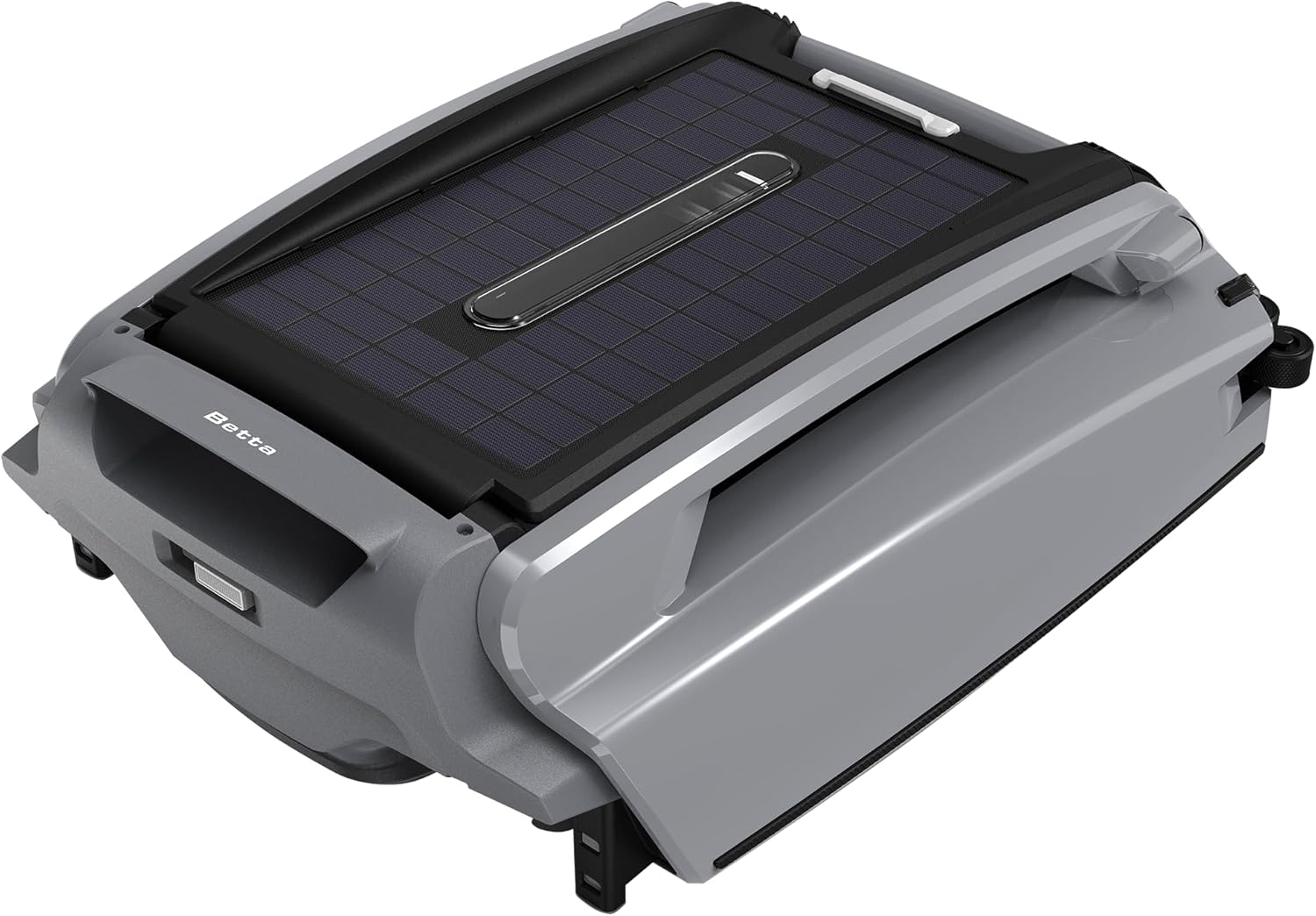
The Betta SE Plus is a solar skimmer designed to autonomously clean your pool’s surface using smart radar navigation, twin motors, and a large-capacity debris basket. Produced by Betta, a brand known for innovating pool tech with sustainability in mind, the SE Plus is the company’s latest flagship model.
Unlike most skimmers that connect to your pool’s pump or require manual handling, the Betta SE Plus is a fully cordless, robotic pool skimmer. It uses solar power exclusively—no charging ports, no batteries to swap out, and no app required. Just drop it in the pool, and it gets to work.

Key Features That Set It Apart
Solar-Powered Autonomy
Equipped with a high-efficiency solar panel, the Betta SE Plus uses the sun to power its twin motors. As long as there’s daylight, it’s cleaning. The unit stores a bit of backup energy in an internal battery, allowing limited nighttime operation or movement during cloudy weather.
Brushless Twin Motors
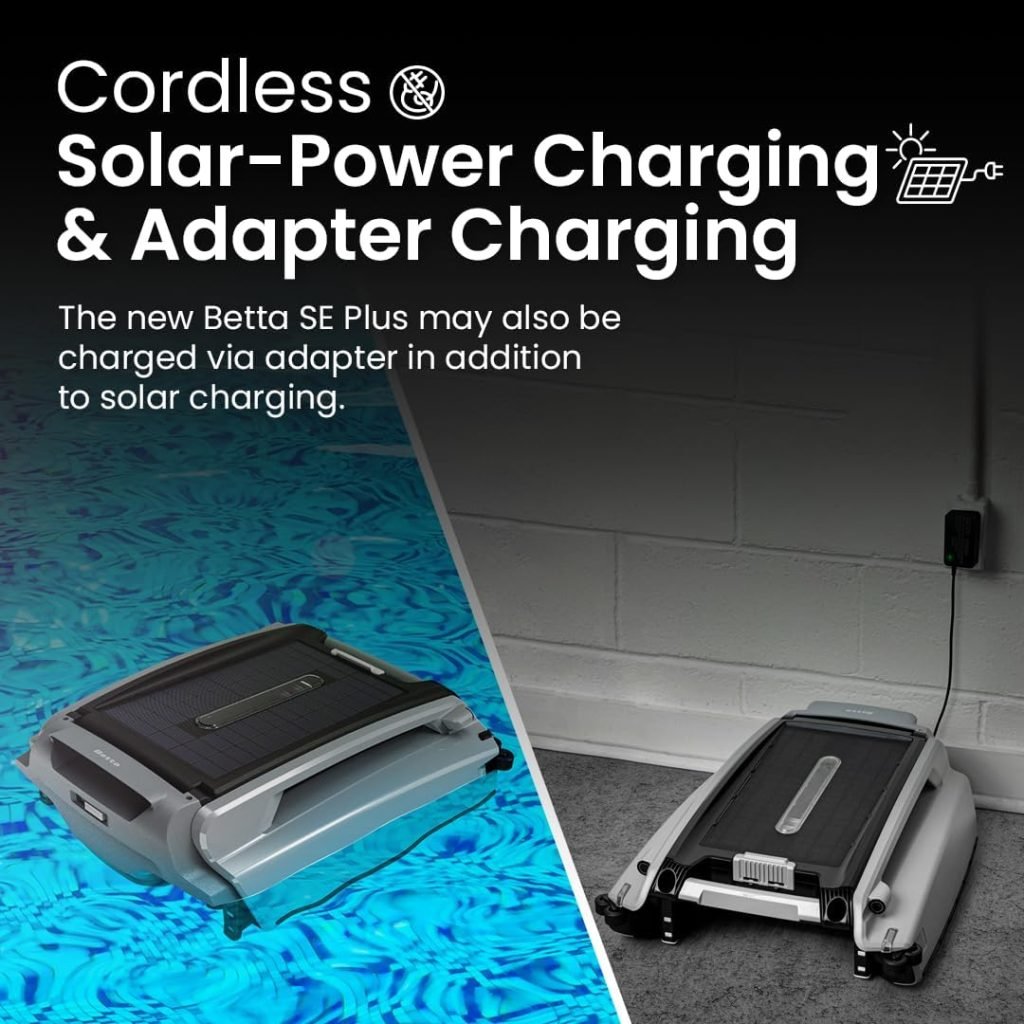
The SE Plus runs on two brushless, salt-chlorine-tolerant motors, increasing durability and reducing maintenance. These motors give the skimmer more thrust and directional control, improving coverage across large pools or pools with unusual shapes.

Large Fine-Mesh Debris Basket
This skimmer doesn’t just move around aimlessly—it collects. The fine-mesh filter basket is spacious enough to hold several days’ worth of leaves, bugs, pollen, and other floating gunk. A top-load design makes it easy to remove, empty, and rinse out.

Ultrasonic Radar Navigation
Instead of bumping around randomly, the Betta SE Plus uses ultrasonic sensors to detect obstacles and re-route itself, giving you more even coverage. That means fewer missed spots and less babysitting.

Night Mode + UV-Resistant Design
While solar power is the primary energy source, Betta includes a night mode that uses reserve battery power. The UV-resistant shell is built to last through scorching summers, and it can be left in the pool 24/7—even in heavy rain or sun.


Real-World Performance: How Does It Stack Up?
We tested the Betta SE Plus in a 20×40 inground pool shaded by trees—arguably a worst-case scenario for a solar-powered skimmer. And to its credit, it still got the job done.
During sunny days, it cruised efficiently across the surface, corralling leaves and even catching stray insects before they waterlogged and sank. Navigation was smooth and deliberate, with few collisions into the pool wall or steps. Debris collection was consistent, and the filter basket only needed emptying every 2-3 days, depending on conditions.
In low light or overcast skies, performance dipped. The skimmer still moved but at reduced speed and range. During a stormy week, it would sometimes stall overnight and need to “recharge” in the sun the following morning before resuming.
Pros
- 100% solar-powered (no cords, no charging required)
- Brushless twin motors offer great power and longevity
- Large fine-mesh basket works well for varied debris
- Smart radar navigation means efficient coverage
- Weather-resistant design—can be left in the pool
Cons
- Struggles in shaded pools or low-light conditions
- May not collect oils or extremely fine particles
- Occasional need to reset if it stalls in a corner
How It Compares to Other Robotic Skimmers
Here’s how the Betta SE Plus stacks up to a few other popular models:
Betta SE Plus Side-by-Side Comparison
| Feature | Betta SE Plus | Aiper Surfer S2 | WYBOT F1 |
|---|---|---|---|
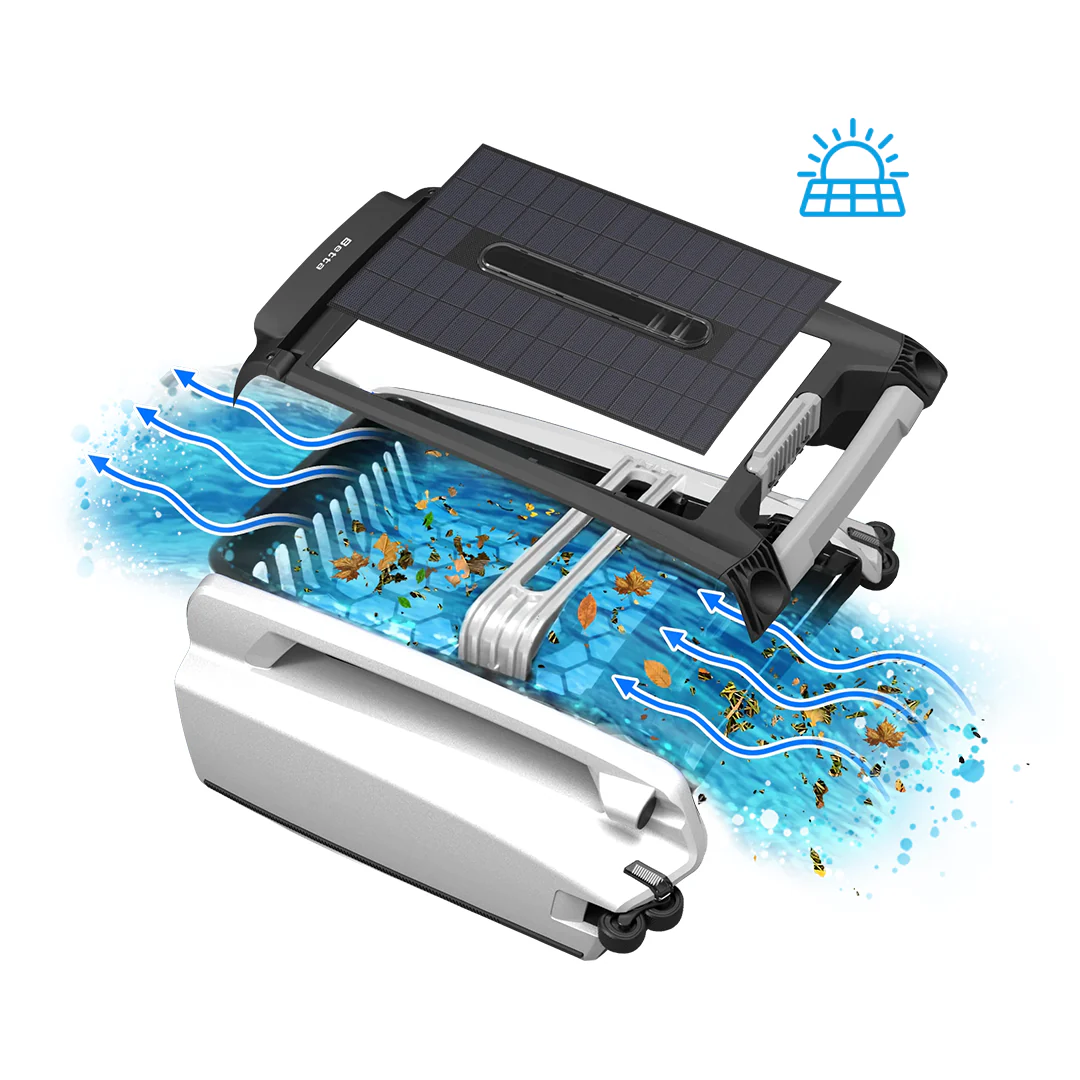 | 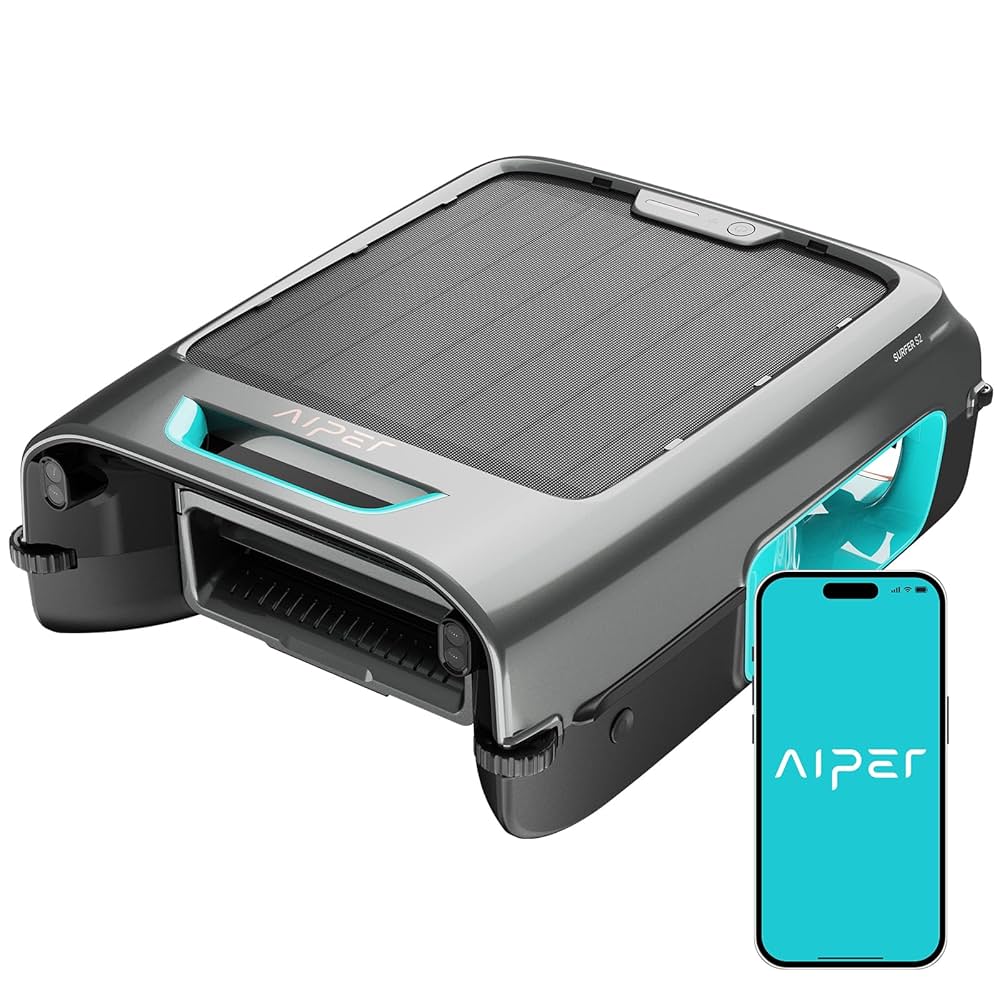 | 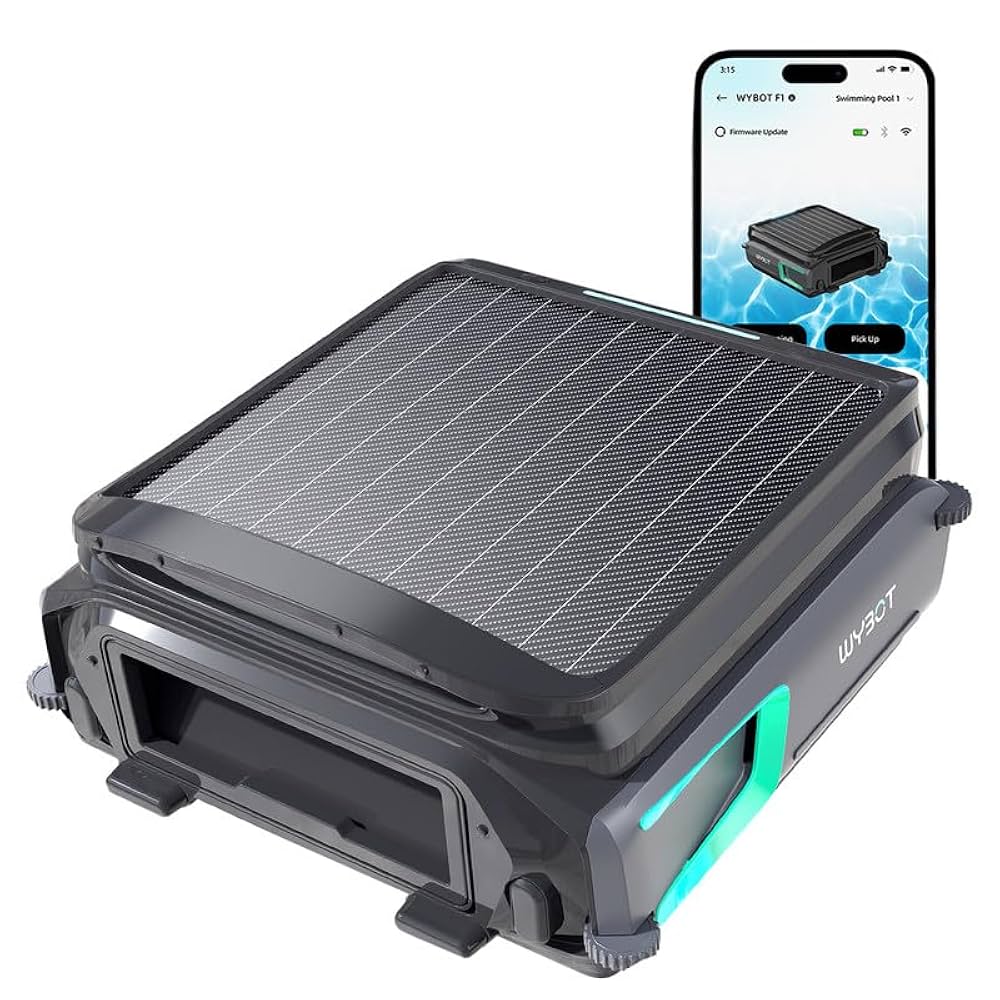 | |
| Power Source | Solar + AC adapter backup | Solar + AC adapter | Solar + internal battery |
| Navigation | Ultrasonic radar obstacle avoidance | Dual sensors + app steering | Bump-and-turn, app steering |
| Motors | Dual brushless, salt/chlorine safe | Not specified | Dual motor system |
| Debris Basket | Large, top-load, fine-mesh (200 µm) | Medium, rear-load (150 µm) | Large, bottom-load tray (~7 L) |
| Run Time | 30+ hours (solar + reserve) | Up to 35 hours | ~8–24 hours depending on mode |
| Durability | UV- and chemical-resistant shell | UV-resistant, moderate build | Good build, weak battery longevity |
| Smart Features | Auto-resume, ultrasonic radar | Remote control, app navigation | Manual/auto modes, LED indicators |
| Price Range | ~$369–$399 | ~$339–$349 | ~$329–$499 |
| Warranty | 1 year standard (2-year at select retailers) | 1 year | 6–12 months depending on vendor |
Who Should Buy the Betta SE Plus?
The Betta SE Plus is best suited for residential pool owners looking for:
- A solar-powered robotic pool skimmer with minimal maintenance
- A tool that runs quietly, efficiently, and doesn’t require tech know-how
- An eco-conscious solution that reduces energy usage and pump reliance
It may not be the best fit for pools that stay shaded all day or for pool owners seeking fine particle filtration, but for leaf-heavy, sun-drenched backyards? It’s a home run.
Price, Warranty & Where to Buy
The Betta SE Plus retails around $369–$399, depending on the vendor and promotions. It includes a 1-year manufacturer warranty, and support is generally praised as responsive.
No products found.
Final Verdict: Betta SE Plus, A Solid Entry In The Robotic Pool Skimmer Category
The Betta SE Plus combines clean design, solid performance, and a truly solar-powered operation into a device that delivers exactly what it promises. For anyone in the market for a robotic pool skimmer that runs without hassle, power cords, or apps, this solar skimmer hits the sweet spot of price, simplicity, and effectiveness.
Whether you’re a pool tech looking to recommend a hands-off skimmer to clients, or a homeowner tired of scooping leaves before every swim, the Betta SE Plus is worth a serious look.




RAVENNA, Italy — SICIS is highlighting its approach to custom swimming pool design through SICIS Pools, which brings together artistic mosaic, large-format decorative glass and integrated lighting for private residences and hospitality projects. The Ravenna-based company works with architects, designers and contractors from concept and material selection through installation and maintenance.
Glass Mosaic and VETRITE for Pool Floors and Walls
SICIS uses mosaic tesserae for custom patterns, artwork and color gradients. Its VETRITE decorative glass is available in more than 100 colors, with slabs up to 120 by 280 centimeters (approximately 47 by 110 inches) for pool floors and walls. The larger panels let designers carry a pattern across a broad surface, while mosaic can follow more intricate shapes and details. The company also offers AISI 316 stainless-steel mosaics and its SICISGrip slip-resistant finish.
The two project images supplied by SICIS show how differently the glass can read underwater. At Hotel La Scalinatella, the Galaxy design gives the pool floor a vivid blue and turquoise pattern. A private villa pool uses the Petroleum design, with smoky gray, blue and bronze tones that pick up the warmer colors around the pool.
Integrated Backlighting
SICIS’s patented Neptune® system uses extra-low-voltage LED panels to backlight decorative surfaces. The lighting can change the appearance of the pool after dark by drawing out colors and details in the glass. SICIS says the modules can be inspected and replaced without disturbing the waterproofing or replacing the cladding.
From Private Villas to Hospitality Projects
At .Here Maldives in Baa Atoll, SICIS supplied more than 4,500 square meters of mosaic across 10 pools designed by Muzalab. Gradual color transitions help connect the pools to the surrounding landscape. The Presidential Villa uses the company’s Corallo design, while the ocean-facing sky pools at the Somewhere Island residences extend 45 to 47 meters and incorporate mosaic, graduated color and Pixel décor.
Other hospitality installations include Moon Palace The Grand in Punta Cana, for which SICIS supplied 23,048 square meters of mosaic, and Moon Palace Sunrise in Cancún, which features another 10,600 square meters. In Dubai, SICIS supplied a Pixel Mosaic design for Burj Al Arab and a custom mosaic composition for Four Seasons Resort Dubai at Jumeirah Beach.
About SICIS
Founded in Ravenna, Italy, SICIS specializes in artistic mosaic, micromosaic and decorative surfaces for residential, hospitality and commercial projects. The company’s work spans architecture, interiors, furnishings, textiles and jewelry.
For more information and project examples, visit SICIS.


Equipment Supplies
iGarden K Series Review: What We Learned After Months in a Customer’s Pool


Robotic pool cleaners can look impressive under controlled conditions. The more meaningful test isn’t how a cleaner performs in a demonstration environment, but how it handles real-world conditions in an actual swimming pool over time.
Leaves, dirt, pet hair, changing weather, irregular pool geometry and everyday use can expose things that simply don’t show up during a short product demonstration.
That was the idea behind Pool Magazine’s recent evaluation of the iGarden K Series robotic pool cleaner.
Rather than conduct a short-term test, we placed the K Series with pool professional Kelli Clancy, owner of Legacy Pool and Spa in Sacramento, who installed the unit in one of her customer’s pools. The homeowner used the cleaner over an extended period, while Clancy monitored its performance and gathered feedback about what worked well and where the cleaner had limitations.
The result was a practical assessment of a cordless robotic cleaner that Clancy believes could make a compelling option for homeowners buying their first robot.
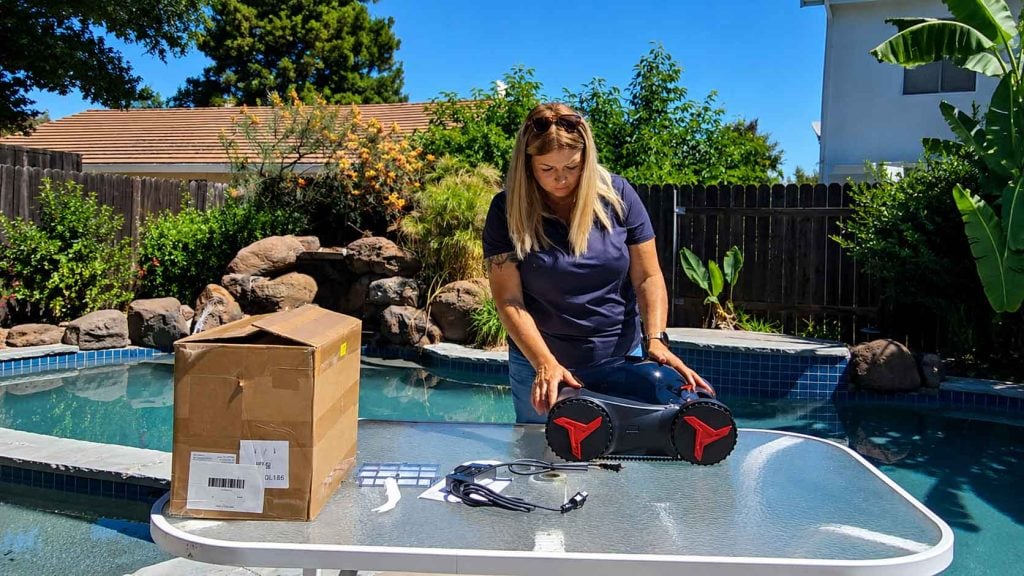
A Real Backyard Instead of a Test Tank
Clancy deliberately selected a pool that would give the K Series plenty to contend with.
“I chose this particular pool for a variety of reasons,” Clancy explained. “One, I knew the customer would give me honest feedback. I knew she would try and get everything she wanted out of the cleaner and give an honest review.”
The surrounding landscape also created a good mixture of debris.
“They had small leaves, big leaves, pine trees,” Clancy said. “So it was a variety of debris I wanted to be able to know if it could pick up.”
As luck would have it, an unrelated issue had also temporarily taken the pool’s circulation system offline, leaving the water somewhat dirtier than usual when the K Series arrived. That provided another opportunity to see how the cleaner handled real debris rather than a carefully prepared demonstration.
The pool itself presented an additional challenge. It was an older freeform gunite pool with curves, varying radiuses and features that would test the cleaner’s ability to navigate something considerably more complicated than a rectangular test pool.
For Clancy, that distinction matters when evaluating robotic cleaners.
“It’s not as authentic as putting it into somebody’s pool in an everyday yard where you have, you know, squirrels, and dogs, and wind, and rain, and all these varieties of things going on,” she said of controlled product demonstrations.
Strong First Impressions
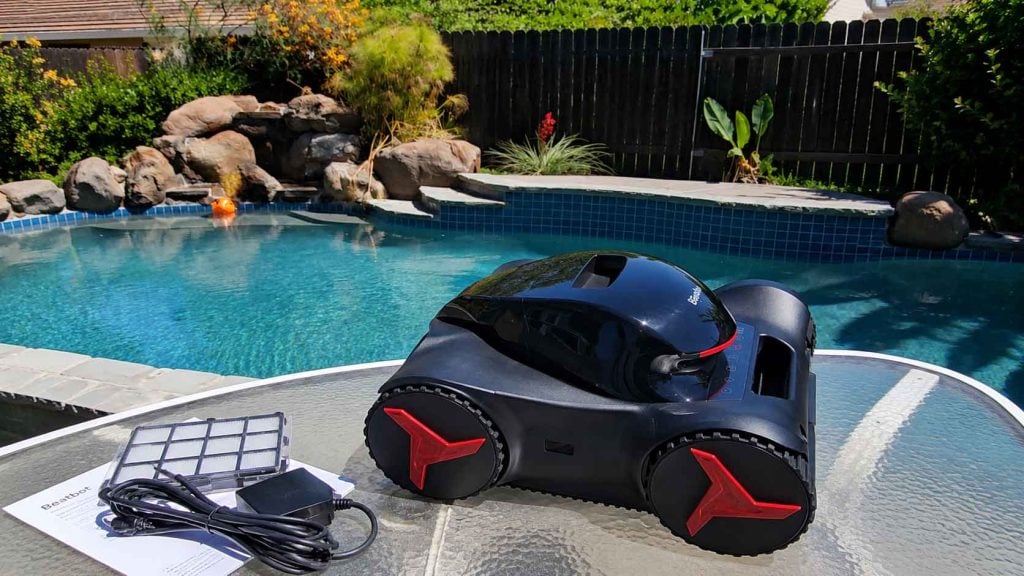
Out of the box, the K Series made a favorable impression.
“I thought it had a very sleek look,” Clancy said. “It has a great look to it, you know, very modern. It wasn’t too bulky, which I did like about it.”
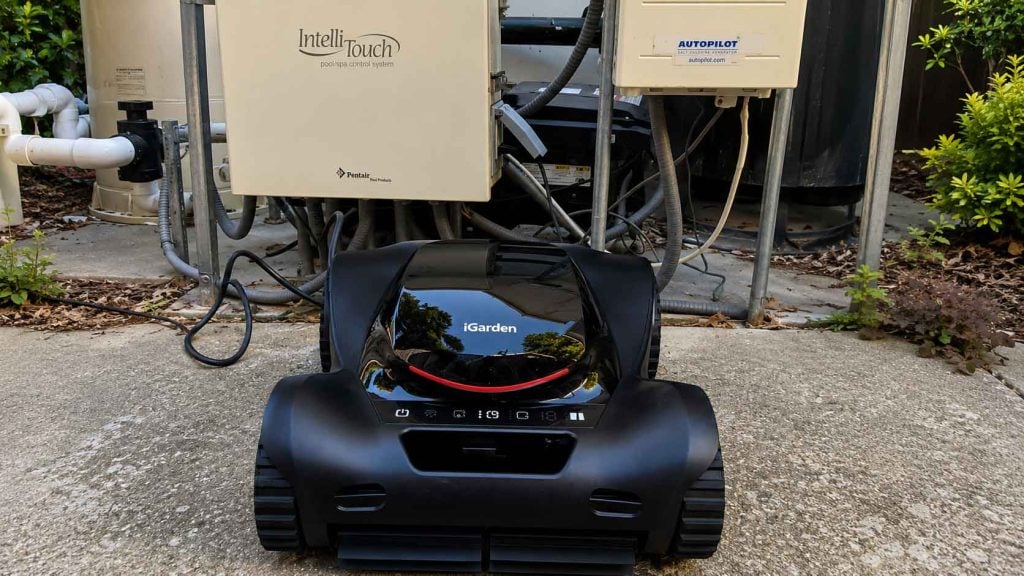
More important than aesthetics was the filtration system. The cleaner includes a fine-mesh filter that fits onto the debris canister, allowing it to capture smaller material in addition to larger debris.
“I really liked that it came with that so it can catch that fine debris such as dog hair or dirt,” Clancy said.
The cordless design was another immediate positive for the homeowner. She had previously owned another robotic cleaner that required placement on a charging base. The K Series offered a simpler arrangement.
“She liked on this one you could just plug it anywhere,” Clancy said. “You didn’t have to put it on a base, and it charged within three hours. She really liked that aspect of it.”
For a homeowner who wants a cleaner without adding another permanent charging station around the pool area, that simplicity can be an attractive feature.
Cleaning the Floor, Walls and Waterline
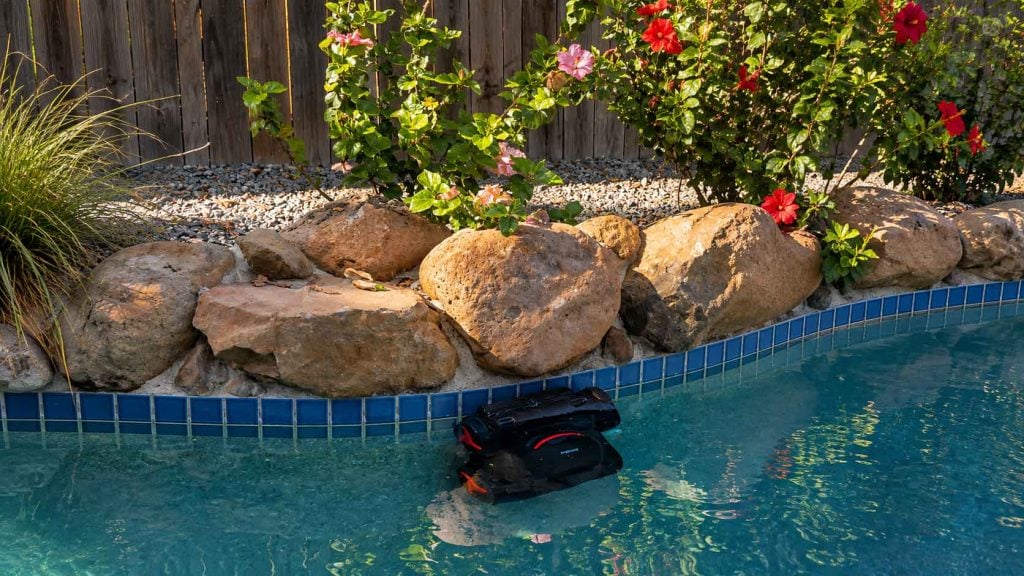
The K Series provides operating modes for floor cleaning as well as floor-and-wall cleaning. Once operating in the latter mode, Clancy found that the robot was capable of climbing the pool walls all the way to the waterline.
“It did go up the walls and did a good job at cleaning them,” she said. “So I really liked that about it.”
That capability stood out to the homeowner because previous cleaners she had owned did not provide the same wall-cleaning performance.
“That was a feature she really enjoyed,” Clancy said.
The robot also surprised Clancy by making its way onto the pool’s tanning ledge.
“It went up onto the tanning ledge. And that was surprising to me,” she said.
What impressed her most, however, was how quickly the K Series could make a noticeable difference.
“Me personally, watching it, I thought the cleaner did really well. I found that it cleaned the pool fairly quickly, which was really nice,” Clancy said. “So then if you have a party, you can just toss that in there and know within an hour that pool’s gonna be ready to go.”
Its ability to reach the waterline added another layer of cleaning.
“It climbs all the way up to clean the tile line, so that was really nice, too, if you haven’t brushed your tile in a while and have some leaves along there this will do a great job with that,” she added.
Handling Real Backyard Debris
Ultimately, a pool cleaner needs to pick things up, and Clancy came away impressed with the K Series’ ability to collect larger debris.
She specifically pointed to the tracks and intake design at the front of the cleaner.
“I think they got right with the tracks on the front where it’s collecting the debris,” Clancy said. “Those were very grippy, and when I watch it go over a pile of leaves, it was able to pull it in easily.”
Combined with the fine-mesh filtration, that gave the cleaner the ability to contend with the mixture commonly found in residential pools, including dirt, dog hair, leaves and pine needles.
Clancy sees that versatility as increasingly important as backyard landscaping becomes more elaborate and homeowners expect robotic cleaners to handle more than one specific type of debris.
Where Pool Geometry Matters
No robotic cleaner is necessarily going to perform identically in every swimming pool, and the K Series was no exception.
The test pool presented a particularly challenging combination of freeform curves and relatively narrow steps. The K Series has a fairly wide wheelbase, and Clancy observed that it could climb some steps but had difficulty stabilizing on others.
Importantly, she believed some of that behavior was specific to the dimensions of this particular pool.
“This particular issue may not be an issue in other pools, depending on the width of the steps,” Clancy explained. The steps in the test pool were approximately 10 inches wide, and she felt even slightly wider steps could have made it considerably easier for the robot to stabilize.
The irregular curves of the older freeform pool also occasionally presented navigation challenges. Based on what she observed, Clancy believes the K Series is likely to perform at its best in more geometrically shaped pools.
That doesn’t negate its performance in the test pool. The cleaner still climbed walls, reached the tile line, accessed the tanning ledge and collected a wide range of debris. It does, however, underscore something consumers should consider with any robotic cleaner: pool shape and feature dimensions can influence performance.
An Area With Room for Improvement
The primary area Clancy would like to see improved is app connectivity when the cleaner is submerged.
“The app needs a little improvement,” she said, noting that communication with the unit became less reliable once it was underwater.
For routine operation, however, Clancy found the cleaner itself straightforward to set up and use. When asked what might distinguish the K Series for someone comparing similarly priced robotic cleaners, she immediately pointed to that simplicity.
“Easy to program,” Clancy said. “It was pretty easy to program. I think that thing took maybe five minutes tops to program completely.”
The homeowner also appreciated a decidedly low-tech feature: the retrieval hook.
“That was one thing the homeowner did love was the hook that came with the cleaner actually worked,” Clancy said. Compared with another robot the homeowner had used, retrieving the K Series from the pool was considerably easier.
It may seem like a small consideration, but usability extends beyond how well a robot cleans. Charging it, programming it, removing it from the water and emptying the debris can determine whether a homeowner actually enjoys owning the product.

A Strong Entry Point Into Robotic Cleaning
With robotic cleaners now available across a wide range of prices and feature sets, one of the biggest questions is where a particular product fits.
For Clancy, the K Series occupies an appealing position for consumers who want to move into robotic cleaning without immediately jumping to the highest-priced equipment on the market.
“I would say it’s gonna be that middle ground customer, someone who’s looking for something that’s not the cheapest but not the most expensive,” she said. “Maybe more of your entry level robotic owner.”
Ease of use strengthens that argument.
“Overall, it seemed very easy to use for anybody, even somebody who doesn’t have ever used a robot,” Clancy said.
That may ultimately be one of the K Series’ strongest selling points. Robotic cleaners have become increasingly sophisticated, but sophistication isn’t necessarily what every homeowner wants. For someone purchasing their first cordless robotic cleaner, being able to charge it, program it quickly, drop it into the pool and retrieve a canister full of debris without a steep learning curve has considerable value.
Clancy’s final assessment carries additional weight because she doesn’t automatically endorse every cleaner she encounters.
“I could see this being a cleaner that I would recommend to people,” she said. “And I don’t recommend just any cleaner. I want something that actually works because, you know, it’s not a small price tag to get a robotic.”
After months in an actual customer’s backyard, the iGarden K Series showed itself to be an approachable cordless robotic cleaner with good debris pickup, wall and waterline cleaning, straightforward programming, convenient charging and thoughtful everyday usability.
There are areas where future generations could improve, particularly app connectivity and navigation around certain freeform curves or narrow features. Those considerations are worth understanding when matching any cleaner to a particular pool.
For homeowners looking to make the jump from traditional pool cleaning equipment to their first robotic cleaner, however, the K Series offers many of the capabilities that make robots attractive in the first place without making the experience unnecessarily complicated.
Should You Buy the iGarden K Series?
Yes.
The iGarden K Series makes the most sense for someone who wants to get into robotic pool cleaning without paying a premium for features they may not need. It’s a practical entry point into the category and, based on our real-world testing, capable enough to justify the investment.
That doesn’t mean it’s the perfect cleaner for every pool. More complex pool shapes and features deserve some consideration, and buyers expecting flawless app control may want to temper their expectations. But those shortcomings weren’t significant enough to change our overall opinion of the product.
What matters is whether the K Series delivers enough cleaning capability, convenience and usability to make owning one worthwhile. We think it does.
If you’ve been considering making the jump to a cordless robotic cleaner and want a capable unit without immediately moving into the upper end of the category, the iGarden K Series earns our recommendation.
And for an entry-level robotic cleaner, getting those fundamentals right matters most.
Ready to take a deeper dive?
Listen to our entire interview with Kelli Clancy about the iGarden K Series robot on the Pool Magazine podcast.

There is a point in luxury pool design where the materials stop functioning merely as finishes and begin defining the character of the space.
For Frank Vitori, co-founder of AquaBlu Mosaics and designer of the new Sand Pearl Series, the opportunity was to rethink some of the patterns currently influencing pool and architectural design without relying on the contrasting colors traditionally used to create them.
When Pool Magazine spoke with Vitori about the collection, he explained that the idea behind Sand Pearl began with a deceptively simple question: What if the pattern could be created by light instead of color?

“The concept behind Sand Pearl was to take patterns we’re seeing throughout contemporary design—checkerboards, stripes and offset stripes—and reinterpret them through finish and light,” Vitori explained. “Instead of using contrasting colors to define the pattern, we’re using the same color in matte and iridescent glass. As the light changes, the pattern reveals itself.”
That distinction is central to understanding Sand Pearl, the latest AquaBlu Signature Collection from AquaBlu Mosaics.
Rather than simply assembling existing tile into a new assortment, AquaBlu developed Sand Pearl as an original, coordinated design collection. Each colorway brings together monochromatic glass, complementary finishes, contemporary patterns, coordinating field tile and curated grout selections to create a complete material system for pools and architectural spaces.
It is a concept rooted in what Vitori describes as a quieter approach to luxury.
“Luxury doesn’t always need to announce itself,” Vitori said. “Sometimes it’s the detail you notice as you move through a space—the way a surface changes in the light or the way water completely transforms the material.”

Reinventing Pattern Through Light
Pattern is hardly new to tile.
Checkerboards, stripes and running patterns have appeared in architecture and interior design for generations. What has changed is how designers are using them.
As contemporary tile trends move toward more intentional patterns and sophisticated material combinations, Sand Pearl approaches those familiar geometries from a different direction.
The collection does not need a dark tile beside a light tile to create a checkerboard. It does not require two opposing colors to make a stripe visible.
Instead, matte and iridescent versions of the same color work together to create the pattern.
From certain angles, the distinction can appear subtle. Then sunlight moves across the installation, the viewing angle changes or water begins flowing over the surface, and individual sections of iridescent glass catch the light differently from their matte counterparts.
Suddenly, the pattern becomes more pronounced.
The effect allows a surface to remain monochromatic while still having considerable visual depth and movement. Rather than placing the emphasis on color contrast, Sand Pearl uses reflection itself as a design element.
That becomes particularly compelling in a swimming pool, where very little about the visual environment remains static.
Sunlight changes position throughout the day. Ripples continuously alter reflections. Water depth influences perceived color. Landscaping, coping, interior finishes and surrounding architecture all contribute additional tones and reflected light.
Sand Pearl was designed to interact with those variables rather than compete with them.
The collection draws its palette from sun-bleached beaches, shallow coastal water, sea glass and other subdued coastal tones, but the coastal influence provides the backdrop rather than defining the entire concept.
The real story is what happens when pattern, finish, and changing light intersect.
Contemporary Patterns, Reinterpreted
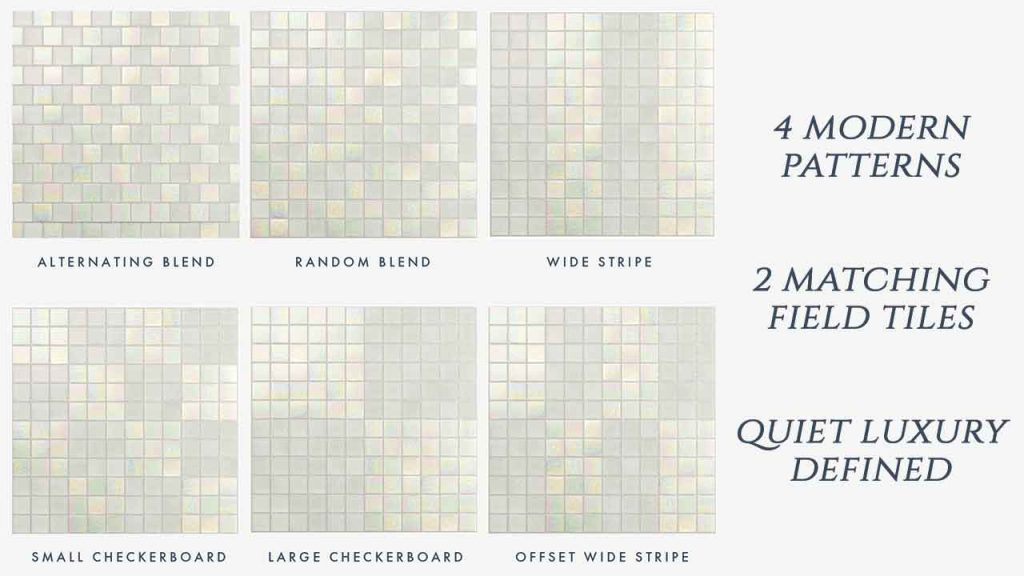
Sand Pearl takes several of today’s most recognizable tile patterns and reconstructs them using matte and iridescent finishes.
The checkerboard pattern provides perhaps the clearest demonstration of the concept. Instead of alternating contrasting colors, the pattern alternates finishes within the same color family. The checkerboard may appear subdued under one lighting condition and considerably more pronounced under another.
The striped pattern applies the same principle in a more linear composition, creating alternating bands of matte and reflective glass. It can introduce direction and rhythm across a waterline, raised spa, feature wall or other architectural surface without introducing another color into the palette.
The offset stripe pattern adds another level of movement by shifting that linear geometry, creating a more dynamic arrangement while retaining the collection’s monochromatic character.
These patterns are complemented by two coordinating field-tile formats: stacked and staggered.
That addition gives designers considerably more flexibility when specifying the collection across an entire project.
A checkerboard, stripe or offset stripe might be used to establish a focal point on a raised spa, water feature or architectural wall, while the coordinating stacked or staggered field tile can finish the surrounding space in the same color and material language.
Alternatively, the field tile can be carried across a larger surface where a quieter treatment is desired.
The result is not simply a selection of individual mosaics. It is a coordinated collection that allows designers to change pattern and visual intensity while maintaining continuity of color and material.

Six Coastal-Inspired Colorways
Sand Pearl is offered in six primary colorways—Marelle, Caspia, Brisa, Calista, Marea and Aurelia—ranging from luminous whites and soft sand tones to aqua, sea-glass greens and deeper coastal blues and grays.
Caspia provides one of the collection’s lightest treatments with a pearlescent white appearance suited to bright contemporary environments. Brisa moves toward tropical aqua, while Marea introduces softer sea-glass tones. Marelle and Calista bring cooler, deeper shades into the collection, while Aurelia introduces the warmth of sand and champagne.
The restrained palette is intentional.
Because the visual interest is being created through the relationship between matte and iridescent finishes, the colors themselves do not need to compete for attention. That allows designers to select a palette based on the architecture and surrounding environment while allowing changing light to bring the pattern forward.
Grout Becomes Part of the Design
AquaBlu has taken that coordination one step further by pairing Sand Pearl designs with curated Starlike PRO grout selections.
That is an important detail because grout can substantially change the appearance of a mosaic installation. With small-format glass tile in particular, grout becomes part of the visible composition rather than simply the material filling the joints.
For Sand Pearl, the grout selection is treated as another component of the design.
Each recommended grout is chosen to complement the intended color and pattern combination, helping maintain the collection’s monochromatic character rather than introducing an unintended grid or competing visual element.
The curated Starlike PRO grout options give designers and installers a defined starting point for achieving the intended finished appearance.
That level of coordination reinforces Sand Pearl’s position as an AquaBlu Signature Collection. The concept extends beyond selecting an attractive glass tile. Color, finish, pattern, field tile and grout are considered together as parts of the same visual system.
Designed for Water, Architecture and Quiet Luxury
The interaction between matte and iridescent glass becomes especially interesting when Sand Pearl enters an aquatic environment.
Water is constantly changing what we see.
Glass naturally reflects and refracts light differently than many conventional pool finishes. An iridescent surface introduces another variable because its appearance changes depending on viewing angle and illumination.
Combine those characteristics with moving water and a monochromatic pattern can behave differently from one moment to the next.
In an infinity-edge pool, the effect can help visually connect the tile with an ocean, lake or distant horizon. On raised spas, water walls, spillways and perimeter-overflow details, moving water continuously changes which portions of the pattern catch and return light.
Even a traditional waterline can become more dimensional because the pattern is not dependent on a fixed contrast between two colors.
The installation effectively changes throughout the day.
That ability gives pool builders and designers another way to create visual interest without adding more colors, decorative elements or competing materials to the project.
More Than a Waterline Tile
Although glass mosaic remains closely associated with swimming pool waterlines, Sand Pearl was developed for considerably broader use.
The collection can extend across pools and spas as well as kitchens, backsplashes and architectural feature walls, allowing designers to carry the same material language between indoor and outdoor environments.
That continuity has become increasingly relevant as homeowners treat outdoor living areas as extensions of the home.
Large sliding and folding glass doors have blurred the traditional boundary between interior and exterior spaces. Outdoor kitchens increasingly mirror their indoor counterparts. Pool houses, cabanas, fire features and covered entertaining areas are frequently designed as elements of a single architectural composition.
Sand Pearl’s coordinating patterns and field tiles make it possible to continue a color throughout those spaces while adjusting the intensity of the pattern according to the application.
A feature wall might employ the checkerboard or offset stripe as a stronger architectural statement. A surrounding surface could transition into stacked or staggered field tile. A raised spa or water feature could then reintroduce the pattern outside.
The material remains connected even as its role changes.
For pool builders and designers, glass mosaics also offer opportunities far beyond a six-inch waterline. Raised bond beams, vanishing edges, spillways, fountains, spas and other water features can become integral parts of the architecture when tile is allowed to play a larger role in the overall design.
Sand Pearl’s monochromatic approach makes that possible without requiring the tile to dominate the project.
Built for Aquatic Environments
Visual design is only part of the equation when specifying tile for a swimming pool.
Materials used in aquatic environments must tolerate constant water exposure, pool chemicals, temperature changes and, depending on the application, continuous submersion.
Sand Pearl is crafted in the United States and TCNA-tested for performance, positioning the collection for demanding aquatic installations as well as interior architectural applications.
Proper installation remains critical with any glass mosaic. Substrate preparation, setting materials, grout selection, expansion considerations and adherence to manufacturer installation requirements can ultimately matter just as much as the tile itself.
For homeowners considering glass, working with a qualified pool professional or experienced tile installer remains particularly important.

A Different Expression of Quiet Luxury
Perhaps the most interesting aspect of Sand Pearl is how naturally the collection fits within the broader movement toward quiet luxury in residential design.
Luxury does not necessarily have to announce itself.
Some of today’s most sophisticated swimming pools rely on relatively simple geometry, carefully selected materials and exceptional craftsmanship rather than an abundance of decorative features. Their visual interest comes from proportion, texture and the way materials respond to the surrounding environment.
Sand Pearl applies that philosophy directly to mosaic tile.
There is shimmer, but it is controlled.
There is pattern, but it does not depend on dramatic color contrast.
There is movement, but much of it comes from the environment itself.
A checkerboard can almost disappear before sunlight reveals it again. An iridescent stripe becomes more pronounced as the viewer changes position. Water moving across a raised spa can alter the appearance of an offset pattern from one second to the next.
What appears restrained on a sample board can become surprisingly dynamic once installed in the environment for which it was designed.
That is ultimately what distinguishes the collection.
Designed by Frank Vitori, co-founder of AquaBlu Mosaics, the AquaBlu Signature Collection reinterprets contemporary tile patterns by allowing finish, reflection, and changing light to create the contrast.
Read the Fall Issue of Pool Magazine

See more of our coverage in your search results
 Sponsored Advertisement
 SICIS Highlights Glass, Mosaic and Integrated Lighting for Luxury Pools
 Part-Time Pool Leak Detection & Equipment Repair Tech – Florida Panhandle
 Jerusalem’s Balian Studio Supplies Hand-Decorated Porcelain Pool Tiles to U.S. Projects
 Skimmer Again Ranks Among North America’s Fastest-Growing Tech Companies
 Aiper Advances the Intelligent Pool Cleaning with Evolved AI and Solar Automation at PSP Expo 2026
 Pool Magazine Announces Strategic Partnership with MyEstimator.pro to Provide Real-Time Pool Pricing
 Solenis to Unveil Revolutionary Smart Pool Technology at PSP Expo
 CPSC Announces Spa Drain Cover Recall Over Entrapment and Drowning Hazard
 Poolwerx Announces New Opening in Riverside, California
- Aiper Advances the Intelligent Pool Cleaning with Evolved AI and Solar Automation at PSP Expo 2026
 Pool Pumps and Motors are Getting Smarter and More Energy Efficient
 Come to Buffalo And See First Hand What An Aquatic Desert Looks Like
 The Acrylic Pool Authority: How Jason Jovaag and HammerHead Aquatics Became a Go-To Name
 Hayward Holdings Names New Chief Accounting Officer
 Sponsored Advertisement
Pool Magazine Podcast
 What’s Your Pool Company Really Worth? – Pool Magazine Podcast With Weld Valuations
 iGarden K Series Review: A Pool Pro Puts It to the Test
 Why Waiting Until Spring to Remodel Your Pool Could Cost You Time & Money
 Ready When You Are: The Changing Role of Automatic Pool Covers
 What’s Hot & Trending in Fire Pits and Fire Tables for 2026
 Sponsored Advertisement

 Pool News2 weeks ago
Pool Corporation to Acquire Team Horner, Expanding Distribution Network in Florida

 Pool Builder4 weeks ago
Historic Rain in Florida Takes Toll on Pool Job Sites

 Pool News3 weeks ago
Pool Filter Explosion Leaves Service Technician With Serious Facial Injuries

 Manufacturer4 weeks ago
Haviland Pool & Spa Invests $26 Million in Indiana Facility

 Equipment Supplies4 weeks ago
Pool Manager Charged Over Stolen Equipment Sold on eBay

 Manufacturer4 weeks ago
JED Pool Tools CEO Featured on ‘Growing Up B2B’

 Pool News2 weeks ago
Pool Industry Heads to New Orleans for the 2026 PSP Expo

 Manufacturer3 weeks ago
Latham Pools Unveils 2026 Photo Contest Winners
You must be logged in to post a comment Login