





Pool News
America Is Losing Public Pools At An Alarming Rate


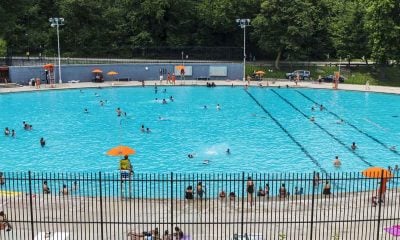
Public swimming pools have been a central part of American culture for over a century, offering a space for people of all backgrounds to come together, cool off, and enjoy the summer. These pools were initially built with the aim of providing recreation and hygiene to urban communities, regardless of race or class. However, a complex history of segregation, suburbanization, and funding challenges has resulted in a significant decline in public pools, depriving many communities of vital recreational spaces.
In the early 20th century, public pools were bustling hubs of social interaction, boasting unique designs that catered to the delight of the masses. In major urban metros, these pools provided leisure and fun for large segments of the population. Unfortunately, as the civil rights movement sought to integrate these spaces, racial tensions escalated, and many cities officially segregated their pools. The subsequent surge of private pools and suburbanization further perpetuated the decline of public swim facilities in urban areas.

Today, the disappearance of urban swimming culture represents a significant loss for city dwellers. Not only did these pools foster a sense of community and social cohesion, but they also provided an opportunity for children, particularly African-Americans, to learn to swim—an essential life skill. As public pools vanished, swimming disparities widened, with many low-income families and minority groups lacking access to affordable swimming opportunities.

According to Jeff Wiltse, the author of Contested Waters, during the early 20th century, there was a significant rise in public swimming facilities primarily established for bathing and hygiene purposes. These municipal pools gained immense popularity, but they were segregated by gender due to concerns about potential sexual impropriety. Moreover, similar to many other public facilities of that time, these new pools were disproportionately concentrated in white neighborhoods.
The Problem Is Systemic From Coast To Coast
An alarming number of public pools continues to evaporate each year and the problem appears systemic all over the United States. The city of Louisville, for example, serves as a glaring example of the decline of public swim spaces. Once home to ten public swim facilities, the city now has only four and this summer only two are open. This leaves thousands of residents, predominantly Black and lower-income households, without easy access to water during sweltering summer months. Even efforts to renovate existing pools or allocate funding for YMCA passes have fallen short of the ideal solution—an indoor swimming center accessible year-round.
Long Beach, despite being known as the “Aquatic Capital of America”, faces a significant deficiency in public pool facilities. With a population of over 460,000 residents, the city only boasts three year-round public swim facilities. This scarcity of accessible and available public facilities is a stark contrast to the city’s beach-oriented reputation and highlights the lack of investment in recreational infrastructure. Of the three existing public swimming facilities in Long Beach, none are conveniently located or easily accessible via public transit. Instead, residents must rely on two high school pools that are only open part-time to the community during the summer.
The city of Boston is currently facing a significant problem with its public pools, especially during times of extreme heat. Mayor Michelle Wu’s recent declaration of a heat emergency on July 26 and 27 underscored the severity of the situation. During an oppressive heatwave, access to cooling facilities, such as city-owned pools and splash pads, becomes crucial for residents to stay safe and comfortable. However, a startling reality came to light – 10 out of the city’s 18 public swim facilities closed.
How Many Public Pools Have We Lost In The U.S.?
To put the problem into perspective, in 2009, the US Consumer Product Safety Commission estimated there were 600,000 public pools in America. Today, the Pool & Hot Tub Alliance estimates there are 309,000 public pools currently in operation and that number continues to decline.

Restoring public pools to their former glory won’t be easy. The heyday of building public swimming facilities was fueled by government initiatives like the New Deal in the 1930s, but current budget constraints make it challenging for cities to build and maintain new pools. Additionally, changing societal dynamics, such as scheduled summer activities and the perception of public pools as dingy and unsafe, have contributed to the declining interest in public pools.
While some cities have managed to maintain their public swimming facilities, many have struggled to keep up with lifeguard shortages, maintenance costs, and increasing insurance expenses. A shortage of lifeguards, means pools are often forced to operate under abbreviated hours or end their swim season early. Private pools and non-profit organizations have attempted to fill the void, but they cannot fully replace the social and recreational benefits that public pools once provided.
Without proper investment and commitment from the government and communities, public pools will continue to fade from view, leaving America’s urban residents without safe and easily accessible places to swim. To reclaim public swimming as an inclusive and shared experience, a collective effort is needed to build and revitalize public swim facilities, ensuring that future generations can enjoy the sense of joy, community, and unity they once offered.








BREVARD COUNTY, FL — For swimming pool builders along Florida’s Space Coast, Monday, November 2, was anything but business as usual. An extraordinary rainfall event inundated portions of Brevard County, flooding neighborhoods, closing roads and turning active swimming pool construction sites into muddy reservoirs.
According to The Washington Post, portions of Florida’s Space Coast received as much as 28 inches of rain in approximately 36 hours, equivalent to nearly half the region’s typical annual rainfall. The relentless downpours overwhelmed drainage systems, flooded residential neighborhoods and brought construction activity to a standstill.
In some of the hardest-hit communities, nearly two feet of rain fell as a slow-moving weather system repeatedly delivered heavy downpours across the region. The National Weather Service characterized rainfall in portions of southern Brevard County as a 1-in-1,000-year event, a statistical designation indicating a 0.1% probability of rainfall of that magnitude occurring in any given year.

By Tuesday, November 3, the storm had claimed at least two lives. Joshua Bennett, 34, was found dead in his truck in a flooded area of southeastern Palm Bay, while Archie Richards, 78, was discovered inside his Toyota Tacoma in a canal near his home in Malabar. Emergency crews rescued hundreds of people as rising water inundated residential neighborhoods and left vehicles stranded.
Preliminary rainfall reports showed 23.69 inches in Grant-Valkaria, 23.44 inches in Malabar and 19.75 inches in Palm Bay. The extraordinary rainfall overwhelmed drainage systems, flooded homes and brought construction activity to a standstill in affected neighborhoods.
For Jeff Jones, owner and builder at Spacefront Pool & Spa, the storm struck directly at the communities he serves. Several of his active construction projects were caught in the flooding.

From Active Construction Sites to Underwater Excavations
Before the storm, Jones’s crews had been progressing through the normal stages of swimming pool construction. Excavations had been completed, plumbing installed and, at some locations, steel reinforcement and forming were already underway.
“Today was one of those days that reminds you just how unpredictable the construction industry can be, especially here on Florida’s Space Coast,” Jones said. “Today we had multiple swimming pool construction sites flood, freshly excavated pools filling with water and surrounding soil washing back into the pools.”

For a pool builder, an open excavation represents considerably more than a hole in the ground. By the time plumbing, rebar, and forms are installed, crews have already invested substantial labor and materials into preparing the site for the next phase of construction.
Flooding at this stage can undo days of work and leave contractors facing costly repairs. But before Jones could begin assessing the damage, there were more immediate concerns.

A Builder’s First Priority: Safety
“Even with roads closed due to flooding, I made it out to our job sites to assess the situation and address immediate hazards,” Jones said. “One of my biggest concerns was the electrical equipment associated with our pumps.”
With floodwaters rising, he worked to disconnect electrical power safely and remove pumps where conditions allowed.
“Some of my pumps were a foot below water.”
The danger wasn’t limited to electrical equipment. Submerged excavations concealed steel reinforcement, unstable soil and other hazards that could pose serious risks to anyone attempting to recover materials or equipment.
Jones understood there was a point where the effort to protect a construction site just had to stop.
“You can rebuild a swimming pool. You can’t replace someone’s life.”
But the damage to his construction sites wasn’t the only thing weighing on Jones.
“What made this situation even more devastating was that some of our customers’ homes were flooding as well,” Jones said.
“As a business owner, your first instinct is to protect your work and your investment. But you quickly realize there’s a much bigger picture.”
The flooding had turned what began as a construction emergency into something far more personal, with Jones balancing the responsibility of protecting his business against the immediate needs of the families he serves.

Weeks of Recovery Ahead
With the immediate danger beginning to subside, Jones faces the difficult task of assessing what can be salvaged from his flooded construction sites.
The damage to an unfinished swimming pool can extend well beyond the water visible in an excavation. Heavy runoff carries soil, sand, and debris into the work area, potentially compromising excavation walls, displacing forms, and undermining surrounding ground. Plumbing and steel may also require inspection or repair before construction can resume.
Some projects may need little more than pumping and cleanup. Others could require extensive excavation repairs, re-forming and additional inspections. Saturated soil and elevated groundwater levels can further complicate recovery, making it necessary to evaluate site conditions before removing accumulated water.
“This is going to set us back weeks,” Jones said.
The setbacks come with additional labor costs, equipment expenses and the challenge of coordinating crews and subcontractors around work that must now be repeated. For a pool builder managing several projects at different stages of construction, those disruptions can ripple through the entire schedule.
Florida contractors are accustomed to dealing with unpredictable weather, but the magnitude of this event illustrates how even experienced builders can find themselves facing circumstances beyond their control.
Jones has spent years working in an industry where weather is an unavoidable part of the business. His experience has taught him the importance of job-site drainage, protecting equipment and preparing crews to respond when conditions improve. Yet even those precautions have their limits.
“Preparation is everything, but even the best preparation can’t prevent Florida from being Florida on a random Monday in November.”
For now, the work ahead involves assessing the damage, restoring affected construction sites, and getting projects moving again. The financial consequences have yet to be fully determined, but the delays are already a certainty.
As Jones put it, “Mother Nature doesn’t care about your construction schedule.”
Photographs courtesy of Jeff Jones, Spacefront Pool & Spa.

A former New Jersey pool company manager has been charged with theft after allegedly selling company equipment through an unauthorized eBay account and keeping more than $14,000 in proceeds, according to police allegations reported by Newport Dispatch.
Jessica Szurick, 42, of Clifton, was charged Oct. 27 with theft by unlawful taking following an investigation involving Preferred Pool Management Inc. in Fairfield. The company’s owner contacted police Aug. 27 to report the alleged unauthorized sales.
Investigators said industrial machinery and pool equipment had been sold through the account. Financial records obtained through court-authorized subpoenas allegedly showed approximately $14,253 from three transactions deposited into a bank account registered to Szurick rather than the business. The owner also reported unauthorized company credit card purchases, which were reviewed during the investigation.

According to Daily Voice, Szurick’s LinkedIn profile listed employment with Preferred Pool Management from May 2018 through July 2026, most recently as a senior regional manager. The profile described responsibility for 161 commercial aquatic facilities and approximately 315 seasonal employees.
Szurick was issued a complaint-summons and is scheduled to appear in Essex County Superior Court on Dec. 9. The charge remains an allegation, and she is presumed innocent unless proven guilty.
Tracking Equipment and Sales Proceeds
The available reporting does not explain the alleged motive or establish which safeguards Preferred Pool Management had in place. But the alleged transactions illustrate a vulnerability other pool companies can examine: equipment leaving the business without the corresponding revenue reaching its bank account.
Pool Magazine recently explored pool equipment theft and its costly consequences for homeowners. Inside a pool business, protecting those assets requires more than locks and cameras. Employees need access to equipment to do their jobs, and owners need records that account for what happens afterward.
The Cost of Earning That Money Back
For a pool company, an equipment loss can create expenses beyond the item itself. Depending on what disappears, the business may face an urgent replacement purchase, a delayed installation, another truck roll, or hours spent reconstructing records. The reporting does not establish whether those disruptions occurred in this case.

Even the direct loss can take considerable work to recover. At a hypothetical 10% profit margin, a company would need $100,000 in additional sales to generate $10,000 in profit—the amount needed to offset a $10,000 unrecovered loss. That follows OSHA’s cost-divided-by-profit-margin calculation.
The reported eBay proceeds do not establish Preferred Pool Management’s total financial loss. They put a dollar figure on the transactions investigators say they traced.

Building Accountability Into the Business
For pool companies, the challenge is giving employees the access they need while maintaining oversight of valuable assets. Managers must be able to purchase equipment, move it between locations, and keep jobs moving. Those responsibilities should come with records another person can review.
The Insurance Information Institute recommends businesses “implement tight accounting controls that include frequent audits and take steps to ensure employees are aware of these practices.” Its employee theft prevention guidance also encourages businesses to provide a way for employees to report concerns without fear of reprisal.
For a pool business, that oversight can start with equipment sales. Document the item, require authorization for its release, and have someone other than the person arranging the transaction verify that payment reached the company’s account. Equipment marked discarded or damaged should also have a documented explanation.
Broader occupational-fraud research supports the value of internal oversight. “Organizations with effective anti-fraud controls in place consistently experienced lower losses and faster fraud detection,” the Association of Certified Fraud Examiners states in its 2026 occupational fraud findings.
As a pool company adds crews, vehicles, and service locations, an owner’s ability to personally track every asset becomes harder to sustain. Equipment may move among a warehouse, several trucks, and multiple job sites before anyone considers selling or disposing of it. The records and review process need to grow with that operation.
The Fairfield allegations remain for the courts to resolve. For other owners, they present a reason to examine their own process now. Delegating responsibility keeps the business moving; independent review gives the owner confidence that equipment releases are authorized and sale proceeds reach the company. Establishing those checks during everyday operations is far easier than reconstructing the trail after something goes missing


Landmark Aquatic announced the appointment of Scott Jones as Chief Executive Officer, effective November 1, 2026. Jones currently serves as Chief Operating Officer. J. Ryan Casserly, founder of the Landmark platform and its current CEO, will transition to Executive Chairman, where he will focus on mergers and acquisitions and continue working closely with the leadership team on Landmark’s long-term vision and strategic direction.
As Chief Operating Officer, Jones has worked across Landmark to strengthen operations, improve alignment, and advance initiatives that position the company for its next phase of growth. His appointment reflects the impact he has had on the organization and his commitment to investing in the people, processes, and capabilities that set Landmark apart in the marketplace.
“Over the past two years, Scott and I have worked closely together to strengthen the business and prepare Landmark for the future,” said Casserly. “He has developed a deep understanding of our industry, our people, and what makes this company special. Scott brings the leadership, operational perspective, and unwavering commitment to our mission that this next chapter requires. I have full confidence in his ability to keep advancing the business while staying true to what matters most — our people and the customers we serve.”

“I’m grateful for the opportunity to lead Landmark Aquatic and excited about what lies ahead for our company and the commercial aquatics industry,” said Jones. “We have a tremendous team, a strong foundation, and an opportunity to keep raising the bar for our industry. Our mission goes beyond the projects we deliver. It’s about creating opportunities for our employees and helping customers realize the full value of their aquatic facilities throughout their lifecycle. I look forward to building on our progress, working alongside our teams, and continuing to move Landmark forward.”
Landmark remains focused on developing its people, expanding its capabilities, and advancing the commercial aquatics industry through continuous improvement and a long-term commitment to the customers and communities it serves.
About Landmark Aquatic
Since 1967, Landmark Aquatic has helped communities and organizations bring complex aquatic facilities to life and keep them performing. Today, Landmark is the nation’s largest integrated commercial aquatics platform, providing design, construction, renovation, restoration, and maintenance services nationwide. Its construction-led expertise and long-term service capabilities give customers one trusted partner across every stage of a facility’s lifecycle. For the life of your pool. Learn more at www.landmarkaquatic.com.

Read the Fall Issue of Pool Magazine

See more of our coverage in your search results
 Sponsored Advertisement
 Historic Rain in Florida Takes Toll on Pool Job Sites
 Pool Manager Charged Over Stolen Equipment Sold on eBay
 JED Pool Tools CEO Featured on ‘Growing Up B2B’
 Scott Jones Named CEO of Landmark Aquatic
 Haviland Pool & Spa Invests $26 Million in Indiana Facility
 Watson’s Acquires Tampa Bay Spas, Enters Tampa Bay Market
 Cover Care Names Greg Conner Executive VP and General Manager

 IPSSA Dallas Chapter Launches Non-Profit to Fund Swim Scholarships and Support Families Impacted by Drowning
 Skimmer Launches Working Capital Through Stripe, Giving Pool Service Professionals Access to Fast, Flexible Financing
 Landmark Aquatic Partners With AngelEye on Drowning Detection Technology
 Tech Company Fills Dangerous Abandoned Pool After Safety Concerns Raised By Industry Expert
 The Acrylic Pool Authority: How Jason Jovaag and HammerHead Aquatics Became a Go-To Name
 RENOLIT Launches ONE Augmented Reality Pool Design App
 Landmark Aquatic Offers LifeFloor Surfacing for Aquatic Facilities

Pool Magazine Podcast
 What’s Your Pool Company Really Worth? – Pool Magazine Podcast With Weld Valuations
 iGarden K Series Review: A Pool Pro Puts It to the Test
 Why Waiting Until Spring to Remodel Your Pool Could Cost You Time & Money
 Ready When You Are: The Changing Role of Automatic Pool Covers
 What’s Hot & Trending in Fire Pits and Fire Tables for 2026
 Sponsored Advertisement

 Pool News2 weeks ago
Sacred Geometry: Where Architecture, Mathematics and Mosaics Collide

 Pool News4 weeks ago
Shasta Pools Hires 30-Year Builder to Head Residential Construction

 Pool News2 weeks ago
Anatomy of a Botched Remodel: What Sank the Lincoln Memorial Reflecting Pool Restoration?

 Contractors and Builders2 weeks ago
What’s Hiding Beneath The Surface: Artificial Rock Features

 Equipment Supplies2 weeks ago
iGarden K Series Review: What We Learned After Months in a Customer’s Pool

 Equipment Supplies2 weeks ago
Hayward Bets Big on Decentralized Automation With OmniX

 Equipment Supplies3 weeks ago
WYBOT Pushes Robotic Pool Cleaning Toward Greater Autonomy

 Pool News2 weeks ago
Landmark Aquatic Taps Britton Nielsen and Tim Garner to Lead Utah Growth
You must be logged in to post a comment Login