





Pool Equipment
Pool Heaters: Give Your Customers Some Pool Heat


Indisputably, all pool heaters tend to offer low efficiency after some years of use. Even so, incorporating the right maintenance techniques helps you boost the durability of your pool heater. Fortunately, we offer expert technicians who can provide troubleshooting services.

Besides experiencing an increased demand for pools, most homeowners have sought to make fair use of their pools and outdoor living spaces. All thanks to the COVID restrictions. Today, a good percentage of American companies still allow their employees to work from home. As a result, backyard spaces are now becoming popular chill spots. Thus, it is essential to keep the area warm throughout, especially during the winter months.
At present, most pool owners are using traditional pool heaters to keep the pool warm. But experts discourage using traditional pool heaters due to the massive energy costs that come with them. Typically, old pool heater models do not work towards saving energy. Therefore, if you have one, it might be time for an upgrade.

So, if you sell pool heaters, it would be best to educate all your clients and prospective customers on modern pool heaters’ advantages. Inform them about a pool heater’s energy-saving benefits. In turn, you will be able to increase your sales and revenues, especially from early spring.
Nonetheless, don’t start selling modern pool heaters if you can barely explain how they function. Ensure that you know how both a traditional and a new heater works. Also, you have to explain why an upgrade is necessary so that you can win a sale. As you do this, make sure you have your customer’s interests at heart. Show them that you want them to upgrade to help them cut down on their energy costs in the future.
Modern high-efficiency pool heaters
Can we be honest for a minute? Occasionally, some pool experts forget how pool heaters function. And it’s perfectly normal; because human is to error.
So, it would be best if you always started by expounding on how the heater complements the pool’s circulatory system. Simply put, when pool water goes through the heater, gas gets ignited and heats the copper tube. Then, heat gets passed from the copper tube to the pool water. The water goes back to the main pool and the heater for repeated heating. At the end of the day, the pool water remains warm.
Heater Efficiency and BTU Output
Often, pool heaters get rated by the British Thermal Unit. Typically, modern pool heaters are mostly said to have 82 to 96 percent efficient levels. So, if the pool heater has 400000 BTU and efficiency rate of 84%, the heater’s heating capacity is 84% of 400000 BTU. On the other hand, a traditional heater with 400000 BTUs and 78% efficiency provides 312,000 BTUs. When comparing the two heaters, the traditional one is likely to degrade more overtime. It is vital to inform the client that the level of efficiency degrades over the years. So, you would instead get a high-efficiency heater that won’t degrade as much after some time, and you’ll end up saving on replacement costs.

Consider using a calculator to prove to the client how much they can save using a modern pool heater. Online calculators can also help you to determine the amount used to heat the pool. This way, you can compare the figure to what the customer is paying. From there, it would be much easier to win a sale. More often than not, pool experts report that customers have to add 30% to finding an energy-saving pool heater.
Why do heaters become less efficient?
Generally, some customers are more curious than others. So, they may want to know why a pool heater tends to become less efficient with time. Not only does this feed their curiosity, but it also helps them incorporate the proper maintenance and care tips for their pool heater. Some of the reasons why pool heaters become less efficient include:
- At times, there may be an accumulation of calcium and chemicals on the heat exchanger tubes. In turn, more energy is often required to keep the pool water warm. And this lowers its efficiency levels. One way you can avoid this problem is by making sure that you have balanced water chemistry.
- Always ensure that your pool heater receives the right amount of gas pressure. Failure to do so would lead to clogging in the heat exchanger. And this makes the heater less efficient due to an increased demand for energy. Check the instruction manual to know how much gas pressure your pool heater needs.
- The pool heater should receive enough aeration. Otherwise, the heat won’t get passed on to the water correctly. It will help if you follow all your manufacturer’s guidelines on this.
- Your pool water should flow at the right rate. When water moves slowly across the heater, the water won’t be warm. On the flip side, if water moves very fast past the pool heater, the chances for condensation and erosion are high. Both scenarios can cause severe damage to the pool heater, thus making it less efficient.
Why should you upgrade to a modern pool heater?
- New heaters are energy-saving.
- New pool heaters help you save space and are environmentally friendly
- New heaters are high-efficient.
- Modern heaters are safer.
Bottom line
Always take the time to explain to your clients why they should upgrade to a new pool heater. Consequently, you’ll gain more sales.





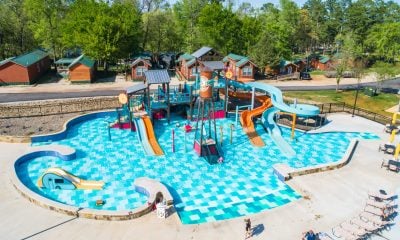

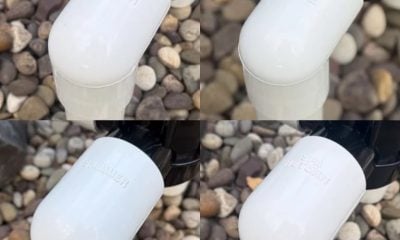


Rico Rock now offers a compact, lightweight, cast concrete modular water fountain that is easily mortared together to create a consistently beautiful waterfall for pools. This low-profile waterfall is easily integrated into any pool design using multiple base pieces that even allow for installation on a radius. Unlike real stone that is heavy and can be hard to manipulate into a functional, aesthetically pleasing fountain, this modular fountain package is designed to always look great—without the worries of leaks or awkwardly stacked stones. Shown here with an optional side boulder. Perfect renovation add-on to any existing pool—for added fall revenue.
Rico Rock, Orlando, FL
(888) 717-3100
www.ricorock.com


Partnership adds local sales and factory-authorized service support for two of the industry’s most widely used commercial robotic pool cleaners
Landmark Aquatic, a nationwide provider of commercial aquatic facility design, construction, and maintenance services, has announced a partnership with Maytronics to bring the Dolphin WAVE 100 and WAVE 200 XL robotic pool cleaners to commercial aquatic facilities across the United States.


Under the agreement, select Landmark Aquatic locations will also become official Maytronics service providers, giving aquatic facility managers a local, single-source solution for both equipment and ongoing cleaner maintenance — reducing downtime and eliminating the need to ship units out for repair.
The Dolphin WAVE 100 and Dolphin WAVE 200 XL are proven workhorse cleaners trusted by aquatic facility managers nationwide. Designed for mid-range commercial pools as well as large community and resort pools respectively, the WAVE 100 cleans pool floors, walls while the WAVE 200XL is engineered to handle commercial pools of any shape, up to Olympic sized pools. Because the robots operate independently of a facility’s main circulation pump, they can also help reduce energy consumption and labor demands associated with manual vacuuming. Additionally, these cleaners use Dolphin’s CleverClean™ smart navigation system for complete pool coverage.
“For many years, we have proudly partnered with Maytronics as their commercial pool vacuums deliver outstanding quality, reliability, and performance,” explains Brian Spear, General Manager for Landmark Aquatics in Indiana. “Their commitment to excellence has enabled us to provide a truly unique in-house Maytronics Authorized Service Center that sets Landmark Aquatic apart from the competition. Together, this long-standing partnership has allowed us to exceed customer expectations by combining our experience with premium equipment and personalized service. We value this relationship with Maytronics and look forward to continuing to deliver exceptional results for our customers for years to come.”
Facility managers can learn more about the Dolphin WAVE commercial line at maytronics.com/en-us/robots-commercial-pools.html or contact their local Landmark Aquatic office.
About Landmark
Landmark Aquatic is a nationwide provider of commercial aquatic facility design, construction, and maintenance services, with more than six decades of industry experience. Serving clients across most of the U.S., Landmark delivers construction-led solutions and on-going support through its AquatiCare maintenance team, ensuring excellence “for the life of your pool.” Committed to the full lifecycle of every facility, Landmark prioritizes long-term partnerships while adapting to client needs through exceptional service, operational excellence, and forward-thinking solutions. For more about Landmark Aquatic visit www.landmarkaquatic.com.

About Maytronics
Maytronics is a global leader in the swimming pool industry, specializing in pool water solutions. Maytronics’ Dolphin pool cleaning robots are a highly recognized global brand. Dolphin robotic pool cleaners continuously set new industry standards for innovative technology, design, reliability, service and most important, meeting our brand promise of exceptional pool water experience – bringing a superior level of cleaning to the pool water. Their flagship Dolphin cleaners are renowned for being “plug-and-play” autonomous machines that operate independently from the pool’s main pump, which lowers energy consumption and reduces chemical usage. The robotic cleaners typically feature advanced navigation, multi-directional scrubbing, and smart app capabilities. Learn more about their commercial cleaners at
https://www.maytronics.com/en-us/robots-commercial-pools.html.


Variable-speed pumps are the standard on nearly every pad now, thanks to the DOE efficiency rule that took effect in 2021 (Federal Register, DOE Energy Conservation Standards for Dedicated-Purpose Pool Pump Motors). Most pool professionals already know that story. What gets less attention is a more useful question: once a pump can run at any speed, what should it actually be basing that speed on?
The answer matters more than the mandate itself. A pump that sets its speed off an accurate, real-time flow measurement, rather than off a preset RPM or an estimate, doesn’t just save energy. It changes how well the heater, the filter, the sanitizer, and the plumbing all work together, because every one of those components was designed around a target flow rate, not a target speed.
The Physics Behind the Savings
The energy case for variable speed starts with the pump affinity laws. Flow rate scales roughly linearly with motor speed, but the power required to move that water scales with the cube of speed. Cut motor speed in half, and flow drops by half, while power consumption falls to roughly one-eighth of what it was (Pentair, “Pump Affinity Laws and Energy Savings”). That cubic relationship is why ENERGY STAR certified pool pumps are rated to use roughly 70% less energy than single-speed models over a season (ENERGY STAR, Pool Pumps).

That math only holds, though, if the pump actually knows what flow rate it’s producing. Running slower saves energy only when the resulting flow still does the job the system needs done. Guess wrong in either direction, too low and the water isn’t turning over or sanitizing properly, too high and the savings disappear, and the pump stops being an efficiency upgrade and starts being a liability.
Why an Accurate Flow Rate Changes Everything Downstream
Every piece of equipment on a pad, not just the pump, is engineered around a specific flow window, and that’s where basing pump operation on measured flow rather than estimated flow starts to pay off across the whole system.
Heat pumps and gas heaters have minimum and maximum GPM requirements. Fall outside that window and the equipment throws error codes, cycles inefficiently, or simply underperforms, wasting the energy it does use. Salt chlorine generators typically need roughly 20 to 25 GPM to activate the flow switch that tells them water is moving; a flow number that’s off by even a modest margin can mean a salt cell that isn’t producing chlorine consistently, even though the pump appears to be running fine. Sand and cartridge filters are rated for a specific flow rate per square foot of filtration area, and running above or below that rate affects both water clarity and how long the filter media lasts.
Turnover time (how long it takes to circulate a volume of water equal to the pool’s total capacity) ties all of this together. It’s the benchmark that determines whether sanitizer actually reaches the whole body of water on schedule, and it’s explicitly defined and capped for public pools under the CDC’s Model Aquatic Health Code, the model framework many state and local health departments use (CDC, Model Aquatic Health Code). A pump that’s only holding a preset RPM has no way to confirm turnover is actually happening on schedule once a filter starts loading or a valve gets adjusted. A pump that’s tracking real flow can hold that target and adjust automatically as conditions change.
The compounding effect is the real story here. A system running on accurate flow data tends to need less chemical correction, because circulation stays consistent. It puts less strain on the motor and bearings, because the pump isn’t overworking to compensate for a resistance change it can’t see. It produces fewer callbacks for cloudy water or error codes, because the equipment stays inside its designed operating window instead of drifting out of it as the season goes on. None of those benefits show up on a spec sheet next to the wattage number, but they’re where a lot of the real value, and the avoided service calls, actually live.

What This Looks Like in Practice
Most variable-speed pumps today are open-loop: they hold whatever RPM was programmed in, regardless of what’s happening in the plumbing. Some newer models estimate flow indirectly, using motor load at a given speed compared against a factory-built pump curve. That’s an improvement over a bare RPM dial, but it’s still inference, not measurement, and it can drift as a filter loads or a motor ages.
One pump closes that loop directly. H2Flow Controls’ Nautis VSF pairs a built-in FlowVis flow meter with its Eco-Flow control system to hold a target GPM within roughly plus or minus 2%, adjusting motor speed automatically as real-world conditions shift rather than holding a fixed RPM. It’s a useful illustration of the underlying principle: when the pump’s decisions are based on the actual flow rate moving through the system, everything downstream, the heater, the filter, the sanitizer, the plumbing, benefits from it.
For installers and service techs, that’s the more useful question to bring into the next conversation about a pump replacement. Not just “is it variable speed,” but “what is it using to decide how fast to run?” The pump that knows its real flow rate is the one that keeps the rest of the system running the way it was designed to.
Read the Summer Issue of Pool Magazine

See more of our coverage in your search results
 Sponsored Advertisement
 RENOLIT Launches ONE Augmented Reality Pool Design App
 Inside the 2026 Million Dollar Pool Design Challenge
 Franklin Electric Shares Global Water Perspectives Through Art Exhibit
 SafeSplash Highlights Early Water Safety During Baby Safety Month
 5 Ways Jandy’s New AquaLink® EDGE™ Is Changing the Game for Pool Pros
 Why Pools Matter: Pool Horizons Takes Its Message Global
 Ownership Group Acquires Shasta Pools, Announces Expansion Plans to Offer Complete Home Services

 Automatic Pool Covers Offers New Cover Coping for Fiberglass Pools
 MOVA Unveils a New Autonomous Hovering Robotic Pool Cleaner with Underwater Drone-Like Agility
 Pool Scouts Aims at Changing the Way Homeowners View Pool Maintenance
 PHTA Supports Bipartisan Virginia Graeme Baker Pool and Safety Reauthorization Act
 California Pool Pros Struggle To Understand OSHA Life Jacket Regs
 Maryland House Bill 303 Passes House And Senate, Governor To Sign
 A High-Performance Heat / Chill Pump Without the Excess Noise
Sponsored Advertisement
 Sponsored Advertisement
 Industry News4 weeks ago
Landmark Aquatic Names Jason Hill Kansas City General Manager

 Pool News4 weeks ago
New FCC Robotics Rules Could Affect Future Robotic Pool Cleaners

 Press Releases3 weeks ago
Veridian Service Partners Names Dave Peterson Chief Sales Officer

 Pool News3 weeks ago
Amazon Drone Drops Package Into Swimming Pool — And It’s Not the First Mishap

 Manufacturer3 weeks ago
TPSC Launches East Green Teak Collection

 Press Releases4 weeks ago
Natalie Hood Swims for Every Child A Swimmer

 Manufacturer3 weeks ago
Pentair Pool and Pool Brain Launch Technology Integration to Deliver Smarter, More Proactive Pool Service

 Press Releases4 weeks ago
Pentair Pool Earns Top Safety Honors in North Carolina
You must be logged in to post a comment Login