Pool News
Watching The World Series From This Pool & Spa Costs $26K
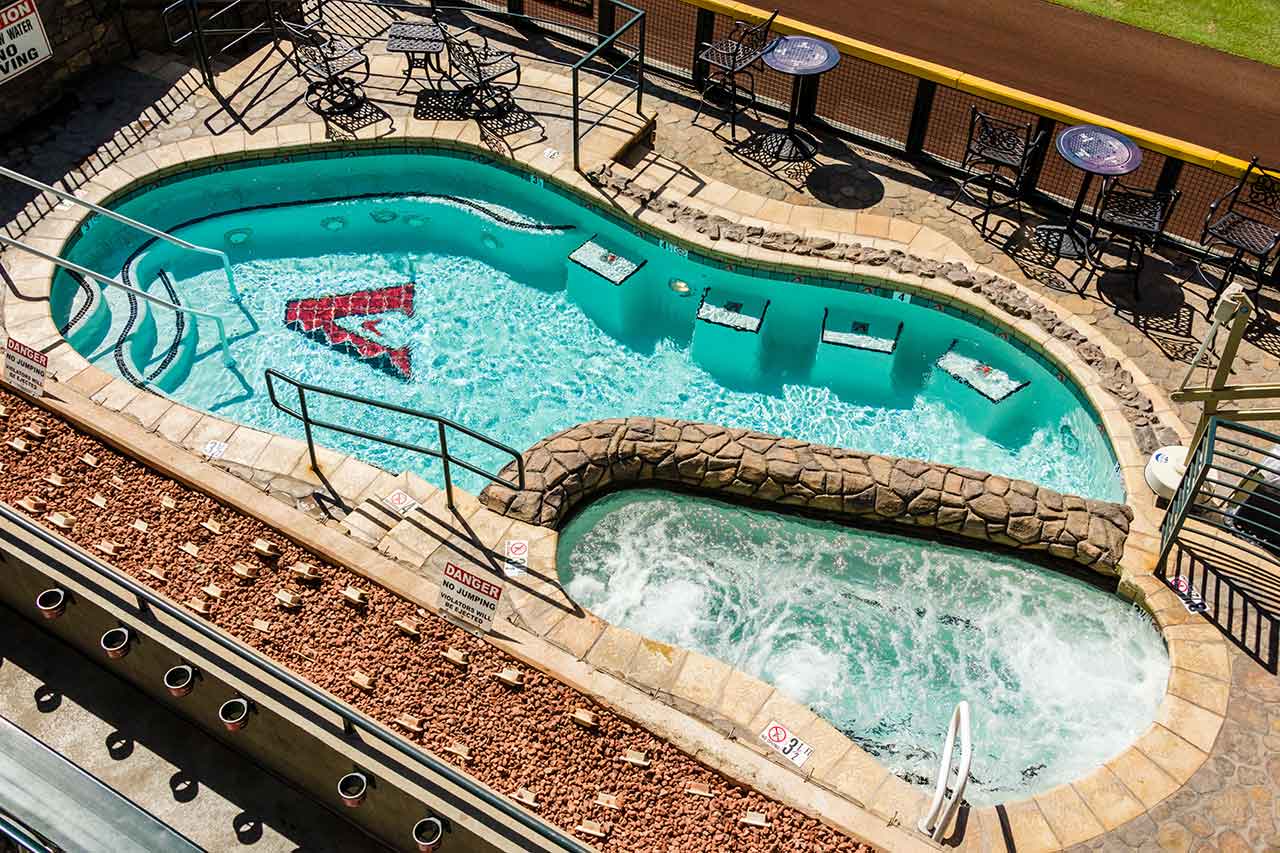
Baseball fans are ready to shell out a pretty penny to watch the World Series this year from the Diamondbacks Pool & Spa at Chase Field.
In the heart of the desert city of Phoenix, where sweltering summer days are the norm, sits a unique oasis that provides not only a respite from the sun but also a front-row seat to America’s favorite pastime. Chase Field, home to the Arizona Diamondbacks, boasts a remarkable feature that defies the conventions of traditional baseball stadiums – a sparkling pool located just beyond the right-field fence.
Over the past 25 years, this aquatic amenity has transformed from a source of controversy into one of the most beloved and iconic elements of the ballpark. As anticipation builds for Chase Field to host Games 3, 4, and 5 of the World Series, the pool area has become one of the most sought-after and thrilling spots in town to witness the Arizona Diamondbacks go head-to-head with the Texas Rangers.
This unique addition to the stadium’s offerings is not just an afterthought but a central component of the Chase Field experience. With its maximum capacity set at 35 people, the pool area consistently sells out for every game, a testament to its popularity among fans. The starting price for securing this exclusive space is $4,750, but during the World Series, one can expect a premium experience that comes with a higher cost. According to Jaci Brown, the Senior Vice President of Content and Communications, in an interview with The Arizona Republic, the World Series package for the pool suite will set you back a substantial $26,000. This lavish fee includes the 35 tickets, five parking passes, a Diamondbacks pool towel for each guest, and even covers a $5,000 deposit for a suite during the 2024 regular season.
Chase Field’s pool has not only made a splash among fans but has also left a lasting mark on the landscape of Major League Baseball. It serves as an inspiration for other MLB stadiums to incorporate unique signature features into their venues. While Houston has its grand model train and Atlanta offers a thrilling zip line experience, it’s important to note that Chase Field remains the sole MLB stadium with a pool as its defining characteristic.
The Swimming Pool at Chase Field
The pool at Chase Field, located in Phoenix, Arizona, is a unique and iconic feature of the stadium. Here are some facts about it:
- Outfield Location: The pool is situated in the right-center field area of Chase Field, behind the outfield fence. It provides fans with a close-up view of the game action, making it a popular and distinctive seating option.
- Size and Capacity: The pool area includes a large, in-ground swimming pool and a hot tub. It can accommodate up to 35 people, making it a unique spot for group gatherings and special events.
- Game Viewing: Guests in the pool area have an unobstructed view of the field, and they can enjoy the game from the comfort of the water. It’s a prime location to catch home run balls hit by the home team, the Arizona Diamondbacks.
- Exclusive Experience: The pool area is considered a premium seating option and offers an exclusive and luxurious experience for fans. It typically includes all-inclusive food and beverage service, which can vary depending on the event.
- Event Hosting: The pool area is available for private events and can be rented out for special occasions, corporate gatherings, or even birthday parties. It’s a popular choice for those looking to host a unique and memorable event at the ballpark.
- Iconic Moments: The pool area has been the backdrop for several memorable moments in Chase Field history, including celebrations after the Diamondbacks’ playoff victories and significant home runs hit by the team.
- Sustainability: The pool at Chase Field is one of the many environmentally conscious features of the stadium. The water in the pool is recycled and purified, and it is heated using solar panels, contributing to the venue’s overall sustainability efforts.
- Pool Parties: The Diamondbacks have hosted special pool parties in the area, where fans can purchase tickets to the pool and enjoy a party atmosphere while watching the game.
The pool at Chase Field adds to the overall unique and enjoyable experience of attending a game at the stadium, and it’s one of the many distinctive features that set the ballpark apart from others in Major League Baseball.
Beyond its innovative presence in the baseball world, the Chase Field pool has become a cherished part of the Arizona Diamondbacks’ history and tradition. In 2011, the team began a now-iconic tradition of celebrating monumental victories at the ballpark by plunging into the pool. This year, the Diamondbacks continued this tradition after defeating the Los Angeles Dodgers and securing their spot in the National League Championship Series. This celebration held extra significance, as it was a direct response to the Dodgers’ audacious pool party a decade ago when they jumped into the same pool after clinching the division pennant in 2013.
As Games 4 and 5 of the World Series draw near, fans can anticipate more celebratory moments, both from the stands and from players in the pool. Chase Field’s aquatic oasis promises an unforgettable experience for baseball enthusiasts, where the line between relaxation and excitement blurs, and the traditional and the extraordinary coexist. So, the next time you catch sight of a shimmering pool beyond the right-field fence at Chase Field, remember that it’s not just any pool – it’s where the magic of baseball and the allure of a unique experience come together in the heart of the Arizona desert.
Pool News
Lincoln Memorial Reflecting Pool Renovation Shifts to Faster, Lower-Cost Strategy
The Lincoln Memorial Reflecting Pool has been a defining feature of the National Mall for more than a century, stretching between the Lincoln Memorial and the Washington Monument and serving as the backdrop for historic gatherings, cultural moments, and even a few unforgettable Hollywood scenes. But like any large-scale water feature that’s been in service for decades, it has also required ongoing maintenance, repairs, and periodic overhauls.
Now, President Donald Trump says the iconic pool is getting a new kind of upgrade—one that reflects a more practical, contractor-driven approach to fixing what he described as long-standing issues with the structure.
Speaking about the project, Trump characterized the Reflecting Pool as a visually important but aging asset. Built in the early 1920s with a granite bottom, the pool has faced challenges related to surface wear, leakage, and water quality over time. In his remarks, Trump pointed out that the original materials were not ideally suited for long-term submersion, noting that the bottom “never looked great” given the conditions it has been exposed to over the past century.
“Right now, it’s got no water in it because it was in terrible shape,” Trump later added in a video shared on his Truth Social account. “It was filthy dirty and it leaked like a sieve for many years.”

Lincoln Memorial Reflecting Pool Renovation, A Shift in Strategy: Resurface Instead of Rebuild
Where the story becomes particularly relevant to pool professionals is in how the project is being approached. According to Trump, earlier plans called for a full-scale reconstruction—removing and replacing the granite bottom entirely. That proposal, he said, carried a price tag of $301 million and a timeline of three-and-a-half years.
Instead, the current plan pivots toward something far more familiar in the pool industry: resurfacing.
Rather than demolishing the existing structure, crews are cleaning and preparing the original stone, repairing joints, and applying a new, modern coating over the top. Trump described the material as an “industrial-grade” pool surface designed to improve durability, reduce leakage, and create a cleaner, more consistent finish.
The difference in scope is significant. Reports place the revised cost in the range of $1.5 million to $2 million, with a timeline measured in weeks instead of years. Project planners aim to have the renovation complete before July 4, 2026, the date of the 250th anniversary of the independence of the United States.
This new alternative approach mirrors what many professionals in the pool construction trade already understand—when the shell is structurally viable, resurfacing can extend the life of a water feature dramatically without the cost and disruption of a full teardown.
Thinking Like a Pool Builder
Trump framed the decision in terms that will sound familiar to anyone who has spent time renovating pools. Drawing on his background in development, he described working with a wide range of contractors over the years and emphasized the importance of selecting the right one for the job.
“I’ve probably built more than a hundred swimming pools,” Trump said, adding—tongue in cheek—that while some builders delivered strong results, others did not, “but we took care of them.”
That experience, he suggested, informed the decision to bring in a contractor he had worked with on previous projects—someone he trusted to evaluate the Reflecting Pool not as a monument, but as a large-scale aquatic structure. In his telling, the concept was simple: clean the surface, prep it properly, and apply a modern coating system that performs better over time.
Work is already underway at the site. According to Trump, crews have begun preparing the existing surface using trucks and heavy equipment to scrape and clean the aging interior in advance of the new coating. Once the prep work is complete, the new material will be applied using specialized trucks designed to spread the coating evenly across the pool floor—a process he said would take approximately three days from start to finish.
The scale, of course, is anything but simple. At more than 2,030 feet long and roughly 167 feet wide, the Reflecting Pool is unlike anything most pool contractors will ever work on. But the underlying philosophy—preserve what works, fix what doesn’t, and avoid unnecessary demolition—is a familiar one.
A New Look: “American Flag Blue”
The visual change may be the most noticeable outcome of the project. Instead of the muted tones created by aging stone, the resurfaced pool will feature a deep blue finish.
Trump said he initially considered a brighter, more tropical look, but ultimately settled on what he described as “American flag blue,” a color choice intended to feel more appropriate for the setting.
The coating itself is designed to provide a smoother, more uniform surface while improving water retention and reducing some of the maintenance issues associated with the existing stone bottom. Trump also noted that modern cleaning technology—including robotic systems—would be used to help maintain the pool, drawing a parallel to residential pool care but at a much larger scale.

Not Everyone Is Sold on the Plan
Not everyone is in love with the remodeling plans. Preservationists and design experts argue that the Reflecting Pool is more than a functional body of water—it’s a carefully designed historic landscape. Their concern is that applying a bright blue, pool-style coating could change the visual character of the site, moving away from the subdued, mirror-like surface originally intended to reflect the Lincoln Memorial and Washington Monument. From that perspective, the issue isn’t whether the pool needs maintenance, but how much its appearance should change in the process.
At the same time, others view the plan as a practical solution to long-standing maintenance challenges that have affected the pool for years. Still, critics have also raised questions about the process itself. Projects involving nationally significant landmarks typically undergo extensive review and public input, and some argue that a faster, contractor-driven approach may bypass those steps. The debate ultimately comes down to a familiar question in preservation work: where to draw the line between restoration and modernization.
A Landmark That’s Always Needed Work
While the current renovation has drawn attention, the Reflecting Pool is no stranger to major maintenance efforts. Over the decades, it has dealt with structural settling, water leakage, algae growth, and ongoing cleaning challenges. A major reconstruction completed in 2012 addressed many of these issues, including improvements to water circulation and infrastructure.
Like any large, shallow body of water exposed to the elements and heavy foot traffic, the Reflecting Pool requires continuous upkeep. From a pool industry perspective, it faces the same core challenges as any other system—just on a much larger and more visible scale.

Fast Facts: Lincoln Memorial Reflecting Pool
• Completed in the early 1920s and designed by Henry Bacon
• Stretches over 2,030 feet long and approximately 167 feet wide
• Depth is 18 inches on the sides, 30 inches deep in the center
• Holds 6,750,000 gallons of water in a shallow basin
• Located between the Lincoln Memorial and the Washington Monument
• Has hosted historic gatherings and remains one of the most photographed sites in Washington, D.C.
• The Reflecting Pool was losing an average of 500,000 gallons of water each week due to leaks and evaporation at one point.
• Underwent a major $34 million renovation in 2012 to fix many issues
• Martin Luther King Jr. delivered his “I Have a Dream” speech there in 1963.
• Featured in pop culture, including the iconic scene in Forrest Gump
• There are no fish in the reflecting pool, but ducks frequently use it as an aquatic oasis
• Swimming in or even entering the reflecting pool is strictly prohibited. Sorry, Jenny!
• The Lincoln Memorial Reflecting Pool is drained and cleaned annually
A Practical Fix for a Symbolic Space
At its core, the Lincoln Memorial Reflecting Pool renovation highlights a tension that exists in many large-scale projects: balancing historical preservation with practical maintenance. Whether the new finish and this latest fix ultimately enhances or detracts from the Reflecting Pool’s historic character will likely be debated long after the work is complete. What’s less controversial is the outcome that everyone involved in the project is aiming for: a cleaner, more durable water feature that continues to serve as a gathering place for Americans and visitors to our nation’s capital for generations to come.
Pool News
The Current State of the Backyard Pool Industry: Short Film Holds Up a Mirror
The film that asks the question… is family togetherness worth the price of summer’s most expensive luxury?
At first glance, The Current State of the Backyard Pool Industry sounds less like a short film and more like something you’d see on the agenda at an industry summit. It reads like a white paper. A market report. An economic forecast delivered in a ballroom with bad coffee and PowerPoint slides.
That’s intentional.
Because the film isn’t just about a backyard pool. It’s about everything surrounding it right now — inflation, supply chain issues, pricing anxiety, dwindling usage, and the uneasy dance between homeowners and contractors trying to justify what something costs these days.
Film Title Anything But a Misnomer
The short film from Derek Frey, David Amadio, Gil Damon, and Steve Kuzmick opens in territory that ought to immediately feel familiar to anyone working in the pool industry: a dated backyard pool. The liner is aging. The water looks neglected. The chemistry is questionable. And the homeowner is staring at a renovation estimate he isn’t sure he can justify — financially or emotionally.
From that setup, the film does something clever. It takes the headlines we’ve been writing about here at Pool Magazine — rising costs, logistical breakdowns, economic pressures — and drops them into an everyday backyard conversation. Then it asks a harder question:
When the cost of maintaining the pool goes up… what happens to the meaning of it?

Film Shows The Realities of Rising Costs
In the opening scene, a homeowner, Henry (played by Gil Damon), asks his pool guy, Rick (played by Steve Kuzmick), why his pool liner replacement now carries a five-figure price tag.
The character Rick cites inflation. Supply chain instability. A late winter freeze in Texas. Petrochemical plant shutdowns. Limited liner availability.
If you’ve read Pool Magazine over the past few years, you’d already know that at least a few of those stories have already been validated in print. They’re real. They happened. They created issues that affected contractors nationwide.
That’s what makes the scene land.
Because Rick isn’t inventing stories. He’s pulling from real-life industry issues. But the way he delivers his points — confidently, rapidly, with the cadence of someone who has well rehearsed his rebuttal — creates more than a sliver of doubt.
Is he educating the homeowner? Or is he stacking headlines into a persuasive narrative that smacks with the slick gold chain energy of a used car salesman?
“The whole Texas freeze thing came from research,” David Amadio explains. “We were trying to connect the plight of this one contractor to a larger industry issue. The audience doesn’t know if it’s real. They don’t know if it’s legit. It could just be a ruse.”
That ambiguity is the point. The film doesn’t accuse the industry of exaggeration. It simply shows how real economic forces can easily blur into sales language.
The inflation and Texas freeze references aren’t throwaway lines. They were well researched.
Art Sometimes Imitates Life
“When you first reached out to us for an interview, I went on the Pool Magazine website, and one of the top headlines was about another Texas freeze,” director Derek Frey says. “I was like, wow. I don’t know if that’s art imitating life or not, but that was particularly intentional in our crafting of this story.”

That realness doesn’t just live in the headlines, pool guy Rick cites — it lives in how he carries himself.
Kuzmick’s performance isn’t built only on what he says but on the physicality of how he delivers his lines. After making his case for why Henry’s liner replacement will be more expensive, he wraps the conversation with a firm slap on his customer’s back and a casual, “Talk it over with the family and let me know.”
Then he walks.
He doesn’t linger, and he sure doesn’t soften the number. The message is subtle but unmistakable: I’ve got other jobs. I’m busy, and you need me more than I need you.
A View From The Other Side of the Mirror
Henry, the homeowner, is just as recognizable as Rick — only from the other side of the estimate.
He’s the Everyman. The middle-aged dad staring at a liner replacement bill that costs far more than he expected and wondering how he’s going to explain it at the dinner table. There’s a touch of Clark Griswold in him — earnest, well-intentioned, slightly overwhelmed. You get the sense that if something can go wrong with his pool, it probably will. When his skimmer pole snaps in half on the first attempt to clean, it’s funny — but it’s also revealing. This is a man losing control of something he once felt confident about.
The real pressure, though, is about the conversation waiting for him inside the house.
Henry knows the liner replacement isn’t just a repair. It’s a negotiation. One where he has to justify the expense to his wife — and he already senses she won’t be on board. In today’s economy, a five-figure liner replacement isn’t a casual conversation. It’s sure to be a debate and a potential source of tension.
That’s where the film pivots from industry commentary to something more personal, and a conversation happening in many homes across the nation.

The hesitation isn’t just about money. It’s about relevance.
Fighting a Losing Battle Against Devices & Indifference
Henry tries to make his case by appealing to what the pool used to represent — long summers, family time, shared memories. But when he looks to his kids for reinforcement to help him make the case, he’s met with indifference. Phones in hand, half-hearted answers, distracted nods. The pool that once anchored family life now competes against their screen time.
“It’s like a fantasy of middle-class American fatherhood,” David Amadio says. “All of us are watching our kids grow older by the day. All these pastimes we loved are falling by the wayside. This movie was our attempt to try to hold onto those things for a little bit longer.”
Gil Damon, who plays Henry — and who actually owns the pool used in the movie — brings an authenticity to that quiet frustration.
The Film Introduces a Thought Provoking Question
“Whether the kids swim in it or not, you still have to maintain it,” Damon says. “If you don’t maintain it, something goes terribly wrong. And there’s still something kind of joyous in maintaining it. Even just skimming the leaves. But at some point you’re like, wait, what am I doing all this for?”
That question lingers in the film.
What are we maintaining?
The pool becomes a metaphor for something bigger — for rituals that once felt permanent but now feel optional. For investments that once made obvious sense but now require defense. For a version of family life that doesn’t compete well with Wi-Fi.
Competing Against Technology
“Technology is king,” Amadio says. “There are so many casualties in the culture of technology. The pool’s like a little antidote to that. It’s an analog getaway from the digital maelstrom in which we all live.”
In that context, the liner replacement isn’t just a repair. It’s a referendum. Not just on budget, but on whether the pool still holds meaning inside the household. Henry’s wife finally says she would just as soon as like to fill in the pool and be done with it altogether.
And it’s right when Henry seems ready to give up — when he shuts off the timer and retreats inside — that the film introduces its wild card.
Reigniting That First Spark
Henry awakens to the sound of splashing. The pool lights are on. The water, which hours earlier looked neglected and uninspiring, now appears clean, inviting, almost cinematic. Floating across the surface is a stranger in goggles, a swim cap, and striped bathing suit, casually doing the backstroke.
He introduces himself as Willy Chamieux — played by writer David Amadio — and calmly explains that he is “the manifestation of why pools are cool.”

Henry, understandably alarmed, tells him the pool is in no condition to swim in (even though it’s clearly been transformed) and orders him out, a command which Willy ignores.
Instead, he dives beneath the surface to “inspect” the torn liner Henry was complaining about. When he resurfaces, it’s face down in a dead man’s float. Henry panics and jumps in to save him — only to discover he’s been played.
Getting Memory to Break Down The Barriers
And that’s the turning point. The moment Henry slips into the water, all of the tension drains from him. The defensiveness, the budgeting, the quiet resentment we saw earlier — it all fades. There’s something about being back in his pool — not as a project, not as an expense, but as he always imagined it — that softens him. You can see it on his face. He’s not calculating anymore. He’s remembering.

Willy challenges him to a game. They dive for quarters. They laugh — the kind of unguarded laughter that hasn’t been heard in that backyard in a while.
Soon, the rest of the family drifts outside. They’re tackled into the pool by Willy and quickly fall under the same spell as Henry, experiencing the renovated condition and joy of once more being in their own pool. The tone of the film shifts again. Visually, the sequence leans into classic aquatic spectacle.
“That was the main reference,” Derek Frey says. “Those 1930s films choreographed by Busby Berkeley — Footlight Parade — and Olympic synchronized swimming. We storyboarded the movement based on many of those references.”

The overhead shots evoke old Hollywood water ballets. The pool center stage again once more in the lives of Henry and his family.

Analysis of Willy Chamieux
The character of Willy carries an apparition-like quality throughout that the film never explains outright.
“We don’t know if he’s a water sprite or an actual person,” David Amadio adds playfully. “He kind of straddles the line.”
That ambiguity is deliberate.
Willy clearly isn’t there to fix the pool; the illusion disappears the moment he does. Rick will still need to be called if that dream is ever to become a reality. No, Willy is merely there to remind.
To remind Henry what the pool once felt like, reconnecting the emotion to the investment.
To remind the family of what enjoying the pool together once meant.
There’s something unmistakably Dickensian about the structure. Willy feels like a warm-weather variation of A Christmas Carol — less chains and underdone potato, more chlorine and cannonballs. If Scrooge needed the Ghost of Christmas Past to remember who he once was, Henry needs something similar.
Willy may very well be the Ghost of Summers Past.
The film never spells it out, but the parallels are there, and we pointed some of them out to the filmmakers. The character Henry represents a man on the brink of abandoning something meaningful. A supernatural visitation. A night that changes perspective before it’s too late.
“We hadn’t thought about Dickens specifically,” David Amadio admits, “but it’s definitely there.”
Whether spirit, trickster, or simply shared DNA, Willy’s function is clear: he forces Henry to re-experience joy before he walks away from it.
And then comes the final turn.
Coming Full Circle
Henry wakes the following morning, not on the couch where he had resigned himself to defeat, but in bed — surrounded by his family. The energy is different. The tension is gone. His wife looks at him and gives a quiet, approving nod. No speech is necessary. No debate. They both know what comes next.
His first order of business will be to call Rick and approve the liner replacement.
The film doesn’t frame that moment as one of defeat or capitulation, but one of clarity.
Only then does the final reveal land.
As day breaks, Rick pulls up in a truck and Willy climbs in. They head off toward another address — another backyard, another hesitant homeowner, another family on the fence. The magic wasn’t random but part of the process.
There’s a faint echo here of The Swimmer — one almost immediately draws the comparison of Burt Lancaster moving from pool to pool. Only this time, the journey is one of restoration. Willy isn’t drifting through suburbia trying to outrun a sad reality. He’s moving through it, reminding families what once made their backyards matter. It’s a subtle but meaningful reframing.
Rather than positioning Rick as a manipulator, the filmmakers present something more layered and nuanced. Rick understands that homeowners don’t just need pricing estimates. They need perspective.
“I think they’re ultimately doing good for people,” Derek Frey says. “Rick is pure business. He’s about the sale. Willy is doing it for the reasons he outlined. Everybody kind of comes out a winner.”
Together, they’re not just repairing pools — they’re restoring connection.
And that’s where the film’s theme settles.
The current state of the backyard pool industry isn’t simply about tariffs, inflation, or any of the other litany of issues impacting the industry. It’s about relevance and reminding consumers why they opted to build a pool in the first place.
Screening The Current State of the Backyard Pool Industry
For pool professionals, the takeaway isn’t that they need a gimmick.
It’s remembering what it is that they’re really selling.
The film doesn’t pretend that the economics aren’t real. The cost increases are real. The supply chain strain was real. The sticker shock homeowners feel is real. Those conversations happen every day in the backyard.
But so does the other part — the part that’s harder to quantify.
The first cannonball of the season.
The late-night sessions of Marco Polo.
The laughter that carries from backyard to backyard all summer long.
Rick understands the business of that, but Willy understands the magic.
And that’s why the film resonates.
Screening this film could be a useful exercise for pool professionals across the industry — not as satire, not as critique, but as perspective. It invites a simple question: Are we leading with cost, or are we leading with value?
We may not all have a magical spirit like Willy to bring along on every job to convince the customer.
Which means the magic has to come through us. Because if we don’t remind them why it matters, no one else will.
Ready to take a deeper dive?
Listen to our entire interview with the filmmakers of The Current State of the Backyard Pool Industry on the Pool Magazine Podcast.
Photo Credits: Derek Frey Films
Pool News
Rising Fuel Costs Are Hitting Pool Pros Where It Hurts Most
Rising fuel costs are quickly becoming one of the biggest pressures facing pool professionals this season. For an industry that depends on being out in the field every day, the impact is immediate.
No matter the role—service, construction, remodeling, or sales—pool companies rely heavily on their vehicles to get the job done. Crews are constantly moving between stops, job sites, and customer appointments, often covering a lot of ground in a single day. Trucks aren’t just a convenience—they’re a core part of how pool companies operate.
That’s why fuel costs hit harder here than in most industries. When prices climb, it doesn’t take long for that increase to show up across the board. What used to be a manageable expense is now becoming a real strain on day-to-day operations, forcing companies to pay closer attention to routing, efficiency, and overall fleet costs.
What’s Driving Fuel Prices Higher
The current spike in fuel prices isn’t happening in a vacuum. It’s being driven by geopolitical tension centered around Iran and the Strait of Hormuz, one of the most critical oil chokepoints in the world.
Roughly a fifth of the global oil supply moves through that narrow passage. When conflict escalates or shipping lanes are threatened, even the perception of disruption sends shockwaves through energy markets. Tankers reroute, insurance costs climb, and traders begin pricing in risk before actual shortages even materialize.
That’s exactly what we’re seeing play out right now. Oil prices have surged as markets react to instability in the region, and those increases are working their way down the chain—from crude oil to refined gasoline and diesel—until they land squarely at the pump.
Diesel, in particular, has been hit harder than gasoline due to tighter global supply and its reliance on international shipping. That matters for the pool industry because diesel fuels everything from heavy-duty trucks to construction equipment and material transport.
The bottom line is simple: when global oil flows get disrupted or even threatened, domestic fuel prices respond quickly—and often aggressively.

A Look at Prices Then vs. Now
Compared to this time last year, fuel costs have taken a noticeable jump.
Nationally, gasoline prices have climbed from the low-$3 range into the $4-plus range in many markets, representing roughly a 25–30% increase year-over-year. Diesel has surged even more dramatically, with increases approaching 40–50% in some cases.
And while those numbers are significant on their own, they don’t tell the full story.

Western States Hit Hardest
The western states, already home to some of the highest fuel prices in the country—have been hit especially hard. It’s not uncommon to see prices well above the national average, pushing deeper into the $5+ range for gasoline and even higher for diesel.
That’s particularly relevant for the pool industry. California isn’t just another state—it’s one of the largest and most active pool markets in the country. From new construction to ongoing service and maintenance, the concentration of pool ownership means a significant portion of the industry is operating in one of the most expensive fuel environments in the U.S.
Fuel prices tend to run higher across the western half of the U.S. in general. Refining capacity is more limited, particularly in California, where the state relies on a smaller number of in-state refineries that produce a specialized gasoline blend required by stricter environmental regulations. That limits supply flexibility—when one refinery goes down for maintenance or an outage, prices can spike quickly. Add in higher state taxes, regulatory costs, and a geographic disconnect from major Gulf Coast refining hubs, and it becomes more expensive to produce and distribute fuel. The result is a market that’s more sensitive to disruptions and consistently priced above the national average.
The Daily Impact of Rising Fuel Costs on Pool Operations
For pool professionals, rising fuel costs aren’t theoretical—they show up every single day.
A service technician running a route might drive 80 to 120 miles in a day. Multiply that across a week, then across an entire team, and you’re talking about hundreds or thousands of gallons consumed every month.
Now layer in a 25–50% increase in fuel costs. At some point, those rising costs have to be absorbed—or passed along.
We’re already seeing pool service professionals begin to address this head-on. Price increase letters are going out to customers, explaining the reality of higher operating costs and the need to adjust monthly service rates accordingly.
For builders, the impact is more layered. Increased fuel costs affect:
• Material delivery pricing
• Equipment transport
• Labor costs tied to travel time
• Subcontractor pricing
All of that ultimately feeds into the total cost of a project.
While no company wants to raise prices, the reality is that sustained increases in fuel costs make it unavoidable. Margins in the pool industry are already under pressure from labor, materials, and regulatory costs. Fuel is now another major lever pulling those margins tighter.

How Companies Are Responding
Pool companies aren’t just sitting back and absorbing the hit—they’re adapting.
One of the most notable shifts in the industry has been how companies are rethinking their fleets altogether—but for many, there’s no easy solution.
Tightening Routes
David Goldenberg, owner of Las Vegas Pool Bros, says rising fuel costs have forced operators like him to take a hard look at how much they’re spending to reach their customers.
“Fuel has become one of the biggest variables in our operation. When you’re running multiple trucks every day, even a small increase at the pump turns into a significant expense by the end of the month. That’s really what pushed us to start tightening our route. For us it’s about controlling costs and protecting the business from the kind of volatility we’re seeing right now.”
Moving to EV / Hybrid Vehicles
For others, the conversation has shifted beyond tightening routes and into rethinking the long-term makeup of their fleet.
Paul Presley, owner of Blue Wave Pools, has been methodically working at transitioning his vehicles as a way to reduce exposure to rising fuel costs, though he says the process is far from straightforward.
“Fuel costs have definitely been a wake-up call for us. We knew we couldn’t just keep absorbing increases every year and expect it not to impact the business. We’ve started transitioning the fleet and we’re about halfway there now, but it’s not as simple as flipping a switch. The goal is to get to a place where all of our vehicles are either electric or hybrid, but getting there takes time and money.”
Presley says that path has become more challenging as incentives that once helped offset the cost of electric vehicles have been scaled back or removed.
“For a while, the numbers made a lot more sense with the incentives in place. Losing things like the $7,500 tax credit definitely changes the equation. You’re still dealing with higher upfront costs, and you have to be more strategic about how and when you make those upgrades.”
Better Fleet Management
Fleet management tools have quickly becoming one of the biggest eye-openers for pool companies trying to get a handle on rising fuel costs. What many operators are discovering is that the problem isn’t just what they’re paying at the pump—it’s how fuel is being used throughout the day.
Elizabeth Donald of Superior Pools notes that the opportunity for savings is often hiding in plain sight.
“Fuel is an enormous cost—especially now—and even small changes in driver behavior can produce dramatic savings. Idling, for instance, burns a half-gallon of fuel per hour. When diesel costs $6 per gallon, that can be several hundred dollars a day in wasted fuel for a 10-truck fleet.”
For Superior Pools, it’s about seeing exactly how long trucks are idling, how aggressively they’re being driven, and how efficient each route actually is. What fleet management tools have done for them is help turn those assumptions into hard data.
In many cases, that visibility alone is enough to drive immediate change. Companies are tightening routes, reducing idle time, and coaching drivers on more efficient habits—all without adding new vehicles or making major capital investments.
And while these strategies are helping companies regain some control, they don’t eliminate the bigger question looming over the industry: where do fuel prices go from here?
What the Industry Is Watching for the Rest of 2026
Looking ahead, there are a few key factors pool professionals are keeping an eye on:
• Stability (or escalation) in the Middle East
• Oil production levels from major global suppliers
• Domestic refining capacity and output
• Seasonal demand shifts during peak summer months
At the same time, many companies are taking a more proactive approach to cost management. That includes reevaluating service areas, tightening route density, investing in more efficient vehicles, and communicating transparently with customers about pricing increases.
The reality is that fuel costs are now a strategic consideration, not just an operational expense.
Is There Any Relief on the Horizon?
That’s the question everyone is asking.
The honest answer is that it depends heavily on what happens geopolitically. If tensions around the Strait of Hormuz ease and oil flows stabilize, we could see some softening in fuel prices. But even in that scenario, prices don’t typically snap back overnight.
Markets tend to hold onto a risk premium until there’s sustained stability. That means even if conditions improve, it could take months for prices to normalize.
If tensions persist or escalate, the opposite is true. Prices could remain elevated—or climb even higher—especially for diesel.
For pool professionals, that means planning for continued volatility rather than banking on a quick return to lower prices.
The Bottom Line
Fuel has always been a part of doing business in the pool industry—but rarely has it taken center stage like it is right now.
From service routes to construction sites, rising costs are reshaping how companies operate, price their services, and plan for the future. The impact is immediate, tangible, and widespread.
Whether relief comes later this year or the industry settles into a new normal of elevated prices, one thing is clear: pool professionals will continue to adapt, just as they always have.
But for now, it’s a season where every gallon matters—and every dollar counts.
-
Pool News3 weeks agoThe Current State of the Backyard Pool Industry: Short Film Holds Up a Mirror
-
Pool News3 weeks agoRising Fuel Costs Are Hitting Pool Pros Where It Hurts Most
-
Pool News4 weeks agoPOOLCORP Strengthens Retail Strategy With New Chemical Systems and Pool360 Unlocked
-
Pool News4 weeks agoThis Summer, A Pool Floats in NYC: Update on + POOL Project
-
Pool News4 weeks agoRolls-Royce Recreates One of Rock’s Most Infamous Poolside Legends
-
Equipment Supplies4 weeks agoSpring Fling: New Robotic Pool Cleaners Making a Splash in 2026
-
Cleaning and Service Equipment and Supplies3 weeks agoBuilding Trust With Water Quality
-
Safety4 weeks agoElectrical Safety for Pool Pros: OSHA Guidelines Every Technician Should Know