





Pool News
What Do You Do If Your Pool Builder Abandons The Project?
Building a pool is a dream for many, but what do you do if your pool builder suddenly abandons your pool construction project?


Building a pool is often a homeowner’s dream, promising relaxation, recreation, and enhanced property value. While the process of building a pool can come with various hurdles that prolong the process longer than some homeowners would like, most builders are reputable enough to see the project through to its fruition. However, what happens when the dream of building a pool turns into a nightmare, and the pool builder abandons the project halfway through? This worst-case scenario can inflict both emotional distress and financial strain on homeowners.
Worst Case Scenario: When a Pool Builder Abandons The Project Entirely
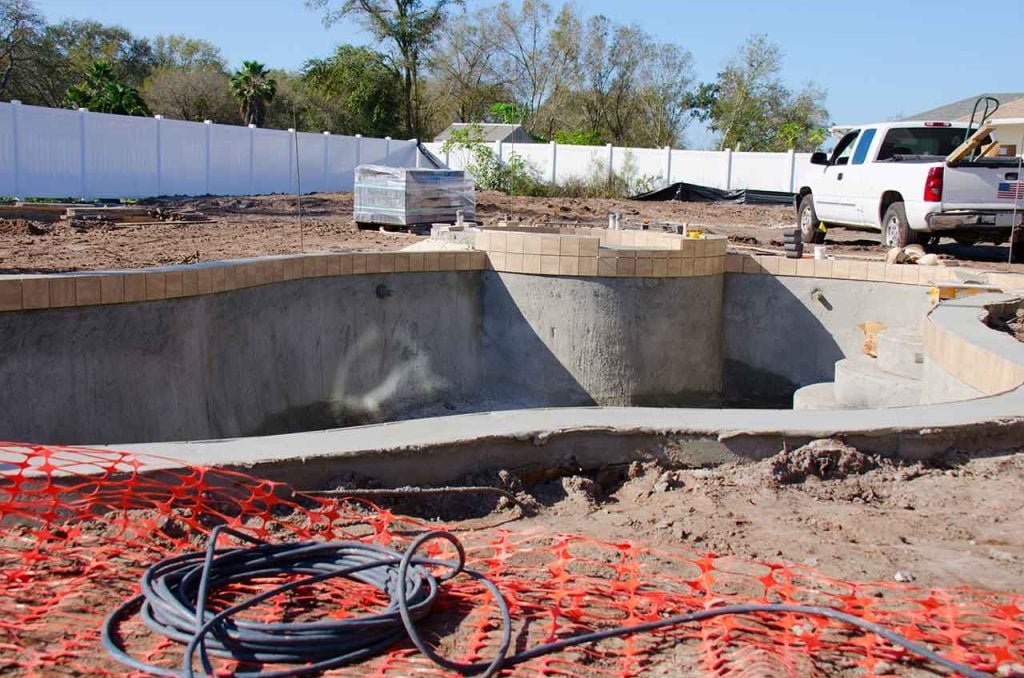
When a pool builder abandons a project, homeowners are left with a gaping hole in their yard and an even greater hole in their hearts. The excitement of transforming their property turns into frustration, disappointment, and even anger as they face the daunting task of either picking up the pieces themselves or finding a new builder to finish the job. The emotional toll of unfulfilled promises and dashed hopes can be absolutely overwhelming.
Financially, the situation is equally distressing. Homeowners often take out loans to fund their pool construction, with the expectation that the loan payments will be justified by the completed project. When the builder abandons the project, homeowners are left with loan payments and little to show for it. They are essentially paying for something they don’t have and can’t use.

Exploitative Practices: Collecting Incomplete Project Payments
Unfortunately, there are instances where unscrupulous pool builders take advantage of payment milestones to their benefit, often at the expense of homeowners. One concerning practice in some states is contractors collecting significant portions of the project cost, sometimes up to 90%, before the milestones are genuinely completed. This practice raises concerns about transparency, quality, and homeowner protection where consumers can find themselves in a vulnerable position, as they’ve handed over a substantial amount of money without receiving the promised results.
This approach can lead to various issues:
- Lack of Incentive: When a large portion of the payment is collected upfront, the builder might lose motivation to complete the project efficiently and to high standards.
- Low Accountability: Builders might be less responsive to homeowner concerns and requests once they have received the majority of the payment.
- Quality Compromises: With most of the funds already collected, some builders might cut corners or use subpar materials, negatively impacting the final quality of the pool.
- Limited Recourse: Homeowners have less leverage to enforce completion when they’ve already paid the bulk of the project cost.
The Purpose of Payment Milestones
Good pool companies understand that transparency in payment milestones is essential for building trust, fostering positive client relationships, and ensuring the successful completion of projects. Transparent payment practices create an environment where both parties—homeowners and pool builders—can work collaboratively towards a shared goal. By clearly communicating the connection between completed work and payments, reputable pool companies demonstrate their commitment to fairness, accountability, and quality.
Best Practices for Transparent Payment Milestones:
- Detailed Contracts: Reputable pool companies provide comprehensive contracts that outline the project scope, payment schedule, and milestones. These contracts specify the work to be completed at each stage and the corresponding payment amount, ensuring that both parties have a clear understanding of expectations.
- Progress-Based Payments: Transparent companies tie payment milestones to specific stages of project completion. Payments are made when certain tangible milestones are achieved, such as excavation, plumbing, structural work, and finishing touches. This approach ensures that clients see the progress being made and that payments accurately reflect the work completed.
- Open Communication: Regular communication between the pool company and homeowners is key. Transparent companies provide updates on project progress, notify homeowners about upcoming milestones, and address any concerns promptly. This proactive approach builds trust and keeps clients informed throughout the construction process.
- Inspections and Approvals: Before each payment is due, reputable pool companies encourage homeowners to inspect the completed work and provide their approval. This step ensures that the completed work aligns with the agreed-upon quality standards before any funds are disbursed.
- Flexible Payment Options: Good pool companies may offer flexibility in payment options, allowing homeowners to choose between different methods or breaking down larger payments into smaller installments. This approach accommodates the financial preferences of clients while maintaining transparency.
- Retained Funds for Completion: To incentivize the completion of the project and ensure homeowner satisfaction, some companies may retain a percentage of the final payment until after a warranty period. This provides assurance that any post-construction issues will be promptly addressed.
Payment milestones in construction projects serve several important purposes:

- Fair Compensation: Payment milestones ensure that contractors and subcontractors are compensated for the work they complete. It provides a predictable cash flow for all parties involved.
- Motivation for Progress: Structured payment milestones incentivize builders to make consistent progress. Knowing that their compensation is tied to completing specific tasks encourages builders to meet deadlines and fulfill project commitments.
- Quality Control: By tying payments to completed work, homeowners can assess the quality of each stage before making further payments. This incentivizes builders to maintain high standards throughout the project.
Protecting Homeowners: Best Practices for Payment Milestones
To prevent falling victim to exploitative payment practices, homeowners should follow these best practices:
- Detailed Contract: Have a clear and comprehensive contract that outlines payment milestones, project scope, timelines, and quality standards.
- Tied to Progress: Link payments to completed project milestones, not just based on time. This ensures that payments reflect tangible progress made.
- Retain a Percentage: Consider retaining a portion of the total payment until the project is fully completed and meets your satisfaction.
- Inspections and Approvals: Regularly inspect completed work and ensure it meets the agreed-upon quality standards before making payments.
- Holdback for Warranty Period: Consider holding back a portion of the payment until after a warranty period to ensure any issues that arise are addressed promptly.
Mechanics Liens: A Double-Edged Sword
Pool builders, like other construction professionals, may use a mechanics lien to protect their financial interests and ensure they are compensated for the work they have performed or the materials they have supplied. Mechanics liens are legal claims that contractors, subcontractors, suppliers, and other parties involved in a construction project can file against a property while working on the pool.
Some builders however can resort to using a mechanics lien as additional leverage. This adds an extra layer of complexity to an already distressing situation. Homeowners could find themselves facing potential legal battles to remove the liens, even though they have already paid the original builder. The lien process can potentially jeopardize the homeowner’s credit and property ownership. Before beginning a pool construction project it’s important to discuss this with the builder and learn how, when, and if a mechanics lien will be employed during any aspect of the project.
Abandoned Project: Can They Lien Your Home?
The question of whether a builder can place a mechanics lien on a homeowner’s property even if project milestones are incomplete depends on the jurisdiction and the specific terms outlined in the construction contract. Some states allow mechanics liens for incomplete work, while others require the work to be substantially complete before a lien can be filed. In many cases, a mechanics lien can be filed if the builder hasn’t paid subcontractors or suppliers, regardless of the project’s completion status.
Picking Up the Pieces: DIY or Hire Another Builder?
When faced with an abandoned pool project, homeowners have two main options: take matters into their own hands or hire a new builder to finish the job. Both options have their challenges and considerations.
- DIY Approach: Some homeowners might choose to take control and finish the pool themselves. This can save costs but requires a strong understanding of pool construction, necessary permits, and access to skilled subcontractors. It’s crucial to assess whether you have the time, skills, and resources to manage such a project effectively.
- Hiring Another Builder: Bringing in a new builder can provide relief, but it’s essential to thoroughly research and vet potential candidates. Check references, read reviews, and ensure the new builder has a solid track record of completing projects on time and within budget.
Prevention and Action: Safeguarding Your Investment
Preventing a pool construction nightmare begins with due diligence:
- Thorough Research: Research potential builders extensively. Verify that your builder is a state-licensed contractor. Most state licensing boards have a web portal consumers can use. For instance, in the state of California, consumers can look up a contractor’s license status online.
- Reviews: Check online reviews but don’t make a hiring decision based on this alone. Some review platforms can be manipulated by bots or fake accounts. Ask for references and check them out to verify the builder performed the work to the client’s satisfaction. You can also ask for a “pool tour” of completed projects to assess the quality of their work.
- Detailed Contracts: Have a detailed contract that outlines project milestones, payment schedules, and dispute resolution mechanisms. This can provide legal protection if issues arise.
- Regular Inspections: Regularly inspect the progress of the project to ensure it aligns with the agreed-upon timeline and quality standards.
- Payment Monitoring: Keep track of payments to ensure the builder is paying subcontractors and suppliers as agreed upon.
Dealing with Abandonment: Steps to Take
If a builder abandons the project, homeowners should consider these steps:
- Documentation: Document the state of the project, any communication with the builder, and any payments made.
- Consult an Attorney: Seek legal advice from an attorney specializing in construction law to understand your rights and options.
- Negotiation: Attempt to negotiate with the builder to reach a resolution. Legal action should be a last resort due to its time-consuming and costly nature.
- Notify Subcontractors: If possible, notify subcontractors and suppliers that you will be handling payments directly to prevent mechanics liens.
- Assess Next Steps: Decide whether you’re equipped to finish the project yourself or if hiring a new builder is the best course of action.
- Notify Relevant Authorities: Homeowners and contractors can consider notifying state contractors boards, consumer protection agencies, and attorney general’s offices about the situation. These entities often oversee construction practices and can provide guidance or assistance in resolving disputes.
- Contact Consumer Protection Organizations: Reporting the issue to consumer protection organizations, such as the Better Business Bureau, can help raise awareness about the situation and potentially mediate a resolution between parties.
At the end of the day, a builder abandoning a pool construction project is the absolute worst-case scenario. If faced with abandonment, homeowners must make informed decisions, consult professionals, and weigh the pros and cons of finishing the project themselves or hiring a new pool builder. Through careful planning and proactive steps, homeowners can avoid the pitfalls of pool construction nightmares and safeguard their investment.


Landmark Aquatic is pleased to announce that three of its aquatic facility projects received 2026 PHTA Awards of Excellence from the Pool & Hot Tub Alliance (PHTA), one of the pool and spa industry’s premier design competitions.
- Doris Roznovak Aquatic Center, Taylor, TX — Merit Award, Commercial Aquatic Facilities
- Danville High School Natatorium Danville, IN — Merit Award, Commercial Aquatic Facilities
- Astra Tower Apartments, Salt Lake City, UT — Silver Award, Elevated Pool and Spa Structures
PHTA is the trade association representing the swimming pool, hot tub, and spa industry. Its annual International Awards of Excellence is one of the industry’s largest and most respected design competitions, recognizing the most creative and innovative pools, spas, hot tubs, and water features built each year. Hundreds of entries are submitted annually by professionals across the U.S. and around the world.
“PHTA is proud to recognize our members for their craftsmanship, inspired design, and dedication to elevating the industry,” said Sabeena Hickman, CAE, President and CEO of PHTA.

“These awards reflect what it takes to design, build, operate, and maintain a truly successful aquatic facility,” said J. Ryan Casserly, Chief Executive Officer of Landmark Aquatic. “That level of commitment shows up in the work of everyone on our team, and we’re proud to keep investing in serving our customers and the communities who enjoy these facilities.”
About Landmark
Landmark Aquatic is a nationwide provider of commercial aquatic facility design, construction, and maintenance services, with more than six decades of industry experience. Landmark supports clients across most of the U.S. through construction-led solutions and its AquatiCare maintenance program — delivering excellence “for the life of your pool” and building long-term partnerships through exceptional service and forward-thinking solutions. Learn more at www.landmarkaquatic.com

NORRISTOWN, Pennsylvania – Women in the Industry (WITI), an initiative of the Northeast Spa & Pool Association (NESPA), is proud to host its 3rd Annual WITI Walk on Sunday, October 11, 2026, beginning at 10:00 a.m. at scenic Norristown Farm Park in Norristown, Pennsylvania.
Participants may also join virtually from anywhere in the country, allowing supporters nationwide to walk, run, or donate in support of a shared mission: ensuring every child has the opportunity to learn the life-saving skill of swimming.
The walk benefits Every Child a Swimmer (ECAS), a national nonprofit dedicated to preventing childhood drowning by providing swim lesson scholarships to children from low-income families, promoting water safety education, and advancing legislation that expands access to drowning prevention resources. Drowning remains the leading cause of death for children ages one to four, making access to swimming lessons and water safety education more important than ever.

The partnership between NESPA, WITI, and Every Child a Swimmer reflects the pool industry’s unwavering commitment to safety. While WITI exists to empower, mentor, and elevate women throughout the industry, its members also recognize the important role they play in protecting families and promoting the safe enjoyment of water. Together, these organizations help educate communities, expand access to swim lessons, and work toward a future where every child has the opportunity to learn to swim.
“We are incredibly proud to partner with Every Child a Swimmer,” said WITI leadership. “As women in the pool industry, we understand that our work extends beyond building and maintaining pools, it includes educating communities, promoting water safety, and helping save lives. Together, we can make a meaningful difference.”
Leading Every Child a Swimmer is Executive Director Casey McGovern, whose commitment to drowning prevention is deeply personal.
After losing her 19-month-old daughter, Edna Mae (“Em”), to drowning in 2009, McGovern dedicated her life to ensuring other families never experience the same tragedy. Today, her leadership has helped grow Every Child a Swimmer into a national network of more than 430 participating swim school locations across 46 states, providing nearly $1 million annually in swim lesson scholarships for children in need.
“Our mission is simple,” said McGovern. “Every child deserves the opportunity to learn this life-saving skill, regardless of their family’s financial circumstances. Through partnerships like WITI, we’re expanding access to swim lessons, measuring outcomes, and helping ensure more children gain the skills they need to stay safe around water.”

Participants of all ages and abilities are encouraged to register, walk, run, sponsor the event, or donate. Those unable to attend in Pennsylvania can participate virtually from anywhere in the country by walking in their own communities while supporting the cause online.
Register Today
https://nespa.users.membersuite.com/events/683a8c52-0078-ce39-202f-0b49bfa98b74/details
Event Information:
2026 WITI Walk
Sunday, October 11, 2026
10:00 a.m. – 1:00 p.m.
Norristown Farm Park
2500 Upper Farm Road
Norristown, PA 19403
Virtual participation is available nationwide.
Every registration, sponsorship, and donation helps provide life-saving swim lessons to children who otherwise could not afford them. Thanks to generous matching support, every dollar donated will be quadrupled, significantly increasing the impact for children and families.
About Women in the Industry (WITI)
Women in the Industry (WITI), an initiative of the Northeast Spa & Pool Association (NESPA), is dedicated to empowering, connecting, mentoring, and supporting women throughout the pool, spa, and outdoor living industry. Through education, networking, philanthropy, and leadership opportunities, WITI fosters professional growth while giving back to communities through charitable initiatives such as the annual WITI Walk.
About the Northeast Spa & Pool Association (NESPA)
The Northeast Spa & Pool Association (NESPA) is a regional trade association serving the pool, spa, and outdoor living industry throughout the Northeast and Mid-Atlantic. For more than 65 years, NESPA has supported its members through education, advocacy, professional development, networking, and consumer outreach while promoting the highest standards of safety, professionalism, and industry excellence.
About Every Child a Swimmer
Every Child a Swimmer is a national nonprofit dedicated to reducing childhood drowning by providing swim lesson scholarships to children from low-income families, promoting water safety education, and advocating for legislation that expands access to drowning prevention initiatives. The organization believes every child deserves the opportunity to learn the life-saving skill of swimming.
Media Contact
Phone: 609.689.9111
Email: [email protected]
Website: www.nespapool.org

Drone delivery may be the future of getting everyday purchases to your doorstep, but apparently Amazon still has a few kinks to work out — particularly when swimming pools are involved.
A video making the rounds on social media this week shows what should have been a routine Amazon drone delivery going very wrong. Instead of safely depositing the customer’s order on dry ground, the package winds up in the backyard swimming pool.
The incident is funny enough when viewed through the lens of an unexpected pool delivery. But it also highlights a very real challenge Amazon faces as it prepares to dramatically expand its Prime Air drone delivery program across the United States.

And remarkably, this isn’t the first time an Amazon drone has put a customer’s package in the pool.
Amazon Has Already Made This Mistake Before
In July 2025, Arizona resident Daniel Muniz decided to try Prime Air after seeing drone delivery available for his order in Avondale.
The delivery was captured on video.
Amazon’s drone successfully reached the property and released the shoebox-sized package over the designated area. There was just one problem: the downward force generated by the drone’s propellers pushed the package several feet across the yard and directly into Muniz’s swimming pool.
Fortunately, the contents weren’t particularly vulnerable to water. Muniz had ordered vitamins.

The incident was especially notable because Amazon’s delivery system is designed to identify suitable drop locations around a customer’s property. Amazon explains that its mapping technology identifies “delivery zones” free of obstacles and establishes appropriate delivery points within those areas.
The company even specifically acknowledges swimming pools as something the technology needs to recognize.
According to Amazon, a swimming pool can appear to be a flat surface in satellite imagery despite obviously being an unsuitable location for a package delivery. Once the drone reaches the designated location, the aircraft descends to approximately 13 feet above the ground, checks that the area is clear and releases the package.
In the Avondale incident, the package wasn’t intentionally dropped into the water. It initially landed on dry ground before the drone’s prop wash sent it into the pool.
Amazon apologized to the customer at the time, characterizing incidents like it as rare.
A year later, however, another swimming pool has clearly managed to intercept an Amazon delivery.
Pools Aren’t the Only Problem
Swimming pools haven’t been the only unexpected destinations for Amazon’s drones.
In another widely reported incident, an Amazon delivery drone came down in a residential garden after experiencing problems during operation. Other incidents have been considerably more serious than a wet package.
In February 2026, an Amazon Prime Air drone struck the exterior of an apartment complex in Richardson, Texas, before the damaged aircraft fell to the ground.
Amazon’s drone program has also faced scrutiny following collisions involving infrastructure. These episodes underscore the complexity of operating autonomous aircraft at scale in residential environments where drones must contend with buildings, trees, utility infrastructure, changing weather conditions and other obstacles.
Amazon says its latest MK30 drones use a sophisticated perception and “Detect-and-Avoid” system designed to identify obstacles and make navigation decisions autonomously.
That technology is going to become increasingly important because Amazon isn’t backing away from drone delivery.
It’s doing the opposite.
Amazon Plans a Massive Drone Delivery Expansion
Amazon announced this week that it intends to expand Prime Air to nearly 500 U.S. cities and towns by the end of 2026, a dramatic increase from the 11 locations where the service currently operates. New markets are expected to include areas around Chicago, Atlanta, Cleveland, Syracuse and Boise.
The company says each Prime Air location can serve communities within roughly a 7.5-mile radius. Its MK30 drones can transport eligible packages weighing up to five pounds, with Amazon targeting delivery times of roughly an hour or less.
Amazon has already completed hundreds of thousands of drone deliveries this year, according to Prime Air Vice President David Carbon.
The long-term ambitions are considerably larger.
Amazon CEO Andy Jassy has said the company believes drone delivery could eventually reach 30 million customers and handle as many as half a billion packages annually by 2030.
The appeal isn’t difficult to understand.
For small, lightweight purchases, a drone potentially eliminates much of the traditional last-mile delivery process. Instead of waiting for a delivery van to work its way through dozens or hundreds of stops, an individual aircraft can carry an order directly from a nearby fulfillment facility to a customer’s home.
Need sunscreen before heading outside? Batteries for a poolside speaker? A replacement part or bottle of test strips?
Amazon envisions those types of purchases arriving from the sky in less time than it might take someone to drive to a store and back.
The company says more than 60,000 products are already eligible for drone delivery in supported markets, ranging from household necessities to electronics.
That’s a compelling vision of where residential delivery could be headed.
The technology just needs to become consistently boring.
Right now, the occasional drone crash, unexpected landing or package taking a swim makes for an entertaining viral video. As Amazon expands Prime Air from a relatively limited program into hundreds of communities, however, the margin for these mistakes becomes increasingly important.
Delivering a bottle of vitamins into someone’s swimming pool is inconvenient and a little funny.
Doing the same thing with a smartphone probably isn’t.
Judging by the occasional package ending up at the bottom of a swimming pool, there are still a few bugs left to work out first.
Read the Summer Issue of Pool Magazine

See more of our coverage in your search results

 5 Ways Jandy’s New AquaLink® EDGE™ Is Changing the Game for Pool Pros
 Why Pools Matter: Pool Horizons Takes Its Message Global
 Ownership Group Acquires Shasta Pools, Announces Expansion Plans to Offer Complete Home Services
 RicoRock Introduces Compact 18-Inch Pool Waterfall
 Landmark Aquatic Earns Three 2026 PHTA Awards of Excellence
 JED Pool Tools Unveils 2027 Catalog
 WITI Announces 3rd Annual Walk for Water Safety

 Heritage Pools’ Designers Earn PHTA Certified Builder Professional Certification
 The Pool Pump Cover™ – Pool Equipment Enclosure
 Pool & Hot Tub Alliance Completes Revision of PHTA-12 Standard For Plastering of Swimming Pools, Begins ANSI Public Review Period
 Earthquake in Taiwan Causes Waterfall From Rooftop Pool
 Sneak Peek of Educational Opportunities Released for Coverings 2023
 Orlando Surf Park Planned For Former Construction Landfill Site
 POOLCORP Strengthens Retail Strategy With New Chemical Systems and Pool360 Unlocked
 Sponsored Advertisement
 Sponsored Advertisement
 Industry News3 weeks ago
Landmark Aquatic Names Jason Hill Kansas City General Manager

 Manufacturer4 weeks ago
Fluidra to Acquire French Water Treatment Manufacturer Hydrapro

 Pool News3 weeks ago
New FCC Robotics Rules Could Affect Future Robotic Pool Cleaners

 Press Releases2 weeks ago
Veridian Service Partners Names Dave Peterson Chief Sales Officer

 Press Releases3 weeks ago
Natalie Hood Swims for Every Child A Swimmer

 Manufacturer2 weeks ago
TPSC Launches East Green Teak Collection

 Press Releases3 weeks ago
Pentair Pool Earns Top Safety Honors in North Carolina

 Awards3 weeks ago
Pentair Pool Launches 2026 Pool Pro Awards
You must be logged in to post a comment Login