





Pools
In-Pool Furniture and Fire Feature Trends: What’s Hot in Outdoor Living

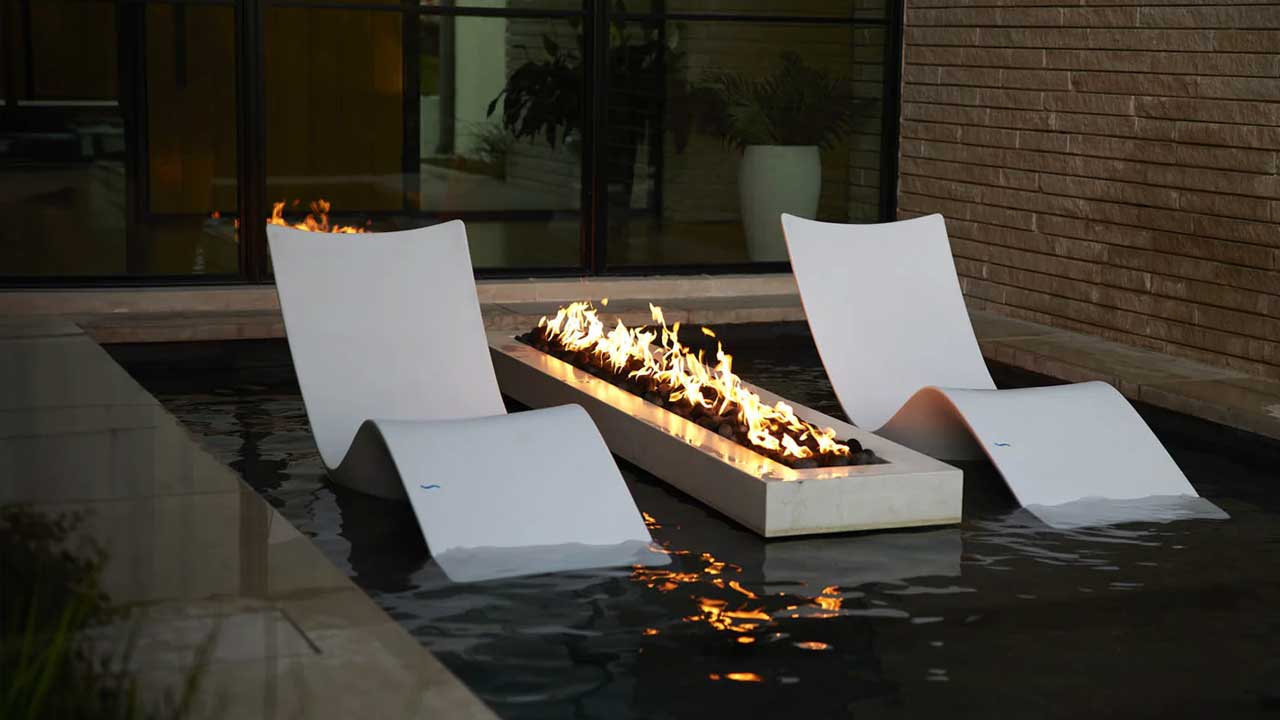
As outdoor living spaces continue to evolve into true extensions of the home, homeowners are increasingly seeking luxury, function, and style in every element of their backyard designs. This year, in-pool furniture and fire features are taking center stage as two of the most in-demand trends, transforming pool decks and sun shelves into five-star resort-style environments. To get an expert perspective, we sat down with Frank Vitori of AquaBlu Mosaics, one of the most trusted voices in poolside accessories.
2 Hot Trends for 2025: In-Pool Furniture & Fire Features
Mass Adoption of Sun Shelves Sparks an In-Pool Furniture Revolution
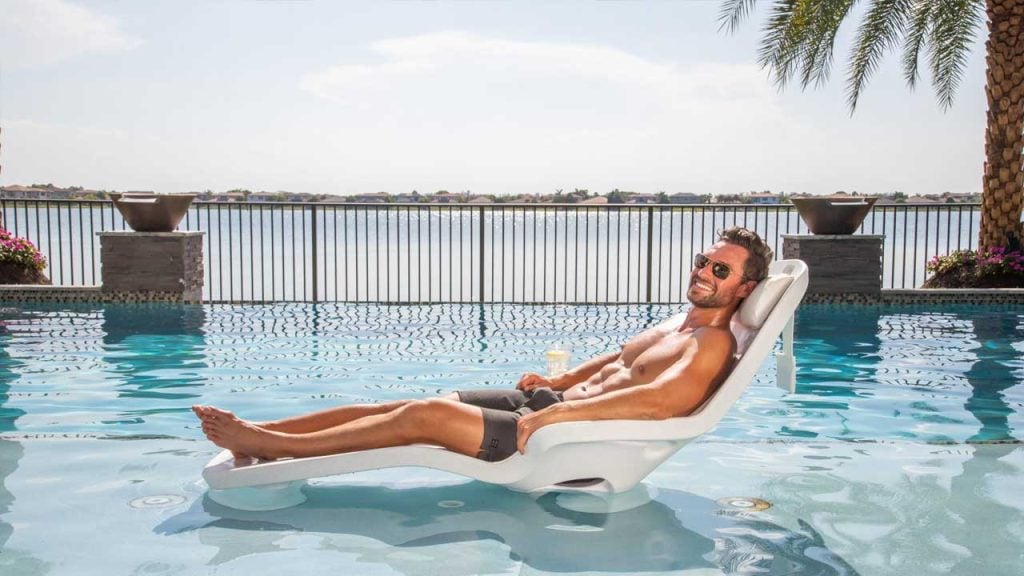
Frank Vitori credits the meteoric rise of in-pool furniture to the widespread popularity of the sun shelf, also known as the Baja shelf. “Over 90% of modern custom inground pools are now being built with a sun shelf,” he shared. “People have come to realize that it’s not just a stylish design element—but a shallow-water hangout zone that brings comfort, safety, and versatility to families and guests.”

He points to industry innovators like Ledge Lounger, which helped define this category with their Signature Chaise. “I gotta give a lot of credit to Ledge Lounger and Chris Anderson for seeing the potential,” Vitori said. “They started with one chair at trade shows and now their products are part of nearly every luxury backyard.”


Following their example, brands like Floating Luxuries and Tenjam have entered the market with fresh takes. “Floating Luxuries came out with their Kai Collection, which is oversized, ergonomic, and super convenient to fill in place with a garden hose,” said Vitori. “Tenjam is another newer brand offering some exciting new designs for in-pool seating.”
Studio Red Rock: Cast Concrete and Built to Last
One of the most distinctive product lines comes from Studio Red Rock, which specializes in cast concrete in-pool furniture. “These are heavy-duty, commercial-grade pieces that don’t need to be filled with water because they already weigh over 160 pounds,” explained Vitori. “That permanence is a big selling point for resorts and hospitality clients. Guests can’t drag the furniture around or damage it—once it’s in place, it stays put.”
Studio Red Rock’s modern silhouettes and durable finishes are turning heads, especially in high-end commercial settings and contemporary residential pools where maintenance and visual impact are both key.
Sustainable Style Makes Waves
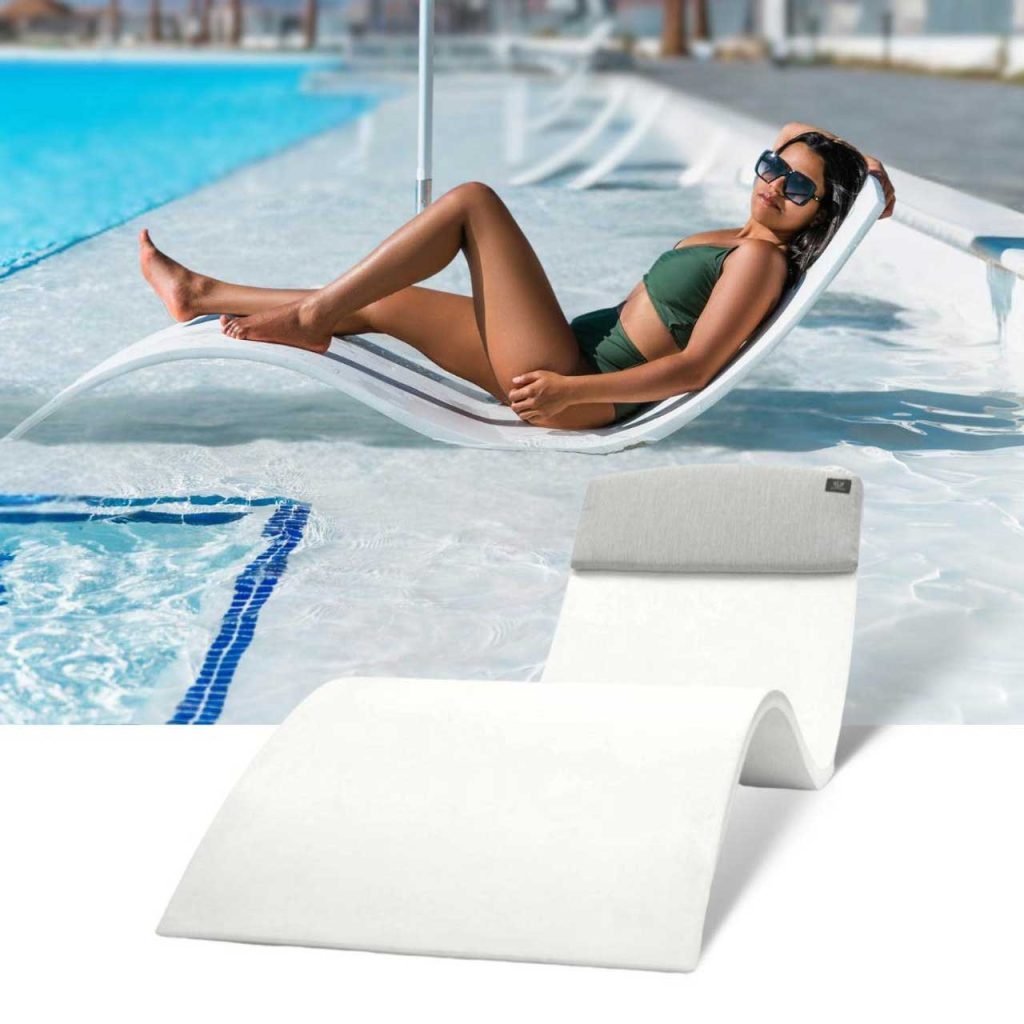
Sustainability is also gaining momentum in the outdoor furnishings space. European-style brands like Vondom are leading the way with eco-friendly materials, such as the Ibiza Collection made from recycled ocean plastics. “There’s no reason something sustainable has to be boring or unattractive,” said Vitori. “The Ibiza Collection is a great example of that—it’s stylish, high-quality, and it’s helping clean up the ocean. That’s a win-win.”

More and more, consumers are factoring sustainability into their design decisions, especially younger buyers who want their purchases to reflect their values.

Going Beyond the Chaise
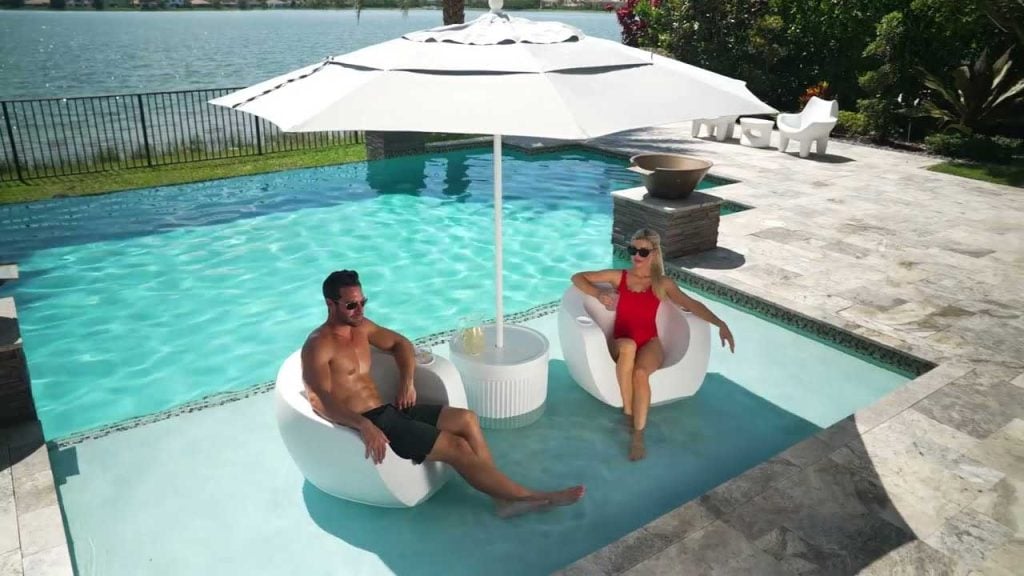
It’s no longer just about the lounger. “We’re seeing more diversity in product offerings—rockers, modular sofas, side tables, even daybeds,” said Vitori. Ledge Lounger’s Affinity Collection is one example, offering ottomans and configurable seating that adapts to the size and shape of the sun shelf.
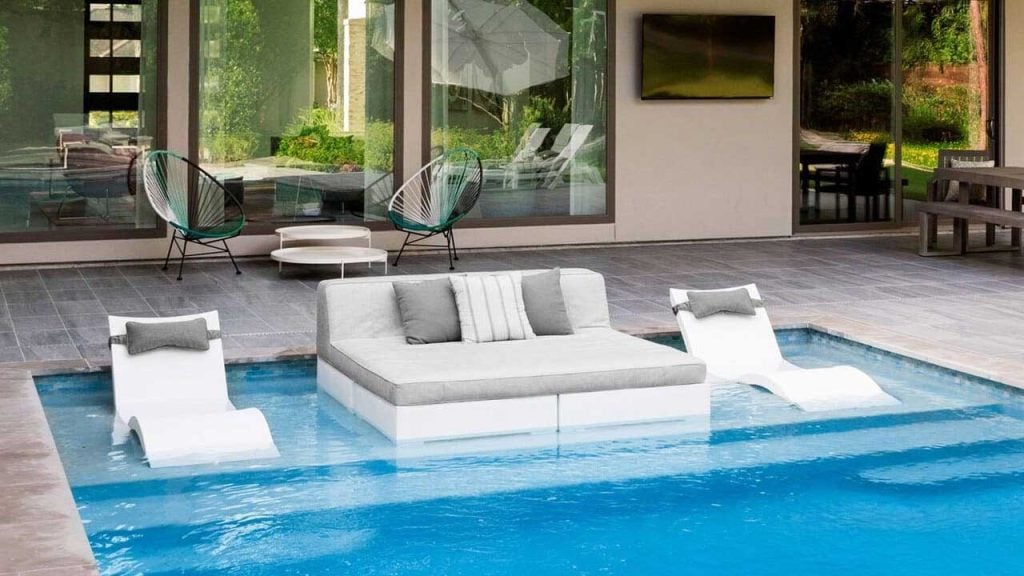
Some of the most underrated but impactful additions, according to Vitori, are accessories like tables with built-in ice buckets or umbrella holes. “It’s surprising how many people don’t realize that most in-pool furniture lines include coordinating side tables,” he said. “These tables often come with built-in ice bins and pre-drilled holes to accommodate umbrellas. That way, you’ve got a drink nearby, some shade overhead, and everything is cohesive.”
The Importance of Quality and Material
With in-pool furniture becoming a long-term investment, Vitori stresses the importance of selecting pieces made specifically for water use. UV resistance, structural stability, and chemical durability are essential. “There’s a lot of imitators out there now,” he warned. “Some of these cheaper versions you find online aren’t built for constant sun and chlorine exposure. They yellow, they crack, and they don’t hold up.”
Each brand has its own approach to water filling, anchoring, and material engineering. “Some have manual plugs, others you fill in the deep end. Floating Luxuries uses a hose and venting system that’s super easy to use. Every design has its pros and cons, so it’s worth talking to someone who knows the differences.”
Fire Features: A Focal Point of Year-Round Use
As homeowners look to make their outdoor spaces usable year-round, fire features are becoming a must-have. From compact fire pits to grand fire-and-water combinations, the market has expanded dramatically.
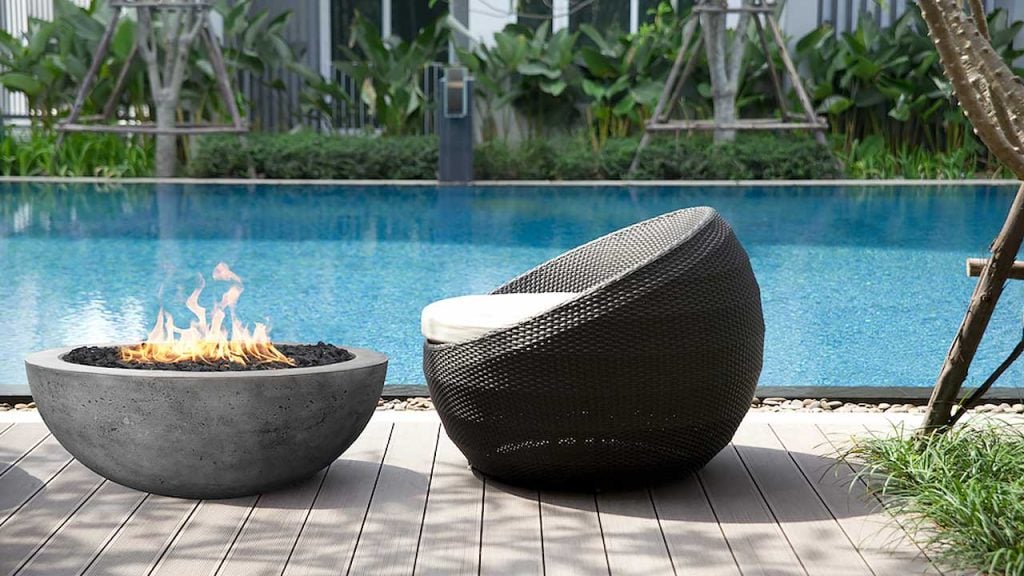
Vitori points to two standout manufacturers—Prism Hardscapes and The Outdoor Plus—as leaders in this category. “Prism Hardscapes specializes in GRFC cast concrete, offering that natural stone look. They’re sealed, color-through, and ready to ship,” he said.
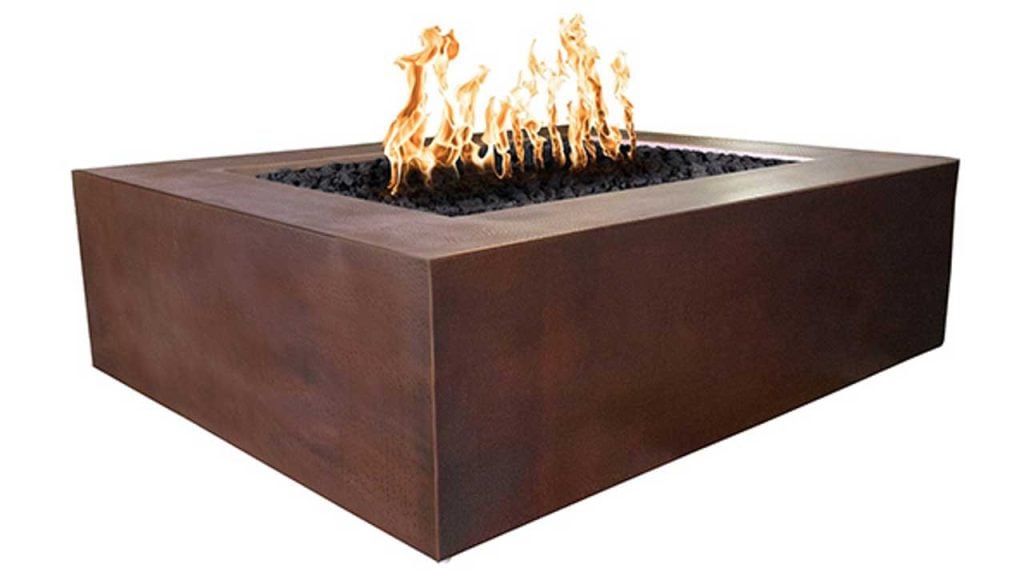
In contrast, The Outdoor Plus brings more contemporary flair, with powder-coated stainless steel and hammered copper finishes. “The copper options age beautifully over time and add a real wow factor,” noted Vitori.
Innovative Designs Gaining Traction
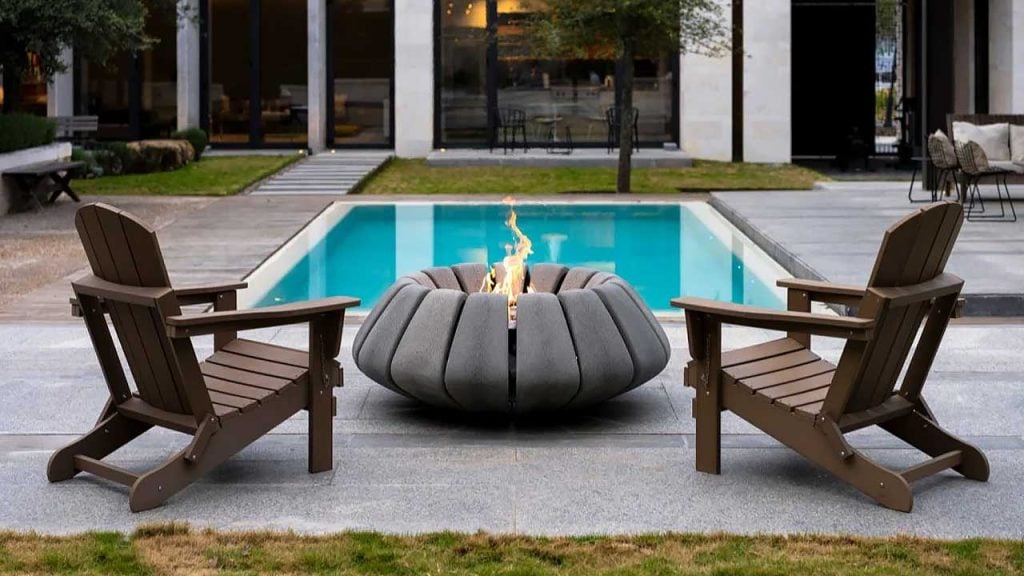
One of the more eye-catching designs to hit the market recently is Prism Hardscapes’ Sunflower Fire Bowl. “It breaks the mold—literally. It’s a sculptural centerpiece that looks incredible on modern decks,” said Vitori.
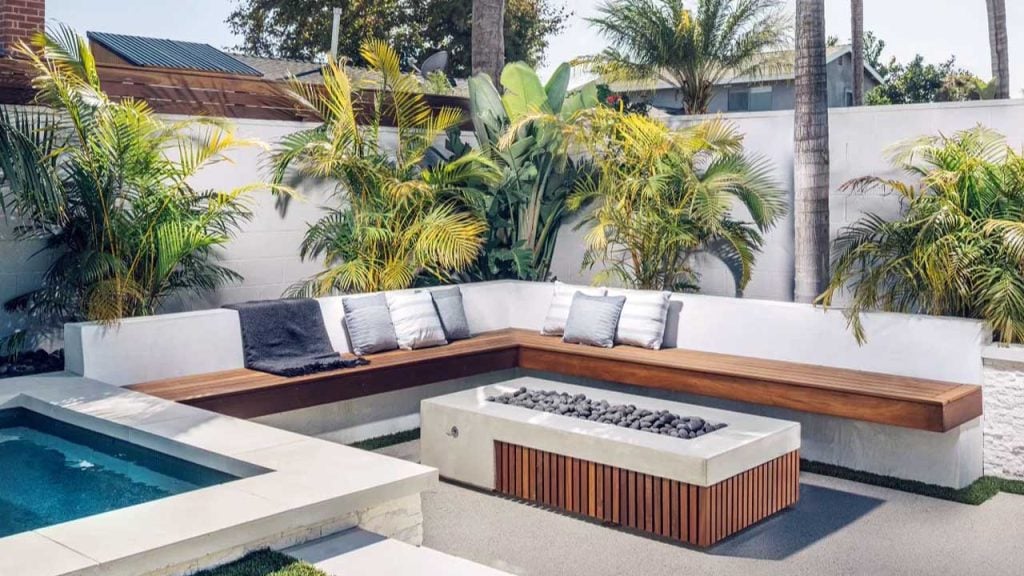
Another highlight from Prism is the Fairmont Table, which combines teak and concrete in a hybrid fire feature perfect for coastal designs.
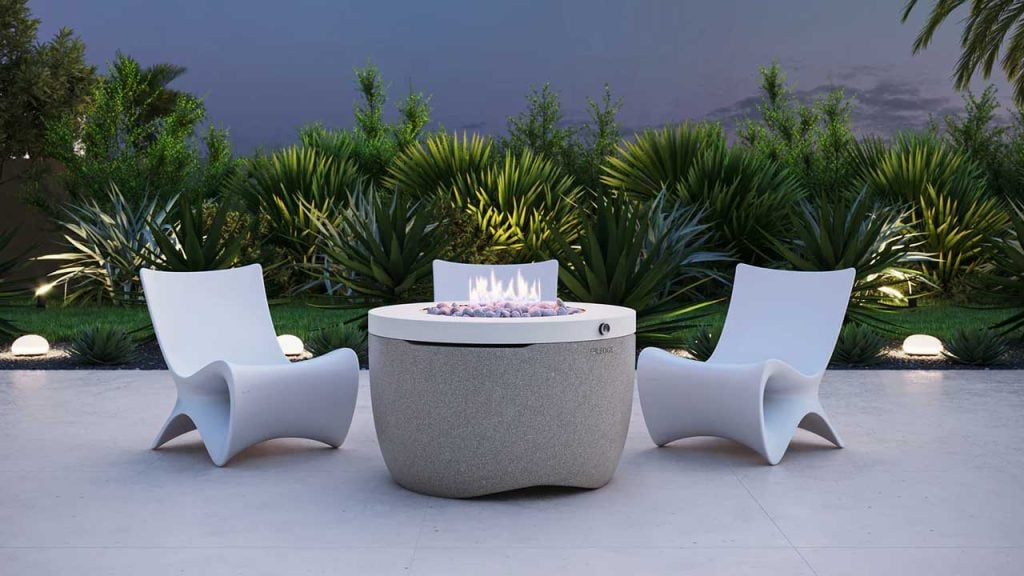
Ledge Lounger is also making a splash with their new Halo Fire Pit, a resin-based design that includes a hidden compartment for a compact propane tank and a rotating lid. “It’s ideal for the DIY crowd. No need to plumb gas—it’s turnkey,” said Vitori.
Fire & Water: A Visual Power Combo
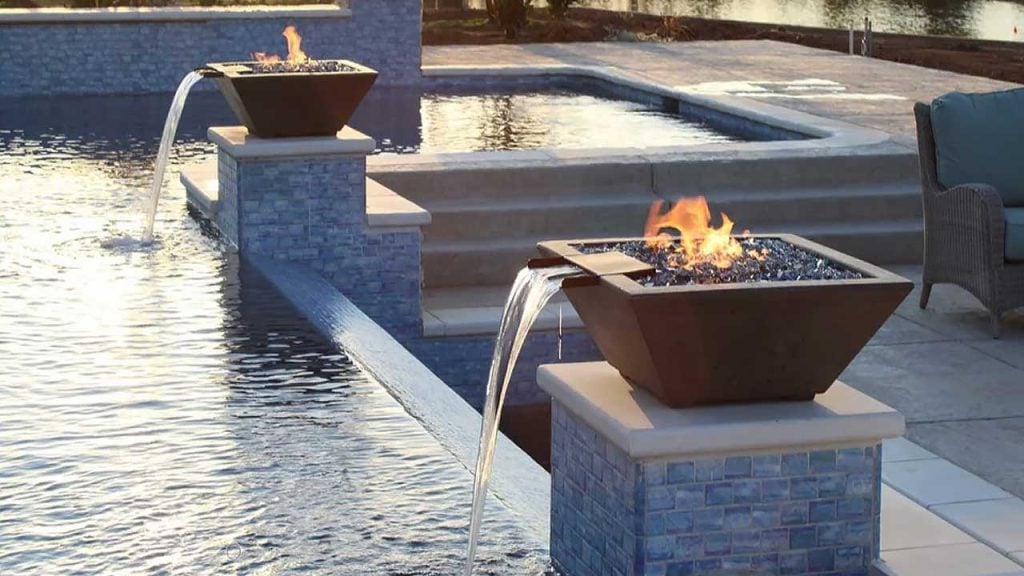
The mix of fire and water is captivating, but it requires thoughtful integration. “These are usually not DIY installations,” Vitori said. “Fire and water bowls typically go on pedestals around the pool and are installed during the pool build.”
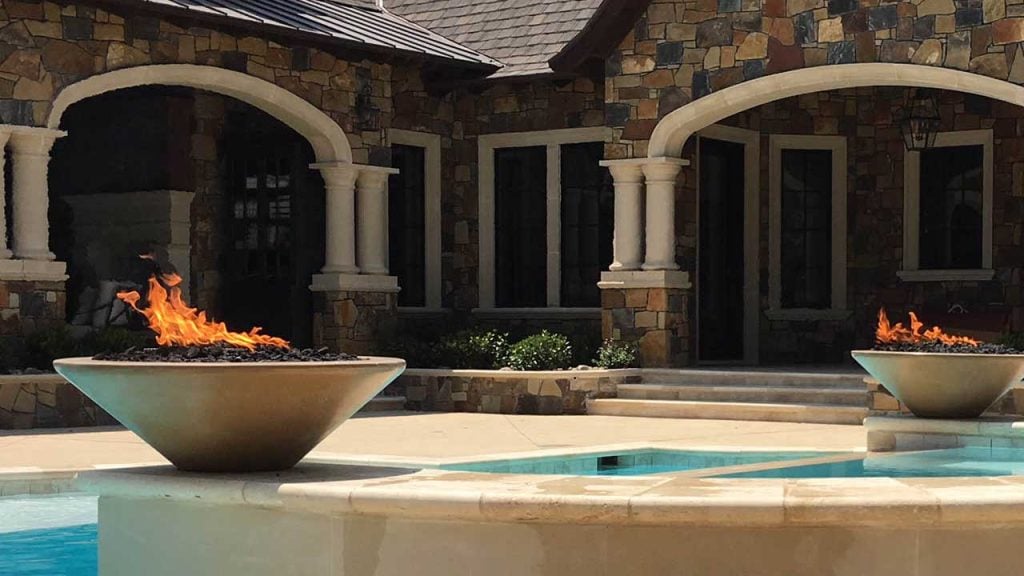
Standard models like the Cazo Bowl and Lombard are popular, but custom fabrications are on the rise. “We’re seeing more requests for 10-foot fire-and-water features, full automation, and custom pans and burner kits,” said Vitori. “Designers are pushing boundaries, and the manufacturers are stepping up to meet the demand.”
What It All Means for 2025
Fire features and in-pool furniture are more than just trendy add-ons—they’re reshaping how people live in and around their pools. “This year’s trends aren’t just about what looks good,” said Vitori. “They’re about designing for function, comfort, and usability—creating spaces that people want to live in, not just look at.”
Expect more innovation ahead as designers push for modularity, sustainability, and integration with smart systems. The modern poolscape isn’t just for summer—it’s becoming the heart of the home, all year long.
Article Photo Credits: Ledge Lounger, Tenjam, Studio Redrock, Floating Luxuries, Prism Hardscapes, The Outdoor Plus








Chlorine gets a bad wrap.
Dry skin. Red eyes. That harsh “pool smell” people complain about the second they walk into a backyard or indoor pool.
That story is common enough, but it doesn’t really hold water. Because when a pool is dialed in properly, chlorine isn’t the thing people notice. It’s only when the chemistry starts to slip that all those issues show up.
The truth sits right in the middle—and if you’re constantly around pools, understanding that nuance matters more than most people realize.
Because while chlorine is the backbone of modern pool sanitation, it’s also one of the most misunderstood chemicals when it comes to swimming pools.
And here’s the part most people don’t really get: it’s not just about chlorine itself—it’s what happens after it starts doing its job.
Chlorine Isn’t the Problem—Until It Becomes One
Let’s start here: properly balanced chlorine is not the enemy.
In fact, it’s the reason pools are even usable in the first place. It kills bacteria, neutralizes contaminants, and keeps water safe for human use. Health authorities consistently point out that when maintained within proper ranges, it’s not associated with harmful effects.

But chlorine doesn’t exist in a vacuum.
The second it hits organic matter—sweat, sunscreen, urine, body oils—it reacts. And that reaction creates a whole different class of compounds known as disinfection byproducts, most notably chloramines.
That’s where things start to get interesting.
That “Chlorine Smell”? That’s Actually the Problem
Here’s a quick reality check you can drop on any homeowner:
Think of your pool like a kitchen.
Free chlorine is your cleaning crew.
Chloramines are what happens when that crew gets overwhelmed and starts leaving behind dirty rags instead of actually cleaning.
Here’s what’s going on in plain English:
When your pool is “healthy,” chlorine is actively killing contaminants—sweat, sunscreen, body oils, urine, all the stuff people bring into the water. When chlorine does its job properly, it finishes the job and stays effective.
But when a pool is struggling, a few things usually happen:
- Not enough chlorine
- Poor circulation
- Dirty filter
- Heavy bather load
- High heat / sunlight burning chlorine off
Now the chlorine can’t keep up.
Instead of fully destroying contaminants, it only partially reacts with them—especially nitrogen-based stuff like sweat and urine.
That partial reaction creates chloramines.

And here’s the key:
Chloramines are basically used-up chlorine that’s now weak and smells bad
So the worse your pool condition gets, the more this cycle feeds itself:
- More contaminants enter the water
- Not enough strong chlorine to handle it
- More partial reactions happen
- More chloramines form
- Water gets cloudy, smells “chlorine-y” (ironically), and irritates eyes
- Now your chlorine is even less effective
It’s like your cleaning crew switching from disinfectant to just wiping things around with a dirty sponge.
That “strong chlorine smell” people talk about?
That’s not clean water—that’s chloramines building up.
What It Actually Does to the Body
Let’s break it down in real-world terms—the stuff people actually feel after swimming.

Skin: Dry, Tight, Irritated
Chlorine strips natural oils from the skin. That’s not a theory—it’s literally how it works as an oxidizer. The longer the exposure, the more moisture gets pulled out, leading to dryness, itching, and irritation.
For swimmers, that shows up as:
• Dry, flaky skin
• Redness or irritation
• Worsening of eczema or sensitive skin
For pool techs? Well, it’s why their hands look like they’ve been sanding drywall for 20 years.

Eyes: Burning, Red, and Watering
Again, not chlorine itself—chloramines.
When these compounds off-gas into the air (especially in indoor pools), they irritate the eyes and mucous membranes.
That classic “red eye” look after swimming? That’s a chemistry issue.

Lungs: The One Nobody Talks About Enough
This is where things get more serious.
Chloramines don’t just sit in the water—they gas off into the air above the pool surface. In poorly ventilated environments (think indoor facilities), that exposure can irritate the respiratory system.
We’re talking:
• Coughing
• Wheezing
• Chest tightness
• That “chlorine cough” you hear about
There’s also research linking repeated exposure—especially in competitive swimmers—to increased rates of asthma and airway irritation.
Now, is your average backyard swimmer at serious risk? No.
But for those working around this stuff every single day? That’s a different conversation.

Hair: Dry, Brittle… and Sometimes Green
The dryness comes from oxidation—same story as skin.
The green hair myth? That’s actually copper oxidation, not chlorine. But chlorine is what creates the conditions that allow it to happen.

Teeth: Yeah, Even That
Long-term exposure—especially in improperly balanced water—can contribute to enamel erosion and staining, sometimes referred to as “swimmer’s calculus.”
Not common for casual swimmers, but something you’ll see in high-frequency exposure scenarios.
The Bigger Picture: It’s About Byproducts, Not Chlorine
Here’s the takeaway most people miss:
Chlorine itself isn’t what causes most of the issues people complain about.
It’s the byproducts created when chlorine has to work too hard.
That’s why poorly maintained pools feel worse—even if they technically have chlorine in them.
And it’s also why a properly balanced pool with the right free chlorine, low combined chlorine, and good circulation feels completely different.
Having A Little Know-How Comes In Handy
Everything we just talked about? It’s controllable. Not eliminated—but managed. And the folks who understand this are the ones having the best swim experience.
Here’s what actually makes a difference:
• Keeping combined chlorine low (breakpoint chlorination matters)
• Proper circulation and filtration
• Encouraging pre-swim showers (huge, underrated)
• Ventilation in indoor environments
• Regular oxidation/shocking to eliminate chloramines
Fun fact: a massive percentage of swimmers skip showering before entering the pool—which means chlorine has to burn through more contaminants, creating more byproducts in the process.
So yeah… sometimes the problem isn’t with chemistry—it’s with swimmers.

The Core Chemistry Ranges To Target
Most people aren’t chasing perfection—they’re keeping water in a range where it behaves consistently. In a typical chlorine pool, that means maintaining free chlorine around 2–3 ppm, keeping pH in the 7.4 to 7.6 sweet spot, and holding total alkalinity between 80 and 120 ppm so the system stays stable. Calcium hardness generally lands between 200 and 400 ppm depending on the surface, while cyanuric acid sits around 30 to 50 ppm in most outdoor pools, sometimes higher in salt systems. Combined chlorine, or chloramines, should ideally be zero—anything over 0.5 ppm is a sign the pool is starting to struggle.
What Happens When the Water Falls Out of Balance
When chlorine drops too low, the water is no longer protected. It starts dull, turns cloudy, and eventually gives way to algae while chloramines begin to build. On the flip side, excessive chlorine usually shows up as irritation—burning eyes, dry skin, and unnecessary wear on liners and equipment.
pH is where most problems begin. When it falls too low, the water becomes aggressive, leading to corrosion and that sharp, uncomfortable feel swimmers notice right away. When pH climbs too high, chlorine loses effectiveness, which opens the door to cloudy water, scaling, and the slow buildup of problems that don’t resolve on their own.
Total alkalinity acts as the buffer for all of this. If it’s too low, pH becomes unpredictable and difficult to control. If it’s too high, pH tends to drift upward constantly, making the pool harder to manage over time.
Calcium hardness affects the pool surface more than anything. Low calcium creates “hungry” water that pulls minerals out of plaster, while high calcium leads to scale buildup on tile, heaters, and salt cells—often accompanied by cloudy water that refuses to clear.
Cyanuric acid is one of the most misunderstood factors. Without enough of it, chlorine gets burned off by sunlight almost as quickly as it’s added. With too much, chlorine becomes far less effective, creating situations where test results show adequate levels, but algae still appears.
Chloramines tie it all together. When they show up, it’s a clear signal that chlorine isn’t finishing its job. That’s when you get the strong smell, the irritation, and the sense that the water just isn’t right.
The Right Way To Think About It
At the end of the day, most people who are managing a pool’s chemistry aren’t looking at these numbers in isolation. Chlorine is the worker, pH determines how effective that worker is, cyanuric acid protects it from the sun, and alkalinity keeps the entire system from swinging out of control.
When those elements are in line, the pool runs clean and predictable. When they’re not, every visit turns into a problem-solving exercise.

Buying a home with a pool can almost feel like you hit the jackpot—until you realize that the swimming pool is its own ecosystem with its own set of rules, maintenance needs, and potential headaches. A backyard pool can absolutely elevate a property, but if you don’t know what you’re looking at, it can also turn into an expensive surprise. The key is understanding what to look for before you close, not after you’re already holding the keys.
You already called out some of the big visual red flags—loose tiles, green water, low levels, and structural cracks. Those are the obvious ones. But the real story usually lives just beneath the surface and over on the equipment pad.
Let’s walk through the top pool-related issues home buyers need to be aware of so you don’t inherit someone else’s problem project.

Structural Integrity Beyond the Obvious
Hairline cracks happen. That’s normal. But not all cracks are created equal. What you want to pay attention to are structural cracks—especially ones that run horizontally, widen over time, or show signs of movement.
Cracks in steps, benches, or along the bond beam (top edge of the pool) can indicate shifting soil, poor construction, or long-term neglect. If the pool is losing water and there are visible cracks, that’s a double whammy—now you’re talking structural repair plus leak detection.
Also look for signs of previous patchwork. If you see multiple areas that have been repaired or resurfaced inconsistently, that could mean ongoing issues rather than a one-time fix.

Pool Surface Condition (Plaster, Pebble, Vinyl, Fiberglass)
The interior finish tells you a lot about how the pool has been maintained. Plaster that feels rough, stained, or etched is usually the result of poor water chemistry over time. Pebble finishes should be uniform—if they look worn down or patchy, resurfacing could be on the horizon.
Vinyl liner pools have their own issues—wrinkles, fading, or brittleness are signs the liner is nearing the end of its life. Fiberglass pools should be smooth and glossy; dull or chalky finishes could indicate oxidation or improper care.

Resurfacing isn’t a minor expense, so this is one of those things you want to factor into your offer if it’s close.

Equipment Pad: The Heart of the System
One of the biggest mistakes people make when buying a home with a pool is that they forget to look at the pool equipment first. This often proves to be a costly error. The equipment pad is where you’ll find out if the system is dialed in or held together with duct tape and prayers.
Here’s what to inspect:
Pump: Listen for grinding or whining noises. That usually means worn bearings or a failing motor.
Filter: Check for leaks, rust, or cracks. Ask when it was last cleaned or replaced.
Heater: Look for corrosion, especially if the home is near the coast. Heaters are expensive to replace.
Chlorinator or Salt System: Salt cells have a limited lifespan. If it’s older, you may be replacing it soon.
Automation System: If there’s a control panel or app-based system, test it. Make sure it actually works.
A clean, organized equipment pad is usually a good sign. If it looks chaotic, poorly plumbed, or neglected, that tells you everything you need to know about how the pool has been cared for.

Circulation and Flow Issues
Even if the water looks okay during a showing, circulation problems can be hiding underneath. Poor circulation leads to algae growth, cloudy water, and inconsistent chemical distribution.
Watch for:
Weak return jets
Dead spots where debris collects
Air bubbles in the pump basket
Water not reaching skimmers properly
These can point to suction leaks, clogged lines, or undersized equipment. None of those are fun to deal with after the fact.

Signs of a Leak (Beyond Low Water Level)
Low water is one clue, but leaks don’t always present that clearly. Pools naturally lose some water to evaporation, especially in hot climates, so you need to dig deeper.
Look for:
Wet spots or sinking areas around the pool
Cracks in decking that seem to be shifting
Constant need to refill the pool
Air in the system (bubbles in returns)
A leak detection test might cost a few hundred bucks during escrow, but it can save you thousands if there’s an underground issue.

Decking and Drainage Problems
The area around the pool matters just as much as the pool itself. Poor drainage can lead to water pooling near the foundation or undermining the pool structure over time.
Watch for:
Uneven or lifting deck surfaces
Standing water after rain or heavy use
Cracks that run toward the pool
Deck material separating from the coping
This isn’t just cosmetic. Drainage issues can lead to bigger structural problems if left unchecked.

Coping and Tile Line Condition
The coping (the edge around the pool) and tile line take a beating from weather, chemicals, and constant water exposure. Loose coping stones or deteriorating grout can allow water to seep behind the shell, leading to bigger issues.
If tiles are falling off or the grout is crumbling, it’s usually a sign of long-term neglect rather than a quick fix situation.

Electrical and Safety Compliance
This is one area you don’t want to overlook. Pools involve electricity, water, and metal—bad combination if things aren’t up to code.
Make sure:
GFCI outlets are present and functional
Bonding wires are intact
Pool lights are working and properly sealed
There are no exposed or makeshift electrical connections
Older pools may not meet current code, and bringing them up to standard can cost real money.

Age and Remaining Life of Equipment
Everything on a pool has a lifespan. Pumps, heaters, filters, and salt cells don’t last forever. If the equipment is 8–12 years old or older, you should assume replacements are coming soon.
Ask for:
Installation dates
Service records
Any recent repairs or upgrades
If the seller doesn’t know, that’s already a signal.

Water Chemistry History
You can tell a lot about a pool just by testing the water. If levels are wildly off during a showing, that might mean the pool hasn’t been maintained properly.
Poor chemistry over time leads to:
Surface damage
Equipment wear
Algae growth
Scaling and staining
Even if it looks clean for the showing, bad habits tend to leave long-term damage.
Pool Size, Depth, and Usability
Not all pools are practical for every buyer. Some are too deep, too shallow, or oddly shaped for actual use.
Think about:
Is the depth appropriate for your family?
Is there usable space for lounging or playing?
Are steps and entries safe and accessible?
A pool that looks impressive but isn’t functional can become more of a burden than a benefit.
Permits and Compliance
Make sure the pool was built legally and permitted. Unpermitted pools can create issues with insurance, resale, and liability.
Also check:
Fencing requirements
Safety gates and alarms
Local compliance standards
You don’t want to inherit a compliance issue that becomes your problem.

What Sellers Should Be Providing to Smooth the Sale
When buying a home with a pool, one of the clearest signs of how well it’s been cared for is the documentation the seller can provide.
Pools make buyers nervous for a reason. Unknown condition, hidden issues, and lack of maintenance history can quickly turn a great backyard into a question mark. The more information a seller can provide, the easier it is to evaluate the pool with confidence.
Here’s what the seller should have ready:
Builder Information
Who built the pool? Was it a reputable company? If you’ve got original plans or documentation, that’s gold.
Service History
Provide records of regular maintenance. Show that the pool has been consistently cared for, not ignored until listing day.
Equipment Manuals
Buyers don’t want to inherit a system they can’t operate. Having manuals or even basic written instructions goes a long way.
Warranty Information
If any equipment is still under warranty, make that clear. Transferable warranties are a big plus.
Recent Repairs or Upgrades
Be transparent about what’s been done—new pump, resurfacing, tile work, etc. This builds trust and reduces negotiation friction.
Utility and Operating Costs
Give buyers a realistic idea of what it costs to run the pool monthly. This helps eliminate surprises.
Pool Service Contact
If you have a reliable service company, introduce them. Buyers love continuity, especially if they’re new to pool ownership.
Startup Instructions
A simple “how to run your pool” guide—timers, valves, cleaning schedule—can make a huge difference for a first-time pool owner.
Clean, Balanced Water
This sounds basic, but it matters. A clean, properly balanced pool during showings sends a strong signal that the pool has been maintained.
At the end of the day, buying a home with a pool isn’t just about the backyard lifestyle—it’s about inheriting a system. If that system is in good shape, you’re stepping into something awesome. If it’s not, you’re stepping into a project.
Do your homework, get a professional pool inspection during escrow, and treat the pool with the same level of scrutiny as the roof or foundation. Because when a pool goes sideways, it doesn’t mess around.
Does a Pool Add Resale Value?
Yes—but it depends on the market, the condition of the pool, and how well it’s maintained.
A 2025 study from Realtor.com found that homes with pools sold for a 54% premium—$599,000 versus $389,000 for homes without. While the so-called “pandemic pool premium” has cooled, pools still remain a strong selling point in many markets, especially in warmer climates.
“During the pandemic, people were looking for ways to get more enjoyment out of their homes, and this surge in demand for features like pools translated into a substantial ‘pool premium,’ where homes featuring a pool commanded significantly higher asking prices compared to their pool-less counterparts,” says real estate expert Hannah Jones.
That premium peaked in early 2022, but it hasn’t disappeared.
“Although price premiums have normalized, the presence of a pool continues to drive a premium and be a popular item to include in listings as a home or community feature,” Jones adds.
The catch? Condition matters.
In other words, buying a home with a pool can add value—but only if it’s been well maintained. Even an older pool with updated equipment can absolutely increase buyer appeal and help a home sell faster. But a neglected pool—green water, broken or outdated equipment, visible damage—can have the opposite effect, turning buyers off or becoming a negotiation point that drags the price down.
Pool News
The Current State of the Backyard Pool Industry: Short Film Holds Up a Mirror
The film that asks the question… is family togetherness worth the price of summer’s most expensive luxury?

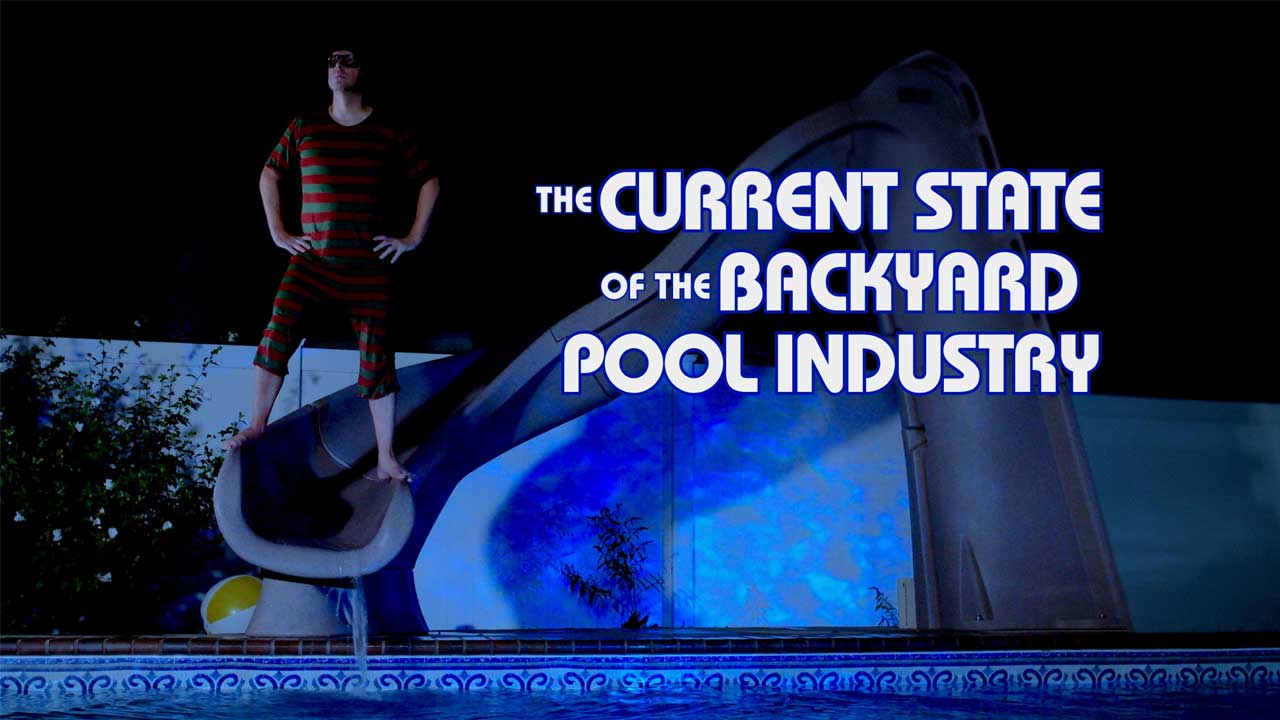
At first glance, The Current State of the Backyard Pool Industry sounds less like a short film and more like something you’d see on the agenda at an industry summit. It reads like a white paper. A market report. An economic forecast delivered in a ballroom with bad coffee and PowerPoint slides.
That’s intentional.
Because the film isn’t just about a backyard pool. It’s about everything surrounding it right now — inflation, supply chain issues, pricing anxiety, dwindling usage, and the uneasy dance between homeowners and contractors trying to justify what something costs these days.
Film Title Anything But a Misnomer
The short film from Derek Frey, David Amadio, Gil Damon, and Steve Kuzmick opens in territory that ought to immediately feel familiar to anyone working in the pool industry: a dated backyard pool. The liner is aging. The water looks neglected. The chemistry is questionable. And the homeowner is staring at a renovation estimate he isn’t sure he can justify — financially or emotionally.
From that setup, the film does something clever. It takes the headlines we’ve been writing about here at Pool Magazine — rising costs, logistical breakdowns, economic pressures — and drops them into an everyday backyard conversation. Then it asks a harder question:
When the cost of maintaining the pool goes up… what happens to the meaning of it?

Film Shows The Realities of Rising Costs
In the opening scene, a homeowner, Henry (played by Gil Damon), asks his pool guy, Rick (played by Steve Kuzmick), why his pool liner replacement now carries a five-figure price tag.
The character Rick cites inflation. Supply chain instability. A late winter freeze in Texas. Petrochemical plant shutdowns. Limited liner availability.
If you’ve read Pool Magazine over the past few years, you’d already know that at least a few of those stories have already been validated in print. They’re real. They happened. They created issues that affected contractors nationwide.
That’s what makes the scene land.
Because Rick isn’t inventing stories. He’s pulling from real-life industry issues. But the way he delivers his points — confidently, rapidly, with the cadence of someone who has well rehearsed his rebuttal — creates more than a sliver of doubt.
Is he educating the homeowner? Or is he stacking headlines into a persuasive narrative that smacks with the slick gold chain energy of a used car salesman?
“The whole Texas freeze thing came from research,” David Amadio explains. “We were trying to connect the plight of this one contractor to a larger industry issue. The audience doesn’t know if it’s real. They don’t know if it’s legit. It could just be a ruse.”
That ambiguity is the point. The film doesn’t accuse the industry of exaggeration. It simply shows how real economic forces can easily blur into sales language.
The inflation and Texas freeze references aren’t throwaway lines. They were well researched.
Art Sometimes Imitates Life
“When you first reached out to us for an interview, I went on the Pool Magazine website, and one of the top headlines was about another Texas freeze,” director Derek Frey says. “I was like, wow. I don’t know if that’s art imitating life or not, but that was particularly intentional in our crafting of this story.”

That realness doesn’t just live in the headlines, pool guy Rick cites — it lives in how he carries himself.
Kuzmick’s performance isn’t built only on what he says but on the physicality of how he delivers his lines. After making his case for why Henry’s liner replacement will be more expensive, he wraps the conversation with a firm slap on his customer’s back and a casual, “Talk it over with the family and let me know.”
Then he walks.
He doesn’t linger, and he sure doesn’t soften the number. The message is subtle but unmistakable: I’ve got other jobs. I’m busy, and you need me more than I need you.
A View From The Other Side of the Mirror
Henry, the homeowner, is just as recognizable as Rick — only from the other side of the estimate.
He’s the Everyman. The middle-aged dad staring at a liner replacement bill that costs far more than he expected and wondering how he’s going to explain it at the dinner table. There’s a touch of Clark Griswold in him — earnest, well-intentioned, slightly overwhelmed. You get the sense that if something can go wrong with his pool, it probably will. When his skimmer pole snaps in half on the first attempt to clean, it’s funny — but it’s also revealing. This is a man losing control of something he once felt confident about.
The real pressure, though, is about the conversation waiting for him inside the house.
Henry knows the liner replacement isn’t just a repair. It’s a negotiation. One where he has to justify the expense to his wife — and he already senses she won’t be on board. In today’s economy, a five-figure liner replacement isn’t a casual conversation. It’s sure to be a debate and a potential source of tension.
That’s where the film pivots from industry commentary to something more personal, and a conversation happening in many homes across the nation.

The hesitation isn’t just about money. It’s about relevance.
Fighting a Losing Battle Against Devices & Indifference
Henry tries to make his case by appealing to what the pool used to represent — long summers, family time, shared memories. But when he looks to his kids for reinforcement to help him make the case, he’s met with indifference. Phones in hand, half-hearted answers, distracted nods. The pool that once anchored family life now competes against their screen time.
“It’s like a fantasy of middle-class American fatherhood,” David Amadio says. “All of us are watching our kids grow older by the day. All these pastimes we loved are falling by the wayside. This movie was our attempt to try to hold onto those things for a little bit longer.”
Gil Damon, who plays Henry — and who actually owns the pool used in the movie — brings an authenticity to that quiet frustration.
The Film Introduces a Thought Provoking Question
“Whether the kids swim in it or not, you still have to maintain it,” Damon says. “If you don’t maintain it, something goes terribly wrong. And there’s still something kind of joyous in maintaining it. Even just skimming the leaves. But at some point you’re like, wait, what am I doing all this for?”
That question lingers in the film.
What are we maintaining?
The pool becomes a metaphor for something bigger — for rituals that once felt permanent but now feel optional. For investments that once made obvious sense but now require defense. For a version of family life that doesn’t compete well with Wi-Fi.
Competing Against Technology
“Technology is king,” Amadio says. “There are so many casualties in the culture of technology. The pool’s like a little antidote to that. It’s an analog getaway from the digital maelstrom in which we all live.”
In that context, the liner replacement isn’t just a repair. It’s a referendum. Not just on budget, but on whether the pool still holds meaning inside the household. Henry’s wife finally says she would just as soon as like to fill in the pool and be done with it altogether.
And it’s right when Henry seems ready to give up — when he shuts off the timer and retreats inside — that the film introduces its wild card.
Reigniting That First Spark
Henry awakens to the sound of splashing. The pool lights are on. The water, which hours earlier looked neglected and uninspiring, now appears clean, inviting, almost cinematic. Floating across the surface is a stranger in goggles, a swim cap, and striped bathing suit, casually doing the backstroke.
He introduces himself as Willy Chamieux — played by writer David Amadio — and calmly explains that he is “the manifestation of why pools are cool.”

Henry, understandably alarmed, tells him the pool is in no condition to swim in (even though it’s clearly been transformed) and orders him out, a command which Willy ignores.
Instead, he dives beneath the surface to “inspect” the torn liner Henry was complaining about. When he resurfaces, it’s face down in a dead man’s float. Henry panics and jumps in to save him — only to discover he’s been played.
Getting Memory to Break Down The Barriers
And that’s the turning point. The moment Henry slips into the water, all of the tension drains from him. The defensiveness, the budgeting, the quiet resentment we saw earlier — it all fades. There’s something about being back in his pool — not as a project, not as an expense, but as he always imagined it — that softens him. You can see it on his face. He’s not calculating anymore. He’s remembering.

Willy challenges him to a game. They dive for quarters. They laugh — the kind of unguarded laughter that hasn’t been heard in that backyard in a while.
Soon, the rest of the family drifts outside. They’re tackled into the pool by Willy and quickly fall under the same spell as Henry, experiencing the renovated condition and joy of once more being in their own pool. The tone of the film shifts again. Visually, the sequence leans into classic aquatic spectacle.
“That was the main reference,” Derek Frey says. “Those 1930s films choreographed by Busby Berkeley — Footlight Parade — and Olympic synchronized swimming. We storyboarded the movement based on many of those references.”

The overhead shots evoke old Hollywood water ballets. The pool center stage again once more in the lives of Henry and his family.

Analysis of Willy Chamieux
The character of Willy carries an apparition-like quality throughout that the film never explains outright.
“We don’t know if he’s a water sprite or an actual person,” David Amadio adds playfully. “He kind of straddles the line.”
That ambiguity is deliberate.
Willy clearly isn’t there to fix the pool; the illusion disappears the moment he does. Rick will still need to be called if that dream is ever to become a reality. No, Willy is merely there to remind.
To remind Henry what the pool once felt like, reconnecting the emotion to the investment.
To remind the family of what enjoying the pool together once meant.
There’s something unmistakably Dickensian about the structure. Willy feels like a warm-weather variation of A Christmas Carol — less chains and underdone potato, more chlorine and cannonballs. If Scrooge needed the Ghost of Christmas Past to remember who he once was, Henry needs something similar.
Willy may very well be the Ghost of Summers Past.
The film never spells it out, but the parallels are there, and we pointed some of them out to the filmmakers. The character Henry represents a man on the brink of abandoning something meaningful. A supernatural visitation. A night that changes perspective before it’s too late.
“We hadn’t thought about Dickens specifically,” David Amadio admits, “but it’s definitely there.”
Whether spirit, trickster, or simply shared DNA, Willy’s function is clear: he forces Henry to re-experience joy before he walks away from it.
And then comes the final turn.
Coming Full Circle
Henry wakes the following morning, not on the couch where he had resigned himself to defeat, but in bed — surrounded by his family. The energy is different. The tension is gone. His wife looks at him and gives a quiet, approving nod. No speech is necessary. No debate. They both know what comes next.
His first order of business will be to call Rick and approve the liner replacement.
The film doesn’t frame that moment as one of defeat or capitulation, but one of clarity.
Only then does the final reveal land.
As day breaks, Rick pulls up in a truck and Willy climbs in. They head off toward another address — another backyard, another hesitant homeowner, another family on the fence. The magic wasn’t random but part of the process.
There’s a faint echo here of The Swimmer — one almost immediately draws the comparison of Burt Lancaster moving from pool to pool. Only this time, the journey is one of restoration. Willy isn’t drifting through suburbia trying to outrun a sad reality. He’s moving through it, reminding families what once made their backyards matter. It’s a subtle but meaningful reframing.
Rather than positioning Rick as a manipulator, the filmmakers present something more layered and nuanced. Rick understands that homeowners don’t just need pricing estimates. They need perspective.
“I think they’re ultimately doing good for people,” Derek Frey says. “Rick is pure business. He’s about the sale. Willy is doing it for the reasons he outlined. Everybody kind of comes out a winner.”
Together, they’re not just repairing pools — they’re restoring connection.
And that’s where the film’s theme settles.
The current state of the backyard pool industry isn’t simply about tariffs, inflation, or any of the other litany of issues impacting the industry. It’s about relevance and reminding consumers why they opted to build a pool in the first place.
Screening The Current State of the Backyard Pool Industry
For pool professionals, the takeaway isn’t that they need a gimmick.
It’s remembering what it is that they’re really selling.
The film doesn’t pretend that the economics aren’t real. The cost increases are real. The supply chain strain was real. The sticker shock homeowners feel is real. Those conversations happen every day in the backyard.
But so does the other part — the part that’s harder to quantify.
The first cannonball of the season.
The late-night sessions of Marco Polo.
The laughter that carries from backyard to backyard all summer long.
Rick understands the business of that, but Willy understands the magic.
And that’s why the film resonates.
Screening this film could be a useful exercise for pool professionals across the industry — not as satire, not as critique, but as perspective. It invites a simple question: Are we leading with cost, or are we leading with value?
We may not all have a magical spirit like Willy to bring along on every job to convince the customer.
Which means the magic has to come through us. Because if we don’t remind them why it matters, no one else will.
Ready to take a deeper dive?
Listen to our entire interview with the filmmakers of The Current State of the Backyard Pool Industry on the Pool Magazine Podcast.
Photo Credits: Derek Frey Films
Read the Summer Issue of Pool Magazine

See more of our coverage in your search results
 Sponsored Advertisement
 RENOLIT Launches ONE Augmented Reality Pool Design App
 Inside the 2026 Million Dollar Pool Design Challenge
 Franklin Electric Shares Global Water Perspectives Through Art Exhibit
 SafeSplash Highlights Early Water Safety During Baby Safety Month
 5 Ways Jandy’s New AquaLink® EDGE™ Is Changing the Game for Pool Pros
 Why Pools Matter: Pool Horizons Takes Its Message Global
 Ownership Group Acquires Shasta Pools, Announces Expansion Plans to Offer Complete Home Services

 IPSP 2025 Achieves Record-Breaking Global Attendance
 Technology in the Pool and Spa Industry
 ISHOF Honors ECAS As Champions Of Water Safety
 Industry Profiles: Andy Kaner – Aquatic Consultants, Inc.
 Banned For Life – Olympus Pools Owner Agrees To AG Settlement
 Taking On the Hard Jobs Others Won’t Touch – Melo’s Pools & Outdoors
 Superior Wellness to Exhibit at Splash Expo in Australia for the First Time
 Sponsored Advertisement


 Industry News4 weeks ago
Landmark Aquatic Names Jason Hill Kansas City General Manager

 Pool News4 weeks ago
New FCC Robotics Rules Could Affect Future Robotic Pool Cleaners

 Press Releases4 weeks ago
Veridian Service Partners Names Dave Peterson Chief Sales Officer

 Pool News3 weeks ago
Amazon Drone Drops Package Into Swimming Pool — And It’s Not the First Mishap

 Manufacturer4 weeks ago
TPSC Launches East Green Teak Collection

 Press Releases4 weeks ago
Natalie Hood Swims for Every Child A Swimmer

 Awards4 weeks ago
Pentair Pool Launches 2026 Pool Pro Awards

 Manufacturer3 weeks ago
Pentair Pool and Pool Brain Launch Technology Integration to Deliver Smarter, More Proactive Pool Service
You must be logged in to post a comment Login