





Swimming Pool Expert Witness - Paolo Benedetti
Indoor Pools & Water Vapor, What You Need To Know


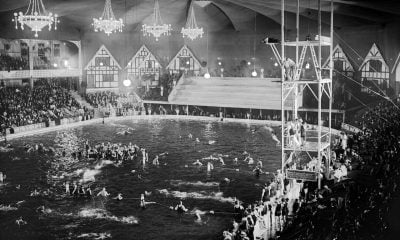
Indoor pools are very unique. The water vapor escaping from the pool is trapped in the building envelope. These vapors are potentially corrosive, as they contain chlorine, chloramines, or ozone. The water can have destructive consequences and pose serious health issues if the building is constructed incorrectly.

Dehumidification for Indoor Pools
There is no such thing as an oversized dehumidification system. But the lack of a dehumidifier (or an undersized one) allows the water vapor to accumulate and penetrate the building envelope. Water vapor inside the walls can cause corrosion of the structural beams, braces, and brackets, corrosion of the wiring and electrical components, foster mold and algae growth, rusting of HVAC ducts, or promote dry rot of wooden elements. Excess water vapor in the building can lead to a series of air-borne health maladies or bacterial infections.

Been There, Done That
Cheap clients who do not want to pay for the installation or operation of a dehumidification system, think that they can reinvent the wheel with exhaust fans, sliding doors, skylights, ceiling fans, or other schemes. Trust us, they have been tried countless times without success.

Proper Building Envelope for Indoor Pools
It is important to install a vapor barrier and use moisture-resistant construction materials to prevent the migration of moisture into the walls and ceiling. Electrical outlets, fixtures, and penetrations must be sealed against vapor intrusion.

Air Pressure in Indoor Pools
The air pressure within the swimming pool enclosure must be less than the adjacent spaces. Maintaining a high pressure in the adjacent spaces ensures that the water vapor does not migrate.
Operational Cost
Operating a dehumidification and air handling system to control the air pressures, temperatures and humidity are expensive to operate. Failure to operate these systems properly will result in vapor migration and degradation of the building. Maintaining the proper temperatures is also important in controlling the creation of water vapor (evaporation).
Automatic Pool Cover
Using a pool cover does not eliminate the need for a dehumidification system. It will help reduce the vapors, but it will not eliminate them. The installation of a cover allows for the reduction in the size of the dehumidification system, as the loads are reduced.
Qualified Indoor Air Quality Expert
We do not profess to be experts in this field. Though we have built a number of indoor pools, we rely upon specialists in this field. Most mechanical engineers or dehumidifier manufacturers do not possess the skills to properly design the HVAC/Dehumidification system, vapor barriers, building envelope, ducting sizes, or air handling register/return locations.

Non-Corrosive Air Ducts
Properly constructed indoor pool air handling systems utilize non-corrosive plastic ducting, registers, and returns. Galvanized sheet metal ducting quickly begins to corrode in an indoor pool environment. Indoor pools can be a source for year-round enjoyment of a pool. But they require a properly designed and built enclosure, in order to protect the rest of the building and occupants’ health.

Swimming Pool Expert Witness




Swimming Pool Expert Witness - Paolo Benedetti
“We’ve Always Done It This Way” — The Dangerous Mindset Behind Bad Shotcrete Practices

Understanding the process can make or break the success of a shotcrete pool. Too many pool contractors do not understand concrete science or shotcrete. Because of this lack of understanding, they cannot critically evaluate the practices of their shotcrete subcontractors.
Subcontractors will say “we’ve always done it this way,” or “we’ve never had a problem before.” Both may be true, however there are common bad practices that compromise the integrity of the process.
Most pool owners never see what happens during the shoot itself. They see steel, plumbing, excavation, and eventually a finished pool. What they don’t see is that the quality of the shotcrete application is one of the most critical structural phases of the entire project. Mistakes made during placement are often buried forever beneath plaster, tile, coping, and finishes. Problems may not show up immediately, but over time, they can reveal themselves through cracking, hollow spots, bond failures, leaks, delamination, or recurring structural issues.

This is why supervision matters. The difference between a properly placed shell and a compromised shell often comes down to jobsite discipline, proper sequencing, material handling, and whether the crew understands what the material is actually doing during placement.
Bad Practices To Avoid
Hands or fingers in the stream of the shotcrete or squeezing the nozzle.
This separates the aggregates from the cement paste and slows down the velocity, resulting in weaker concrete.
Shotcrete relies heavily on velocity to properly compact the material as it hits the receiving surface. Once someone interferes with the stream using their hand, fingers, or by pinching the nozzle, the consistency of the material changes. The aggregate can separate from the cement paste, which creates inconsistencies in density and strength throughout the shell. The nozzleman should be controlling placement through technique and distance — not by physically manipulating the stream.

Not shooting the horizontal surfaces or coves before the walls or benches.
Failing to place the floor or coves first allows the loose trimmings from the vertical walls and benches to fall into the floors & under the steel.
If this material is still plastic, it can be vibrated into place. However, most of the time, the wall materials have stiffened & set up, so trimmings become waste materials. It is virtually impossible to shovel out this waste from under the floor steel.
This is also why spa benches & floors are notoriously sources of recurring problems.
The sequence matters. When crews rush through walls first because it is easier or faster, they often contaminate the horizontal surfaces with rebound and waste material. That waste becomes trapped beneath reinforcing steel where it cannot be properly consolidated. Over time, those areas can become weak points in the shell. Many chronic spa leaks and bench failures trace back to poor placement practices that occurred during the original shoot.

Using trimmings in benches, walls or floors.
Once the concrete has stiffened, it cannot be used in benches, floors or walls. It is a waste product that needs to be hauled off-site.
If your recently shot project looks really clean, ask yourself, “Where are all of the trimmings?” There should be piles of waste around the entire pool.
This is one of the most misunderstood parts of the process. Rebound and trimmings are not reusable structural material once they begin stiffening. Yet many crews still push, shovel, or pack this waste into steps, benches, coves, and floors to save time and cleanup. The problem is that this material no longer bonds correctly and creates weak pockets inside the shell. A clean site immediately after a shoot is not always a good sign. Properly discarded rebound should be visible throughout the jobsite because waste is a normal part of the shotcrete process.

No one is using a vibrator.
Most placed concrete is not self-consolidating. Vibration is required to consolidate it & remove air pockets & voids.
Walking on this material (aka: “stompcrete”) does not consolidate it.
Air pockets and voids inside the shell reduce density and compromise structural integrity. Proper consolidation helps ensure the material fully encapsulates the reinforcing steel and eliminates trapped air. Simply walking around on freshly placed shotcrete does not achieve proper consolidation. In fact, excessive foot traffic can actually create more problems than it solves.

Excessive foot traffic on freshly placed materials.
Walking all over freshly placed materials – another version of stompcrete- alters the compressive value & water to cement ratios.
Freshly placed shotcrete is still in a highly vulnerable state. Excessive foot traffic disturbs the material before it has properly set and consolidated. Crews that constantly walk across floors, benches, and steps during placement can unintentionally weaken those surfaces. This is especially problematic in shallow areas, beach entries, spa floors, and tanning ledges where thinner sections are more sensitive to improper handling.

“Flashing” the floor at the end of the job.
They’re not doing you a favor – they’re cleaning out their pump & hoses in your pool floor.
The water used to rinse their hopper & hoses alters the cement-to-water ratio, which results in a weak crusty layer on the floor.
This is why these areas are very white in color & hollow-sounding.
Many contractors and homeowners do not realize what they are actually seeing when this happens. That thin slurry layer may initially appear smooth or finished, but it is often structurally weak because the additional water destroys the intended mix design. These areas frequently become soft, chalky, hollow, or delaminated over time. If sections of the floor appear unusually white compared to the rest of the shell, there is usually a reason.
Another issue rarely discussed is accountability. In many cases, the pool contractor is not even present during the shoot. The subcontractor controls the process, the sequencing, the cleanup, and ultimately the quality of the shell installation. If the builder does not understand proper shotcrete practices, they cannot recognize when corners are being cut.

Knowledge Is Key
If you don’t know the correct way to install shotcrete, you cannot hold your subcontractors accountable.
If you don’t supervise your subcontractors, they will take the path of least resistance.
The reality is that many structural failures, hollow spots, leaks, and recurring issues are preventable and are not caused by the material itself. Typically, errors occur due to poor placement practices, poor supervision, lack of understanding, and failure to enforce standards on the jobsite.
Understanding concrete science is not optional if you are building shotcrete pools. It is the foundation of the entire structure. Builders who educate themselves, supervise properly, and demand better practices from their crews dramatically reduce the likelihood of future problems.
The best shotcrete crews make the process look easy. But there is a difference between fast and correct. A shell can look perfectly fine the day after the shoot and still contain hidden defects that reveal themselves years later. Once the pool is plastered and filled, correcting those problems becomes exponentially more expensive and difficult.
A properly installed shotcrete shell should not be based on luck, habit, or “the way it’s always been done.” It should be based on sound practices, proper supervision, and understanding exactly what is happening during every phase of placement.

Every pool builder or contractor has heard it—or said it—at some point:
“But it passed inspection.”
Those words often come up in courtrooms, after a project has gone sideways and litigation is underway. It’s a phrase meant to shift blame, to suggest that because an inspector signed off, everything must have been done correctly. Unfortunately, that’s not how the law works.
Passing inspection does not equal being code-compliant. And when problems arise, it’s the builder or designer, not the inspector, who carries the legal and financial responsibility for non-compliance. Understanding how building standards are adopted, enforced, and referenced is critical for every professional in the pool and spa industry.

Understanding How Standards Become Law
Most contractors know that building codes exist, but fewer understand how those codes are structured. Many of the technical details that govern your work are not printed in the state building code itself. Instead, they’re part of what’s known as “adopted by reference”—external standards that are legally binding even though they aren’t printed word for word in the codebook.
For example, the International Code Council’s International Swimming Pool and Spa Code (ICC-ISPSC) is one of the most widely adopted pool construction standards in the country. Many states have formally adopted the ISPSC by reference through their residential or building code appendices. That means that even though you won’t find every detail of the ISPSC spelled out in the printed state code, it carries the full weight of law.
How “Adopted by Reference” Works
When you look at your state’s residential building code, you’ll often find an appendix titled “Referenced Standards.” This section lists all of the national and international standards the state has chosen to adopt for that code cycle.
Most of the larger, more populous states are on a three-year code revision cycle, staying current with the ICC and IAPMO (International Association of Plumbing and Mechanical Officials) updates. Smaller states tend to move on longer cycles, sometimes adopting every six or nine years.
Instead of reprinting the full ISPSC document, the state code typically includes a short statement that ties the local law directly to that standard.

For example:
•. In the 2015 Texas Residential Code, section 326.1 states: “The design and construction of pools and spas shall comply with the International Swimming Pool and Spa Code.”
•. The 2018 Tennessee Residential Building Code uses nearly identical language in its own section 326.1.
This simple line means that the entire ISPSC—every clause, every diagram, every standard—becomes part of that state’s enforceable building law.

What’s Inside the ISPSC?
When a standard is adopted by reference, you’re bound to comply with all of it. That includes requirements for:
•. Water circulation rates and line velocities
•. Floor contours, slope transitions, and steps
•. Handholds and ladder spacing
•. Anti-entrapment and anti-drowning features
•. Safety barriers, fencing, and alarms
•. Structural load and shell integrity
•. Equipment placement, bonding, and electrical standards
In short, “adopted by reference” brings the entire ISPSC—and all of its subsections—into play for every new pool or spa construction project in that jurisdiction.
When Local Jurisdictions Modify the Code
Local municipalities do have some authority to modify state codes, but they can’t do it informally. To avoid enforcing specific portions of the state building code, a local government must pass a formal resolution listing every section of the state code that they are choosing not to adopt.
This is rare, but it happens. For example, California and Florida both have their own pool-specific codes that go beyond the ISPSC. These state-level codes are considered more stringent than the ICC’s model code, so they don’t need to reference it directly.
However, for the vast majority of states, the ISPSC—or another comparable standard—is part of the law by reference.
Inspectors Are Not the Final Authority
Here’s where many builders get tripped up: local inspectors do not routinely read or study the building codes in full detail.
Most inspectors rely on experience and precedent. It’s not until they review a set of plans that cites a specific code section or standard that they realize a particular provision applies. That’s why a project can “pass inspection” even though it’s not fully compliant with the adopted standards.
In these situations, ignorance of the code is not a defense—for the inspector or the builder. But while inspectors are largely protected by sovereign immunity, meaning they can’t be sued for missing violations, builders and designers are not.
If a defect later leads to injury or property damage, the responsibility lands squarely on the contractor or design professional. Courts have consistently ruled that “passing inspection” does not exempt a builder from liability if the work fails to meet applicable codes and standards.

The Legal and Financial Reality
In personal injury or construction defect litigation, one of the first questions attorneys ask is: “Was the work code-compliant?”
If the answer is no, it doesn’t matter that the project was approved by a local inspector. The standard of care in these cases is what the law requires, not what the inspector accepted.
Builders and designers are legally responsible for:
•. Knowing which codes apply in their jurisdiction
•. Keeping current with code updates and revisions
•. Ensuring that all referenced standards are followed
•. Documenting compliance throughout the project
Failing to do so can expose contractors to claims of negligence, breach of contract, or professional misconduct, even years after the project is complete.
“It Passed Inspection” Is Not a Defense
The concept of sovereign immunity exists to protect public officials, including building inspectors, from lawsuits when they make honest mistakes. That protection does not extend to private builders.
In the eyes of the law, you’re the expert. You’re expected to know the applicable codes and standards. When a violation exists, you can’t rely on an inspector’s oversight as a shield.
Saying, “But it passed inspection,” is equivalent to admitting you didn’t understand your own obligations under the law.
Staying Ahead of the Curve
So, where should builders go to stay informed? The most accessible resource is UpCodes, an online library that provides searchable access to state-specific building codes and referenced standards.
UpCodes makes it easy to:
•. Search your state’s adopted code cycles
•. Review appendices for referenced standards
•. Track amendments or local modifications
•. Stay up to date on pending revisions
It’s also a good practice to maintain a copy of the current ICC-ISPSC or your state’s equivalent pool code in your office or jobsite trailer. Regularly reviewing it with your design and field teams helps prevent costly oversights.
A Builder’s Responsibility
Complying with building codes and referenced standards isn’t about passing inspections—it’s about protecting lives, property, and your professional reputation.
Builders who study their codes, document compliance, and communicate clearly with inspectors and clients show the kind of professionalism that defines true craftsmanship.
Codes aren’t arbitrary red tape; they’re the accumulation of decades of engineering, safety research, and field experience. When you follow them—not just the parts you know, but the full scope of what’s adopted by reference—you’re doing more than meeting legal requirements. You’re building with integrity.
Final Thoughts on the Subject
The next time you hear someone say, “But it passed inspection,” remember this: inspections are a checkpoint, not a certification of compliance. The responsibility—and the liability—always comes back to the builder.
Do your homework, know your state’s adopted standards, and make compliance a cornerstone of every project. It’s not just good business—it’s the law.

When it comes to building a swimming pool, what happens below the surface is just as important as what’s visible above it. In areas with unstable, expansive, or soft soils—or on sloped lots—standard foundations simply won’t cut it. That’s where deepened foundation systems come into play. These structural supports, often hidden underground, are crucial for ensuring the long-term stability and safety of a pool. Depending on site conditions and engineering requirements, contractors may rely on a variety of pier types—each with its own strengths and limitations. In this article, we explore the most common deep foundation options used in pool construction: friction caissons, driven piles, helical piers, and end-bearing caissons.
Deepened Foundations in Pool Construction: Caissons, Piles, and Piers Explained
Friction Piers/Caissons
Friction caissons are drilled holes, filled with reinforcing steel and concrete. The engineer calculates the friction between the earth and the outer surface of the concrete. These rely upon the surface area of the outside of the caissons and the coefficient of friction of the soil for support. Therefore, their diameter and depth are designed to develop sufficient surface area and soil friction. If the earth is removed they lose their ability to support the structure.

Driven Piles
Driven piles work in much the same way as friction caissons, except that they are pounded into the ground. Precast concrete, wood or steel I-beam piles are driven into the ground by a pile driver to the point of refusal. They are not often used in residential construction, due to the noise and ground vibration they cause.

The vibrations can actually damage nearby structures. They also require large machinery that often cannot access residential lots. Driven piles can be “end bearing,” friction or a combination of both. They are most often used in swimming pools adjacent to water (lake front, beach front, swamp land), that have soft or incompetent soils.

Helical Piers
Helical Piers are giant soil “screws” that are drilled into the soil. They have significant limitations, due to their size and method of installation. Helical piers are limited in their load bearing capacity to the torque that the installation machinery can deliver. Helical piers also do not perform well in loose or soft soils. Their development depth is limited by the length of the shaft.
For pools, helical piers are most often used in areas of expansive soils or high water tables to hold down the structure. They are the most economical and weakest of the available options. To resist point loading on the tip of the shaft, grade beams or mat foundations are often utilized to spread the load across the underside of the pool floor.

End-bearing caissons
As the name implies, end-bearing caissons (seen above – Featured Image) are drilled or driven until the end of the pile contacts supporting bedrock or soils. They often develop support through a combination of skin friction and end load bearing. Bell caissons, flare out on the bottom to increase the contact footprint of the shaft. They require specialized augers to create the flared end.
The portion of a pier above grade is a “free standing” pier (aka: column). The tops of the columns are tied together by beams or a mat foundation to resist movement. They are often seen on bridges, overpasses and above grade swimming pools.
You can see why a soils report is required for pier supported structures. Without a soils report, the structural engineer will not know the soil’s coefficient of friction, it’s load bearing capacity or the expansion index for their design.
Conclusion
When it comes to pool construction, building a structurally sound pool on challenging terrain requires more than just a good understanding of design—it demands a deep understanding of soil behavior and the right foundation system to match. Whether it’s friction caissons, driven piles, helical piers, or end-bearing caissons, each solution serves a specific purpose based on site conditions and load requirements. Because these systems involve critical calculations and specialized installation methods, they’re never a DIY task. A thorough soils report and the expertise of a qualified structural engineer are essential. For pool contractors working in uncertain ground conditions, relying on professional guidance isn’t just smart—it’s a matter of long-term safety and liability.
Photo Credits: Swimming Pool Expert Witness
Read the Summer Issue of Pool Magazine

See more of our coverage in your search results
 Sponsored Advertisement
 RENOLIT Launches ONE Augmented Reality Pool Design App
 Inside the 2026 Million Dollar Pool Design Challenge
 Franklin Electric Shares Global Water Perspectives Through Art Exhibit
 SafeSplash Highlights Early Water Safety During Baby Safety Month
 5 Ways Jandy’s New AquaLink® EDGE™ Is Changing the Game for Pool Pros
 Why Pools Matter: Pool Horizons Takes Its Message Global
 Ownership Group Acquires Shasta Pools, Announces Expansion Plans to Offer Complete Home Services

 Orlando Surf Park Planned For Former Construction Landfill Site
 14-Year-Old Killed After Wall Collapse at Air Force Base Pool Club
 PHTA Announces 2024 Greg Garrett Scholarship Award Winners
 Float Like A Duck, Water Safety Initiative Receives Step Into Swim Grant
 A High-Performance Heat / Chill Pump Without the Excess Noise
 PHTA Launches New $5,000 Greg Garrett Scholarship Award
 The Etiquette of Performing Warranty Work
Sponsored Advertisement

 Industry News4 weeks ago
Landmark Aquatic Names Jason Hill Kansas City General Manager

 Pool News4 weeks ago
New FCC Robotics Rules Could Affect Future Robotic Pool Cleaners

 Press Releases4 weeks ago
Veridian Service Partners Names Dave Peterson Chief Sales Officer

 Pool News3 weeks ago
Amazon Drone Drops Package Into Swimming Pool — And It’s Not the First Mishap

 Manufacturer4 weeks ago
TPSC Launches East Green Teak Collection

 Press Releases4 weeks ago
Natalie Hood Swims for Every Child A Swimmer

 Manufacturer3 weeks ago
Pentair Pool and Pool Brain Launch Technology Integration to Deliver Smarter, More Proactive Pool Service

 Awards4 weeks ago
Pentair Pool Launches 2026 Pool Pro Awards
You must be logged in to post a comment Login