




Pool Maintenance
Baking Soda Pool Hack – Is It Real Or Is It Clickbait?
One pool hack states a cup of baking soda in your pool every other day can keep the water in perfect balance. Is it real or just clickbait?


In recent times, a viral article and accompanying TikTok video shared a pool maintenance “hack” that caught the attention of pool owners worldwide. In this supposed hack, a pool owner claimed that the secret to maintaining perfectly balanced water was as simple as adding a cup of baking soda to the pool every other day. But is this unconventional method truly effective, or is it a risky endeavor that could potentially harm your pool? To get to the bottom of this, we spoke with pool care expert, CPO instructor, and best-selling author, Rudy Stankowitz.
@gillaleighhome.designs Replying to @user9410247040220 #poolhack #bakingsodahack #phblancer #swimmingpool #naturalcleaningproducts #poolcleaningtips #cleaninghacks #fypシ
♬ Livin’ My Best Life – Dylan Scott
Just How Real Is This Pool Hack?
The viral pool maintenance video might have garnered attention, but, as Rudy Stankowitz aptly puts it, “It was a fantastic piece of clickbait. As with most clickbait, there’s a grain of truth buried in it, but the risks and pitfalls of this method are significant. Stankowitz elaborates, “There was some truth in it, but then there was a lot that wasn’t, and a lot that can actually put a homeowner in a bad position if they just followed through with what this woman was recommending.”

The Importance of Proper Pool Care
Before diving into the specifics of the baking soda “hack,” it’s essential to understand the fundamentals of pool care. Stankowitz emphasizes that adding any chemical to your pool should never be a haphazard act. “Nothing should go in without first having tested the water and then determining the need for what it is that you’re going to add,” he asserts. This rule is foundational to responsible pool maintenance. Randomly adding chemicals can lead to imbalances, problems, and potential damage to your pool.
The Role of pH in Pool Maintenance
A crucial factor in pool care is the pH level, which measures the acidity or base of the water. Rudy Stankowitz breaks down the significance of pH: “It’s the measurement of acidity or base. It’s the measurement of hydrogen ion activity.” Maintaining the correct pH level is vital for various reasons:
- Pool Protection: pH plays a role in protecting the pool structure itself, preventing damage over time.
- Chlorine Effectiveness: The effectiveness of chlorine in the water is pH-dependent, with lower pH levels leading to more efficient chlorine action.
- Algae Prevention: The type of algae we see in swimming pools prefer a pH of >7.6
Stankowitz recommends maintaining a pH level between 7.2 and 7.5 to ensure proper water quality and bather safety. Proper pH control is essential for an enjoyable and safe swimming experience.
The Role of Baking Soda in Pool Maintenance
In the viral video, the pool owner claimed to use a cup of baking soda every other day as a natural pH balancer. While baking soda can indeed raise total alkalinity, Stankowitz points out that blindly adding it without testing the water can lead to issues. “She’s going to get to a point where her total alkalinity is too high in trying to maintain her pH,” Stankowitz warned. Constantly adding baking soda could lead to excessive total alkalinity, necessitating the addition of acid to lower it, which in turn would drop the pH. This creates a yoyo effect and a cycle of imbalances and problems.
The Problem with pH Bounce
Stankowitz also highlights the issue of pH bounce or pH lock, a term used to describe drastic pH fluctuations. Adding chemicals without understanding their impact can cause pH to swing unpredictably. Baking soda’s natural pH of around 8.4 means it’s not the ideal choice for raising pH efficiently. A better alternative is soda ash, which is more cost-effective and effective in increasing pH.
Copper Ionization Hack: Fact or Fiction?
In the same viral video, the pool owner used a copper pipe with holes drilled in a plastic bottle to create a copper ionization system. Stankowitz acknowledges that copper does have bactericidal properties and is used for algae control in pools. However, the effectiveness of this DIY method is questionable. The contact kill effect of copper relies on specific conditions, and and enclosing the copper pipe in a plastic bottle reduces the contact time even further than the flowrate. This pretty much ensures contact occurs only when the pump is off and for maybe the 2 – 3 gallons of water in the skimmer at that time, if at all. Moreover, the lack of testing and control over the copper levels poses a risk of potential staining and other issues in the pool.
@gillaleighhome.designs My most popular pool hack to get rid of algae for good #poolhack #poolcleaning #byebyealgae #cleaningpools #poolcleaninghack #swimmingpoolhack #fypシ
♬ Wild Thing (Re-Recorded) – Tone-Loc
The Importance of Proper Testing
Stankowitz underlines the significance of proper water testing in pool maintenance. “If she had a test kit and used every bottle in the test kit and then had some basic chemistry knowledge and then used the sodium bicarbonate every time that she needed to actually increase the total alkalinity, I would say that’s great,” he comments. Pool owners should rely on accurate testing methods and sound chemical knowledge rather than adopting unverified hacks.
Managing External Factors
For pool owners dealing with external factors such as storms, Rudy Stankowitz advises focusing on maintaining the ideal total alkalinity, which serves as a buffer for pH fluctuations. Understanding how cyanuric acid affects total alkalinity is crucial. By adjusting for the contribution of cyanuric acid in water, pool owners can achieve a more accurate measure of carbonate alkalinity. This knowledge helps maintain a stable pH and prevents it from becoming too corrosive or scale-forming.
In the world of pool care, shortcuts and DIY hacks can often do more harm than good. Rudy Stankowitz’s expert insights reveal the importance of using proper testing methods and understanding the chemistry of pool water. While there’s some truth to the viral baking soda “hack,” it’s vital to recognize that pool maintenance is a precise science that requires careful attention and knowledge to achieve consistently safe and enjoyable swimming experiences.
Listen to our entire interview with Rudy Stankowitz on the Pool Magazine podcast.



Equipment Supplies
Spring Startup Meets Smart Automation With The Attendant
Spring startup meets smart automation with The Attendant, a platform helping improve monitoring, efficiency, water quality, and control.

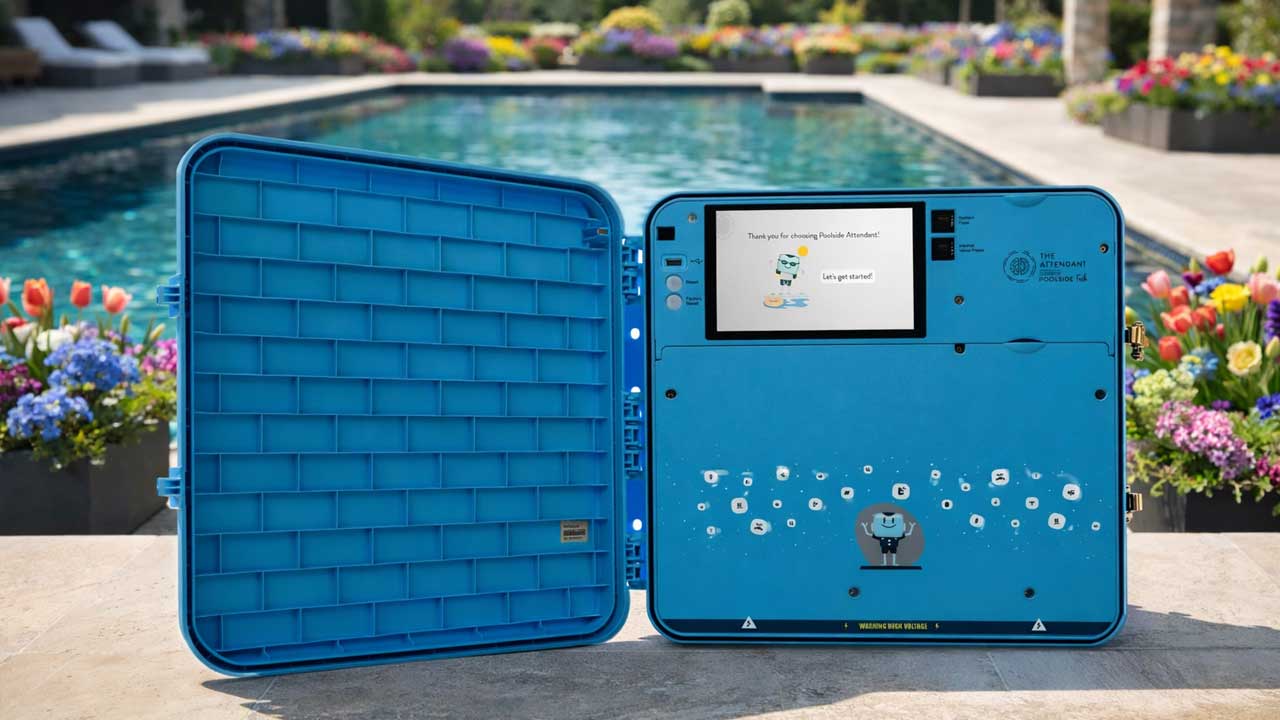
As spring approaches and the pool season begins to ramp up, automation quickly rises to the top of the list of topics pool professionals discuss with homeowners. Customers want pools that are easier to manage, more efficient to operate, and capable of maintaining consistent performance without constant attention.
For builders and service companies, automation offers a different kind of value. Connected systems can provide better visibility into equipment performance, reduce troubleshooting time, and help identify issues before they turn into costly service calls.
It’s no surprise that the topic continues to dominate conversations heading into every pool season.

Over the past few years, one of the pool automation platforms gaining attention among pool professionals is The Attendant, a connected automation and monitoring system developed by Poolside Tech. The platform combines equipment automation with system monitoring and data visibility, creating a tool designed to help both homeowners and service professionals better understand how their pools are operating.
While many automation systems are designed around specific equipment ecosystems, Attendant was built to integrate with a wide range of pool equipment, giving builders and service companies flexibility when designing or upgrading equipment pads.
But compatibility is only part of the story.
The larger goal behind the platform is to expand the role automation plays in how pools are monitored and maintained.
“Automation used to basically turn things on and off,” explained Ben Forrest of Poolside Tech. “Now we’re talking about systems that think, adapt, and prevent problems before they happen.”


Building an Intelligent Pool System
Traditional automation systems have historically focused on equipment control. Pumps can be scheduled to run at certain times, heaters can be turned on remotely, and lighting systems can be coordinated through a mobile app.
The Attendant builds on that concept by introducing a deeper layer of monitoring and diagnostics.
Through connected sensors and equipment integration, the system collects operational data from the equipment pad and makes that information accessible through a cloud-connected interface. Homeowners and service professionals can observe how pumps, heaters, and other components are operating in real time, providing insight that goes far beyond simple scheduling.
For service professionals, that level of visibility can change how pools are managed. Instead of discovering issues during routine weekly visits, technicians can receive alerts when equipment begins to behave outside its normal operating range.
A pump drawing unusual power, a heater cycling incorrectly, or changes in water conditions can trigger notifications that allow technicians to respond quickly—often before the homeowner even realizes something is wrong.
For homeowners, the system provides peace of mind that their pool is being monitored continuously rather than only during scheduled service visits.
The Attendant Product Line
Poolside Tech has developed several versions of the Attendant platform designed to support different types of installations.
The Attendant
At the center of the lineup is the flagship Attendant controller. Designed for installations where multiple pieces of equipment must operate together, the system functions as a central hub capable of coordinating pumps, heaters, valves, and sensors while collecting operational data about how the system is performing.

Because the platform is cloud-connected, both homeowners and service professionals can access system data remotely through the Attendant interface. Instead of relying solely on periodic inspections at the equipment pad, users can observe system performance in real time.
The goal is to move automation beyond fixed schedules and toward systems that provide a clearer picture of how equipment is operating throughout the day.
The Attendant Mini & The Attendant Mini + Chemistry
For installations that do not require the full scale of the flagship controller, Poolside Tech offers a compact alternative in the Attendant Mini.
The Attendant Mini delivers many of the same monitoring and automation capabilities in a smaller footprint designed for residential equipment pads. Despite its size, the system still integrates with pumps, heaters, and monitoring devices while providing remote access and system alerts through the Attendant platform.

For pool pros, the Attendant Mini offers an accessible entry point for introducing connected automation to residential customers without requiring the larger automation cabinets typically associated with advanced systems.
The platform expands further with the Attendant Mini + Chemistry configuration.
This version incorporates probe-based sensors that continuously monitor water balance parameters such as pH and sanitizer levels. Instead of relying exclusively on manual testing during service visits, the system provides ongoing readings that allow service professionals to observe trends in water chemistry over time.
“If a builder offered homeowners a system that keeps chlorine and pH perfect no matter how many kids are in the pool,” Forrest said, “almost everyone would say yes—as long as it’s affordable.”
By integrating water monitoring with equipment automation, the Attendant platform aims to help service professionals maintain more consistent water conditions while reducing the guesswork that often accompanies traditional testing routines.
Building Momentum Across the Industry
While the Attendant platform has steadily evolved over the past several years, Poolside Tech has also been working to introduce the technology directly to the professionals who build and service pools every day.
In recent seasons, the company has made a strong presence at industry trade shows, conferences, and educational events, demonstrating the platform to builders, service companies, and distributors across the country.
Those efforts have helped Poolside Tech build a growing network of partnerships across the pool industry, beginning with major manufacturers like Latham and extending to distribution relationships with organizations such as POOLCORP and Heritage Pool Supply.
The company has also developed connections with several prominent industry buying groups, including Carecraft, United Aqua Group (UAG), and Master Pools Guild (MPG). These organizations help introduce new technologies to members who are continually looking for tools that can improve operational efficiency and customer experience.

Pool Pros Embracing Connected Automation
Service companies have also begun exploring how connected monitoring platforms can improve day-to-day operations. Organizations such as Poolwerx are working with Poolside Tech in their efforts to streamline service routes, reduce troubleshooting time, and provide greater visibility into pool performance between service visits.
Companies such as Shasta Pools are also exploring how connected monitoring platforms can support both sides of their operation. As a company that builds pools while also maintaining a large service and repair division, Shasta is working with Poolside Tech to adopt automation and monitoring technology that gives homeowners greater visibility into how their pool systems are performing while helping technicians keep a closer eye on equipment between service visits. For Shasta, integrating connected automation is part of a broader effort to improve the long-term ownership experience as smart home technology continues to expand into the backyard.
A Changing Landscape for Pool Automation
Automation has come a long way from the simple timers that once controlled pumps and heaters.
Today’s connected systems provide real-time insight into equipment performance, allowing homeowners and service professionals to monitor pools more effectively than ever before.
Platforms like Attendant represent an evolution in how automation is being designed—combining equipment control, monitoring, and operational data into a single connected environment.
As the new pool season approaches and automation once again becomes a central topic of conversation, it’s clear that the technology is continuing to evolve.
That’s why this spring, the goal is no longer just convenience. It’s making pools easier to manage, more efficient to operate, and better understood by the people responsible for keeping them running.
Photo Credits: Poolside Tech, Latham

When a green pool is simply left to turn into a stagnant, algae-infested basin, it isn’t just an eyesore—it can become a serious public-health and legal hazard. Neglected pools serve as ideal breeding grounds for mosquitoes capable of transmitting diseases such as West Nile virus and Zika virus.
From a pool-industry perspective, the issue is clear: an unmaintained pool is not simply a dormant asset—it can generate liability, drive down property values, invite municipal code enforcement, and create safety hazards beyond the usual concerns of drowning, slip-and-fall, or equipment failure.
Neighbor’s Viral Photo Raises Questions About Pool Neglect and Liability
After a photo of a backyard pool completely overtaken by algae and vegetation began circulating on Reddit, it quickly became a viral talking point. The photo wasn’t taken by a passerby or an inspector—it was snapped by a frustrated neighbor fed up with living next to what had become a swamp. The homeowner had apparently abandoned their pool a decade ago, leaving it to fill with algae, debris, and rainwater until nature completely reclaimed it.


When the neighbor shared the image online, the post went viral, and commenters couldn’t believe it was once a swimming pool. Many asked how anyone could be allowed to let their pool reach that point and why local authorities hadn’t stepped in. Beyond the shock factor, the discussion struck a nerve—it wasn’t just about aesthetics, but about responsibility, public health, and the fine line between private property rights and community wellbeing.
Homeowner Responsibilities When a Pool Is Neglected
In many jurisdictions, local codes define standing water that can breed mosquitoes as a “public nuisance.” For example, the City of Los Angeles Municipal Code states that any standing water on private property that has become a breeding source for mosquitoes is declared a public nuisance and an immediate threat to public health.
Similarly, under California law, county health-agency information sheets note that neglected swimming pools may produce millions of potentially infected mosquitoes and that local vector-control agencies may enact abatement proceedings, impose fines of up to $1,000 per day, or place a lien on the property.
In short, a homeowner who allows a pool to remain stagnant and untreated may find themselves subject to enforcement action, abatement costs, and fines or judgments.
Code Enforcement & Abatement Processes
In the City of Huntington Park, California, ordinances require property owners to maintain swimming pools in a manner that does not allow mosquito breeding, including emptying or keeping dry any pool that is abandoned or not in service. Violations are considered infractions punishable by fines.
In Los Angeles, vector-control authorities can issue a 72-hour notice to secure and abate the nuisance; failure to comply can result in misdemeanor charges. The municipality may then perform the abatement work and bill the cost to the property owner, often adding administrative surcharges.
For pool builders, remodelers, and service contractors, this highlights a key education point: failing to act is not just the homeowner’s problem—it can quickly become a legal one.
General Liability: Premises & Attractive Nuisance
Beyond mosquito-vector issues, neglected pools still carry the classic “attractive nuisance” liability. Legal experts note that when a property includes a feature likely to attract children—such as a pool—a homeowner owes an increased duty of care, and failure to maintain it may heighten civil liability.
Combine that with visible neglect (green water, unsecured fencing, vegetation overgrowth), and a homeowner may face multiple forms of exposure: vector control, code violation, and premises liability.
Public Health & Neighborhood Impacts
From a public-health standpoint, a single neglected pool can become a prolific mosquito nursery. Health agencies report that mosquito eggs can hatch in as little as 7 to 10 days in stagnant water, and that one neglected pool can produce millions of mosquitoes in a single summer.
Neighborhoods and HOAs should take note: one person’s abandoned pool quickly becomes everyone’s problem. Municipalities are increasingly monitoring such sites, especially in areas prone to vector-borne disease.
Practical Alternatives: What Should Homeowners Do Instead?
Evaluate: Remove, Mothball or Maintain?
When a homeowner asks what to do instead of watching their green pool turn into a mosquito resort, the answer depends on intent and condition. Three main strategies emerge.
1. Full Removal or Back-fill
If the pool is no longer in use and there’s no plan to service it, complete removal or back-fill may be the most responsible course. The Pool & Hot Tub Alliance recommends draining, filling, and rendering an abandoned pool incapable of holding standing water.
From a liability standpoint, this eliminates the basin, the standing-water hazard, and ongoing obligations.
2. Mothballing (Seasonal Maintenance and Covering)
If the pool might be used again, seasonal maintenance and proper covering is the practical alternative. This means keeping water circulating and sanitized, using a secure ASTM-rated safety cover, removing debris, and ensuring no place for stagnant water to accumulate.
Simply covering a pool with a loose tarp isn’t enough; water can still collect on the surface, providing mosquito habitat and a drowning hazard.
3. Active Maintenance (In-Use Strategy)
If the pool remains in use, standard maintenance applies: circulation, filtration, sanitation, and algae control. Even when not used daily, the system cannot simply be turned off. Well-maintained pools eliminate food sources for mosquito larvae and reduce the chance of infestations.
Annual inspections or off-season maintenance remain good practice for responsible homeowners.
Role of Pool Builders and Service Companies
This topic creates a strong value-add opportunity for pool professionals. Educate homeowners about the risks of abandonment, offer winterization or closure plans, and provide turnkey removal options. Present written proposals outlining costs, compliance issues, and long-term benefits. Helping clients make informed decisions reduces liability for both homeowner and contractor.
Neighborhood and Public-Health Impact
| Condition of Pool | Mosquito Breeding Risk | Potential Legal/Code Consequence |
|---|---|---|
| The pool is fully maintained and in use | Minimal – filtration and sanitizer remove larvae | Standard homeowner liability (fencing, drowning) |
| Pool inactive but drained/back-filled | Low – no standing water | Low code-risk if properly closed |
| The pool is inactive but covered, yet water remains | Medium-high – water on the cover or basin supports breeding | Moderate code risk unless cover meets safety specs |
| Pool inactive, no maintenance, green water | High – millions of larvae possible | High risk of abatement, fines, lien, or criminal sanction |
| Pool inactive, unsecured, green water | Very high – drowning + vector hazard | Highest risk: multi-agency enforcement |
Key Takeaways
• Neglecting a green pool can lead to fines, liens, or criminal penalties.
• Every homeowner must decide responsibly: maintain, mothball, or remove.
• Doing nothing is the riskiest and costliest choice.
• For professionals, this is an educational moment to reinforce that pools require stewardship—not abandonment.
Final Thoughts
When a homeowner says, “I’m just going to stop using it and let nature take its course,” what they are really doing is inviting legal and environmental trouble. For the pool industry, this is an opportunity to emphasize that our role extends beyond construction and service—we also help protect communities from public-health hazards.
A neglected pool isn’t just unsightly; it’s a potential liability and a vector-control issue. By guiding homeowners toward maintenance, proper closure, or removal, we help preserve not only their property but also the well-being of their neighbors.
Feature Photo Credit: Reddit


There’s something deeply satisfying about seeing a dull, stained pool surface turn bright and clean again after a good acid wash. It’s like hitting the reset button on a pool that’s seen better days. But as any seasoned pool pro knows, this powerful process comes with some serious risks.
Acid washing uses muriatic acid (hydrochloric acid)—a chemical strong enough to dissolve mineral buildup, algae, and stains. That same strength, though, can cause burns, lung damage, and serious injuries if not handled the right way. Knowing how to stay safe isn’t just a good idea—it’s essential for protecting yourself, your crew, and your customers.
Why You Can’t Cut Corners on Safety
Muriatic acid is no joke. A splash on your skin or a breath of concentrated fumes can do real harm in seconds. It can also eat away at pool finishes and metal fixtures if it’s not used properly. The goal is to make the pool look better—not cause damage or danger along the way.
When you follow safety protocols, you’re not just checking boxes—you’re building a reputation for professionalism and responsibility that customers notice.
Safety Basics Every Pool Pro Should Practice
1. Paperwork Isn’t Just Paperwork
Before you start mixing anything, make sure your Hazard Communication Program is up to date. Have Safety Data Sheets (SDS) for every chemical you use, and double-check that all containers are clearly labeled. This may seem tedious, but if something goes wrong, this documentation can be a lifesaver—literally and legally.

2. Dress Like You Mean It
When you’re handling acid, jeans and sunglasses aren’t enough. You’ll need:
● Acid-resistant gloves (rubber or neoprene)
● Chemical splash goggles and a face shield
● Long-sleeved acid-resistant clothing or a Tyvek suit
● Closed-toe, chemical-resistant boots
● A respirator with acid-gas cartridges if ventilation isn’t great
It might not be a fashion statement, but it’s definitely a safety statement.


3. Let It Breathe
If you’re working in an indoor pool or a deep end, acid fumes can build up fast. Always use fans, open doors and windows, and wear a respirator if needed. OSHA even considers an acid-washing pool a permit-required confined space—so don’t take chances. When in doubt, step out and get fresh air.

4. Mix with Care
There’s one golden rule every pool pro should memorize: Always add acid to water—never water to acid. Doing it backwards can cause an instant, violent reaction that splashes acid everywhere. Mix outdoors, use plastic containers, and keep people (and pets) far away while you work.

5. Be Kind to the Environment
Once you’ve finished the wash, it’s time to neutralize the leftover acid with sodium bicarbonate (baking soda). Never let untreated acid flow into a storm drain or onto the lawn. Not only is that harmful, it can also get you in trouble with local environmental agencies. Take a few extra minutes to neutralize properly and practice disposal according to local rules.

Two Is Better Than One
Whenever possible, don’t go it alone. Have another technician on deck while you’re in the pool. That second person can pass tools, monitor fumes, or call for help if something unexpected happens. It’s simple teamwork that makes the job safer for everyone.

Be Ready for the “What-Ifs”
Even with the best precautions, accidents can happen. Make sure you have:
● An eye wash station or portable eyewash bottle within arm’s reach
● A fresh water source nearby for rinsing skin or eyes
● A neutralizing agent like baking soda ready to go
● Up-to-date first-aid training for handling chemical exposure
At Pool Troopers in Tampa, FL, for example, every employee is issued proper safety gear and trained on SDS procedures—an approach all pool companies can learn from.

The Bottom Line
Acid washing is one of the most dramatic makeovers you can give a pool—but it’s not something to take lightly. The right preparation, gear, and mindset make all the difference between a successful job and a dangerous one.
If you’re looking to sharpen your safety skills, check out the OSHA 10 Course for Pool Pros that I offer through Space Coast Pool School. It’s a great way to stay informed, stay compliant, and most importantly—stay safe.
Read the Summer Issue of Pool Magazine

See more of our coverage in your search results
 Sponsored Advertisement
 RENOLIT Launches ONE Augmented Reality Pool Design App
 Inside the 2026 Million Dollar Pool Design Challenge
 Franklin Electric Shares Global Water Perspectives Through Art Exhibit
 SafeSplash Highlights Early Water Safety During Baby Safety Month
 5 Ways Jandy’s New AquaLink® EDGE™ Is Changing the Game for Pool Pros
 Why Pools Matter: Pool Horizons Takes Its Message Global
 Ownership Group Acquires Shasta Pools, Announces Expansion Plans to Offer Complete Home Services

 Pool Tariffs Are Coming, Buckle Up
 Ken Howard Joins Pool & Spa Apprenticeship & Training Committee
 The Etiquette of Performing Warranty Work
 How the Pool Industry Is Part of the Drought Solution
 Structural Foam Plays a Big Role
 HornerXpress Worldwide Honored With The Prestigious 2024 President’s E Star Award For Excellence in Exporting
 Chlorine Prices Continue To Go Up This Summer
 Sponsored Advertisement


 Industry News4 weeks ago
Landmark Aquatic Names Jason Hill Kansas City General Manager

 Pool News4 weeks ago
New FCC Robotics Rules Could Affect Future Robotic Pool Cleaners

 Press Releases4 weeks ago
Veridian Service Partners Names Dave Peterson Chief Sales Officer

 Pool News3 weeks ago
Amazon Drone Drops Package Into Swimming Pool — And It’s Not the First Mishap

 Manufacturer4 weeks ago
TPSC Launches East Green Teak Collection

 Press Releases4 weeks ago
Natalie Hood Swims for Every Child A Swimmer

 Awards4 weeks ago
Pentair Pool Launches 2026 Pool Pro Awards

 Manufacturer3 weeks ago
Pentair Pool and Pool Brain Launch Technology Integration to Deliver Smarter, More Proactive Pool Service
You must be logged in to post a comment Login